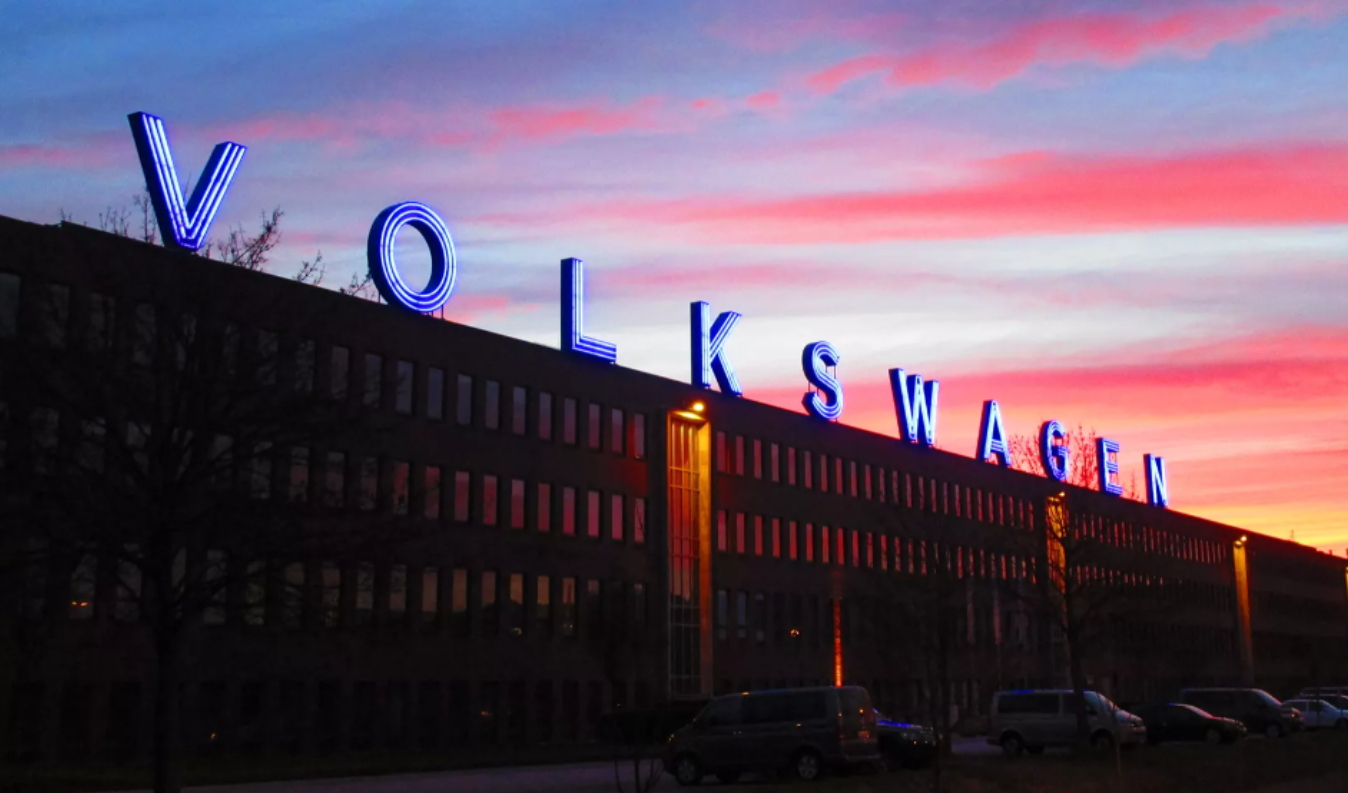
Volkswagen Group reported its first nine months of 2026 on 29 October, and the numbers read less like a quarterly wobble than a collective settlement. The group posted an operating loss of EUR 5.86 billion with an operating margin of minus 7.8 per cent, below market expectations. Over the nine months, operating profit was down to EUR 71 million, a fall of 98.7 per cent, and the after-tax result was a loss of EUR 2.72 billion against a profit of EUR 3.41 billion a year earlier.
Hyundai disclosed its third-quarter results in Seoul the same day. Nissan and Toyota published September production and sales data. All three face the same condition: volumes still there, profit retreating.
The loss is concentrated in one line
The main driver sits inside special items. Volkswagen booked EUR 8.7 billion of special items in the nine months, of which EUR 6.4 billion was a goodwill impairment on Porsche. Goodwill impairment does not consume cash. What it concedes is that the premium paid for Porsche’s electrification transition cannot be recovered against present cash-flow expectations.
Return is the second place to look. The nine-month return on sales, excluding special items, was 3.8 per cent, meaning less than EUR 4 of operating profit retained from every EUR 100 of revenue. The finance chief and chief operating officer said in the statement that this margin is not sufficient over the long term.
Full-year guidance came down with it. Volkswagen now expects revenue of about EUR 315 billion in 2026 and a return on sales of at most 1 per cent, against a previous range of 4 to 5.5 per cent. A manufacturer with EUR 315 billion of revenue is guiding to roughly EUR 30 billion of operating profit, less than many single brands.
Cash moved the other way. Automotive net cash flow was EUR 4.4 billion in the nine months, up 145 per cent, which the group attributes to lower investment spending and portfolio adjustments.
What the subtraction actually removes
The answer is a cost programme of roughly EUR 31 billion with five priorities: simplify the model range, slim the organisation, cut vehicle and overhead costs, raise plant efficiency and accelerate technical development. Product comes first. Model count determines part count, labour hours, line changeovers and dealer inventory. The group intends to unify its parts library and, on current assessment, as much as 50 per cent of models could be discontinued.
At brand level, the long-running SEAT marque may be phased out, though no final decision has been taken. At organisation level, the group plans to cut around 100,000 jobs worldwide. At capacity level, the future of four German plants, Emden, Zwickau, Hanover and Neckarsulm, has been put on the table, and the group cannot guarantee production allocation for them between 2031 and 2034.
Ralf Brandstätter, who runs Volkswagen China, has said the group is rebalancing its global product matrix, that the pace of competition in China is forcing faster model simplification and cost optimisation, and that electrification can no longer be funded by simply adding more investment. A sustainable profit model has to be proven quickly.
Every major carmaker is on the same paper
Volkswagen shrinking its line-up and cutting capital spending is not an isolated choice. Across the mainstream global carmakers, a similar pressure mix is showing up at once: electrification eating margin, regional trade barriers raising operating cost, and domestic new-energy brands taking share at home.
Hyundai made the external shock visible in its third quarter, with sales of KRW 45.1 trillion below the KRW 46 trillion consensus and net profit of KRW 1.7 trillion missing expectations. Its operating performance held up, but currency swings and overseas asset results consumed the profit. For carmakers that depend on exports, earnings stability is increasingly hostage to overseas macro variables.
The Japanese majors are under the same weight. Nissan global sales fell 10 per cent year on year to 250,000 units in September, while Toyota parent-level global output fell 3.2 per cent to 889,000 units. Both are slowing expansion, reallocating capacity and defending the home base rather than adding more spending abroad.
The European premium brands are answering on the product side. Mercedes-Benz plans a new all-electric E-Class for 2027, widely expected to absorb the segment previously served by the EQE sedan, on a dedicated electric platform, reaching China in the second half of 2027. One car absorbing one segment is a way to fold a scattered electric line-up back into fewer platforms and fewer parallel development budgets.
Trade rules amplify all of it. Whether Western carmakers push capacity south to dodge US tariffs, or Chinese carmakers localise production in Europe, building where you sell is a defensive move against tariffs and freight. It also creates a fresh round of fixed capital spending, which for a carmaker already under margin pressure is a cost that cannot convert to profit quickly.
What survives the subtraction
Put the moves together and the global capacity map is shifting from low-cost production and global sales to local production and local sales. The price of that shift is duplication: one model built on three regional lines, fixed costs spread three times, unit cost pushed up. To hold price competitiveness the money has to come from somewhere else, which returns the industry to subtraction. Fewer models, fewer platforms, fewer plants, fewer people. It is a self-reinforcing loop and it will not close within a year.
What Volkswagen still holds can be read in three numbers. Around 9 million deliveries a year keeps it in the global top three. Several tens of billions of euros of net liquidity buys time. An order backlog of 1.1 million vehicles in Europe, 40 per cent of it battery-electric, means the demand side has not collapsed. What is missing is the layer that converted scale, cash and orders into profit, which used to be supplied by the technical premium on combustion cars.
The group’s choice is to shorten the gap by burning less cash in it. The other route is to wait for scale effects, where cell standardisation, platform sharing and software reuse finally lower cost in substance.
The cost problem Volkswagen has today, Chinese carmakers will meet in Europe. The difference is timing, and timing is room to move. Whoever builds brand premium before the cost arrives can skip the gap.
Editor’s note: This is an adapted translation of the original Gasgoo report. It has been trimmed and restructured for readability for an international business audience. The full original (in Chinese) is at https://auto.gasgoo.com/news/202610/30I70476399C108.shtml.