Public charging piles in China ran at 6.51 per cent power utilisation in September 2026, below the 8 to 10 per cent band the industry treats as break-even. More than 80 per cent of charging operators are loss-making, and leading sites have netted as little as RMB 0.04 per kilowatt-hour after depreciation, land rent and maintenance.
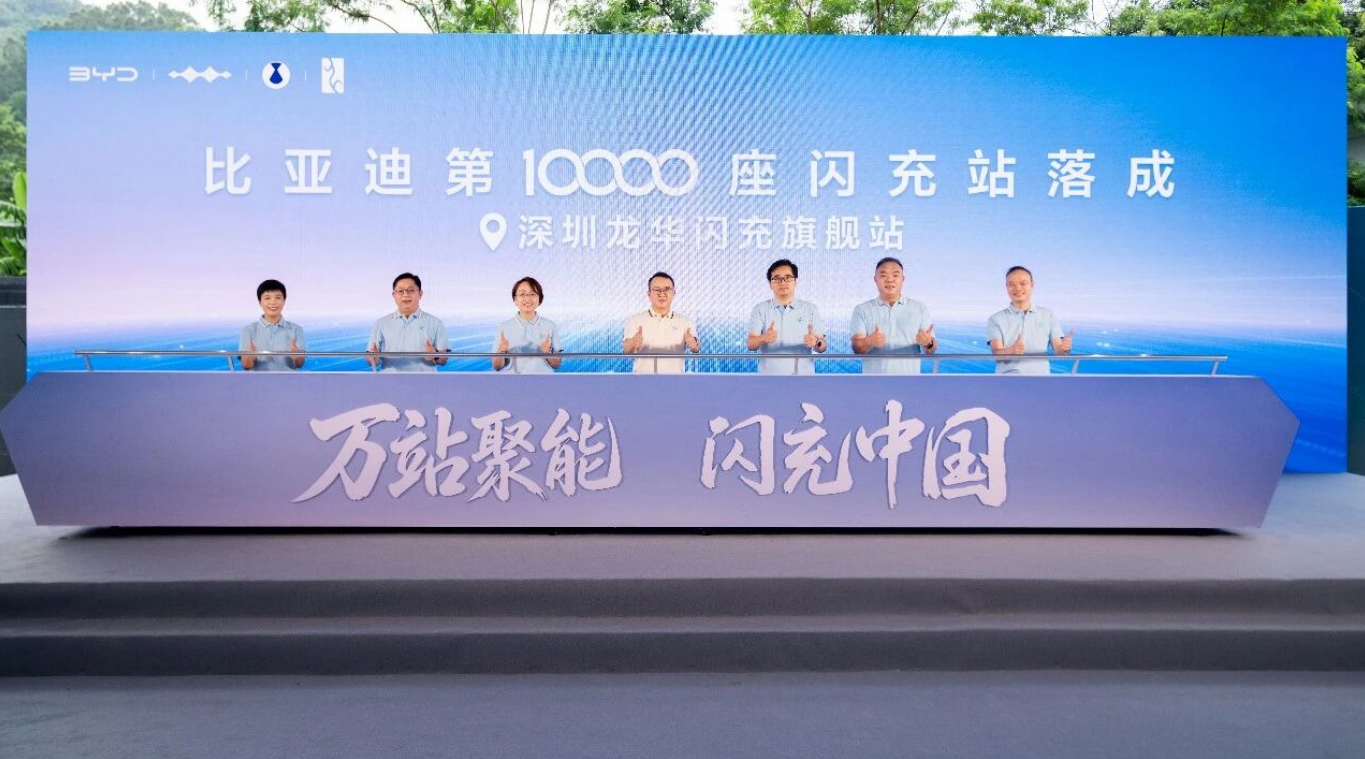
On the other side of the ledger, the same carmakers keep announcing buildouts measured in tens of thousands of sites. BYD has completed its 10,000th flash-charging station and targets 20,000 by year end. Geely plans more than 22,000 stations and 100,000 guns by the end of 2027. Chery has put 2029 on 20,000 second-scale charging and V2G sites.
Three different bets on the same losing station
BYD is building inside existing sites rather than acquiring land or requesting grid capacity upgrades. Of its 20,000 target, 18,000 are station-in-station units: a flash charger with an integrated storage buffer is dropped into an existing lot, three parking bays, no civil works. Brand and public relations general manager Li Yunfei described the construction logic as closer to installing an air conditioner, and said the several hundred million yuan involved is worth it at the company’s current scale.
Geely has gone the heavier route. Haohan Energy had more than 2,500 stations and 12,000 guns across 232 cities as of September, with a plan to reach 22,000 stations and 100,000 guns by the end of 2027, including more than 15,000 Jiyue-branded intelligent charging sites. Its fifth-generation charger pushes single-gun peak power to 2,250 kilowatts, while 800V architecture and 6C charging have moved down to the RMB 120,000 to 180,000 price band on Galaxy and Lynk models.
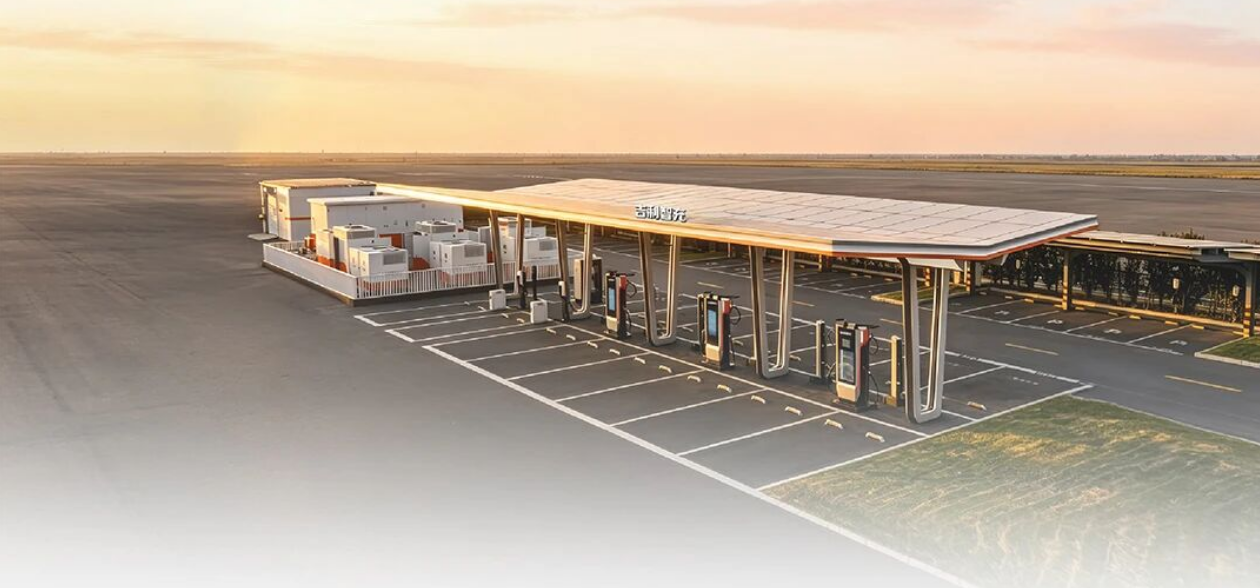
Even at that scale Geely went outside. On 28 September it contributed its Yiyi interconnection business and RMB 640 million in cash for 30 per cent of NIO Power, with NIO taking 10 per cent of Haohan Energy. Chief executive An Conghui said heavy assets cannot be carried by a single company alone.
Chery is treating the station as an energy asset. Its second-scale network is paired with vehicle-to-grid capability, and the company says a user participating in V2G trading for 100 days a year could earn more than RMB 3,000. Chery claims a 0.1C smart discharge strategy that it says leaves battery degradation close to zero, and its V2G hardware supports both Chinese and European standards in preparation for exports.
The battery question nobody has settled
Academics have not converged. Ouyang Minggao of Tsinghua University warned in April that extreme fast charging walks the boundary between safety and service life, and that long range, ultra-fast charging, high safety and low cost cannot all be optimised at once.
Field data is mixed. Geotab’s sample of 22,700 electric vehicles across 21 models found roughly 1.5 per cent annual degradation for mostly slow-charged cars against 2.5 per cent where fast charging exceeded 12 per cent of sessions.
Carmakers are answering with warranties and thermal control rather than data. BYD cites 89.2 per cent capacity retention after 500 cycles under continuous flash charging. Geely caps peak charging temperature at 65 degrees Celsius with predictive thermal management and claims a cycle-life gain above 20 per cent. Chery puts its Rhino battery at up to 5,000 cycles with a lifetime powertrain warranty. China’s new battery standard, effective July 2026, adds an external short-circuit test after 300 fast-charge cycles.
The strategic conclusion is that charging has become infrastructure rather than a service business. As 800V platforms reach RMB 150,000 vehicles, a matching fast charger is a condition of sale, and the network is funded out of vehicle gross margin rather than charging revenue.
Editor’s note: This is an adapted translation of the original Gasgoo report. It has been trimmed and restructured for readability for an international business audience. The full original (in Chinese) is at https://auto.gasgoo.com/news/202610/30I70476386C501.shtml.