A Chinese bearing manufacturer that supplies wheel hubs to carmakers has just won a robot order worth roughly RMB 300 million, in a year when its net profit fell by more than 90 per cent. Both facts belong to the same strategy.
The order
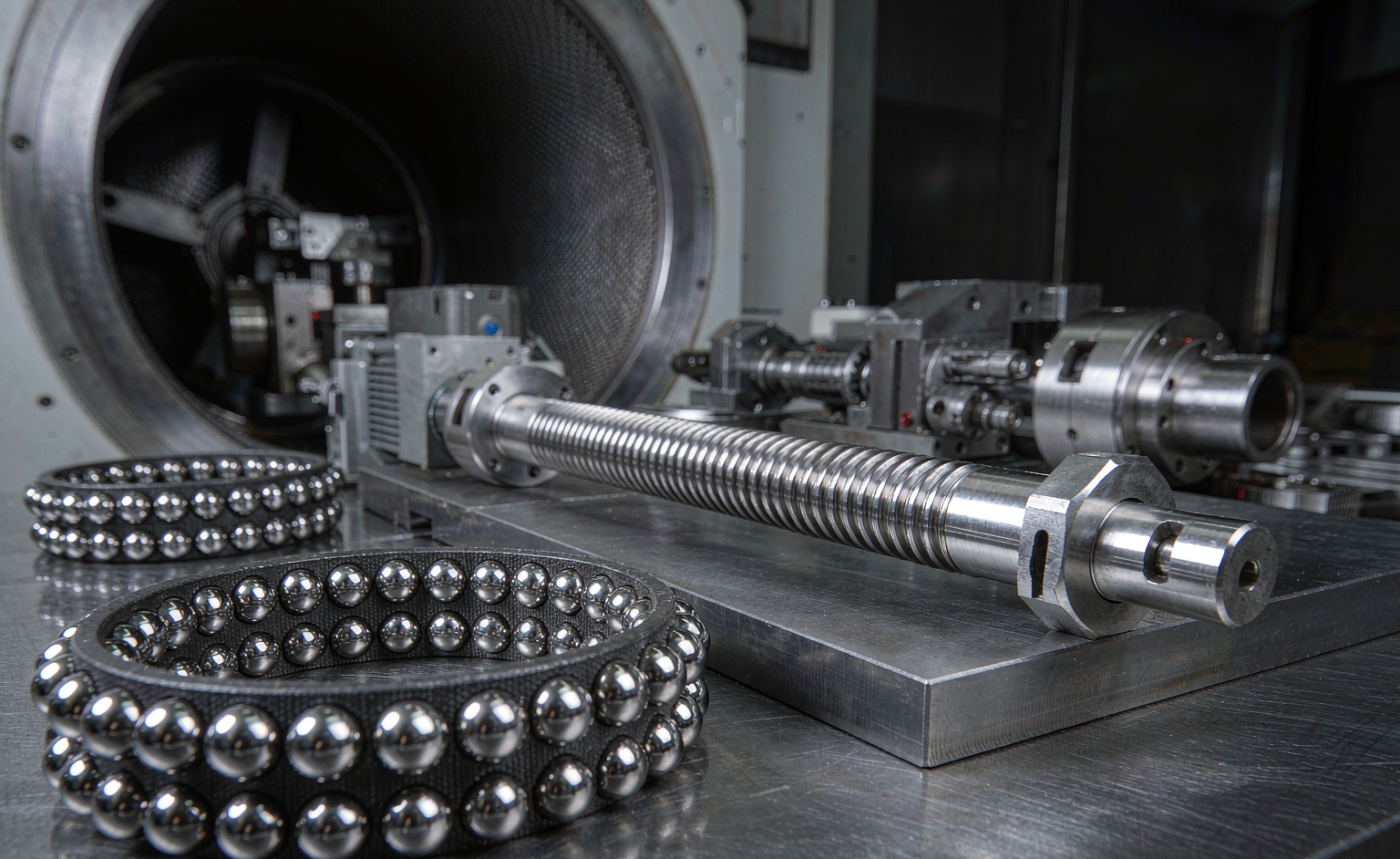
Zhaoju Intelligent, a joint venture between Zhejiang Zhaofeng Mechanical and Electronic and humanoid maker Leju Robot, won a bid for a robot innovation service platform project at a contract value of about RMB 300 million. Zhaofeng also previously won the Huizhou humanoid robot innovation centre project. Zhaoju makes ball screws, roller screws, steering screws and brake screws.
Zhaofeng is a national-level specialist little giant in wheel hub bearings, with close to 5,700 bearing products developed across the range from microcars to heavy trucks and from combustion to electric platforms. Hub bearings, screws and joint modules are all high-precision transmission parts. They share heat treatment and precision grinding, and the automotive-grade manufacturing system that has already passed OEM validation is the base for the crossover.
The numbers that do not fit
First three quarters of 2026: revenue RMB 499 million, down 2.28 per cent. Net profit attributable to shareholders RMB 28.21 million, down 90.68 per cent. Adjusted net profit RMB 38.07 million, down 49.86 per cent.
The company is spending into that hole. First-half research spending on robot components reached RMB 25.66 million. Several screw models are in customer sampling, with some already through performance testing and into small-batch trial production. Crossed roller bearings for embodied AI are in volume delivery. A next-generation cycloidal rotary joint module is in development.
In June the company proposed raising up to RMB 1.4 billion, with RMB 1.104 billion earmarked for an industrialisation project covering embodied-AI robots and high-end precision parts for intelligent driving. In September it changed the use of part of the proceeds, moving an existing 300,000-unit electric vehicle controller project onto its own funds and redirecting the unused money to the robot and smart-driving programme.
How a parts supplier buys into the ecosystem
Zhaofeng is not waiting for orders to arrive. It has taken three routes at once. Equity: a controlling joint venture with Leju Robot, plus investments in Kepler and DEEP Robotics. Commercial: an agreement with Niumai Robot, the wholly owned Chinese subsidiary of Germany’s Neura Robotics, under which parts are already being sold. Academic: a joint research centre on embodied AI and intelligent manufacturing with Zhejiang University’s advanced technology institute, where a postdoctoral project on linear actuators for humanoid robots has won funding from the China Postdoctoral Science Foundation.
That combination is the standard shape of Chinese supply-chain entry into robotics. A tier-two auto supplier cannot sell a robot directly, so it buys a seat at three tables: a joint venture with a body maker, a stake in two more, and a research chair that gives it access to talent and standards work.
Why the timing works
Frost and Sullivan puts global humanoid robot sales at 36,000 units in the first half of 2026, already above the 35,000 units sold in the whole of 2025, on revenue of USD 540 million. The category has crossed from validation into a volume upcycle, and the value is concentrating in transmission parts rather than in finished bodies.
That is where a bearing company has an advantage it did not have to invent. Screws and joint modules are the parts that determine payload, repeatability and noise, and they are the parts Chinese manufacturers have historically imported at a markup. A supplier with an automotive-grade quality system and an existing cost structure can undercut imports without matching their performance ceiling.
The risk is equally clear. A RMB 300 million platform project is not the same as a RMB 300 million production order, and innovation-centre contracts have a habit of being staged, revised or quietly descoped. Zhaofeng’s profit is down 90 per cent while it waits to find out.
Chinese auto suppliers have spent a decade being told they are commodity vendors. The ones now winning robot contracts are the ones whose processes were never commodity at all.
Editor’s note: This is an adapted translation of the original OFweek report. It has been trimmed and restructured for readability for an international business audience. The full original (in Chinese) is at https://robot.ofweek.com/2026-10/ART-8321201-8120-30709436.html.