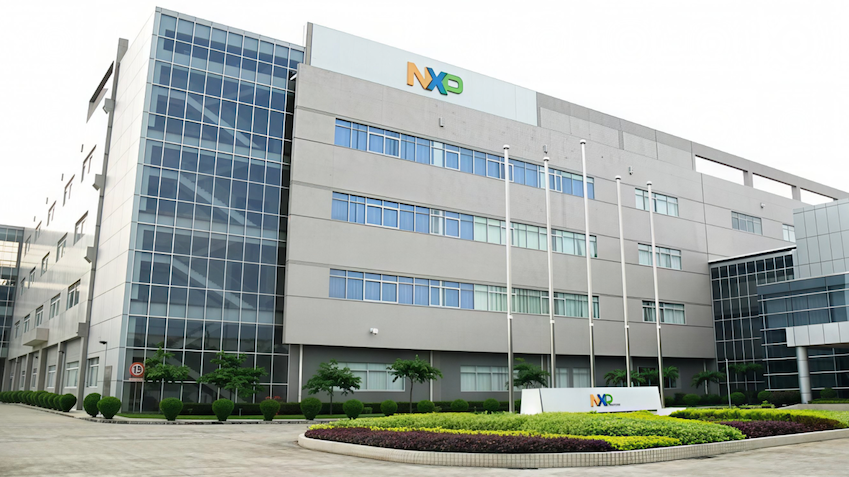
NXP has told distributors it will raise prices on parts of its portfolio from 1 January 2027. It is the third such letter this year, and the bill lands on Chinese carmakers that are already earning less per vehicle than a mid-range laptop.
The Dutch chipmaker cited persistent inflationary pressure across materials, energy, labour, logistics and supplier inputs. It sent earlier notices in March and May 2026. NXP is the reference supplier for automotive semiconductors, with the S32 processor family, the S32N5 central compute platform, in-vehicle networking chips and radar silicon in production across Chinese model lines.
The arithmetic of a 3.3 per cent industry
China’s auto industry booked RMB 8.04 trillion of revenue in the first nine months, up 2.6 per cent, on costs of RMB 7.16 trillion, up 3.8 per cent. Total profit fell 23 per cent to RMB 267.5 billion, and the sales margin came in at 3.3 per cent, near a four-year low. On those numbers the average car sold in China earns its maker under RMB 5,000.
UBS estimates that memory price inflation alone can add several thousand renminbi, and in high-end cases more than RMB 10,000, to the cost of a single advanced driver-assistance vehicle. That is not a component negotiation. It is a margin event.
Substitution is already the live strategy
The shortages have arrived faster than the price letters. Li Auto told buyers of the MEGA that Samsung OLED screens were unavailable and would ship with a 29-inch 6K LCD instead, with a bulk screen-replacement service from 1 March 2027 and a three-year service package as compensation.
In late October, MEGA customers who had locked orders with CATL’s 5C ternary battery were told the cells were not available and that the cars would ship with Li Auto’s in-house Lianshan pack instead. Buyers could accept the swap plus RMB 3,500 of benefits, or cancel for a deposit refund and RMB 5,000 in compensation. In July, a headlamp supply wobble on the i6 cut about 4,000 units from that month’s output.
What this does to the 2027 model year
Chinese OEMs responded to the first two NXP letters by dual-sourcing and by pushing domestic alternatives into body controllers and infotainment. The third letter, timed for a January effective date, turns that into a planning assumption rather than a hedge. Every 5 per cent of bill-of-materials that moves to a domestic supplier is revenue that leaves NXP, and every quarter of delayed qualification is margin that leaves the carmaker.
Watch the substitution rate, not the list price. A price rise that sticks across a 3.3 per cent margin industry is a market share transfer in progress.
Editor’s note: This is an adapted translation of the original Chedongxi report. It has been trimmed and restructured for readability for an international business audience. The full original (in Chinese) is at https://chedongxi.com/p/379207.html.