Lululemon’s China Sales Grew 30%. Then They Put a Japanese War Drum on the Great Wall
Lululemon on placed a Japanese taiko drum on a beacon tower of the Great Wall of China.
Not a metaphor. This happened on May 30. The company flew in Chinese TV star Zhu Yilong to beat the drum on camera. The drum art team they hired specialised in Japanese taiko. His technique was visibly Japanese. The drum itself was Japanese. The beacon tower was built to signal the approach of foreign armies. By 1933, Chinese soldiers were using it to shoot back at one.
The stunt was supposed to go viral. It did.
Lululemon’s China sales rose 30% in 2025 while the brand’s global profit fell. They had the right product, the right price point, and exactly the right customer: affluent, cosmopolitan, culturally confident. Shanghai’s upper-middle class flies to Tokyo on Fridays. Sushiro queues snake through high-end malls. This demographic does not carry the anti-Japan sentiment that runs hot in other parts of Chinese society. They buy Japanese skincare, drive Japanese cars, and consider Kyoto a second home.
None of that gave lululemon any cover. Loving Japan is one thing. Placing a Japanese taiko drum on a monument to Chinese resistance against Japan is another. Great Wall beacon towers do not belong to the lifestyle category. They belong to national memory. Lululemon found out the hard way that those two categories do not merge.
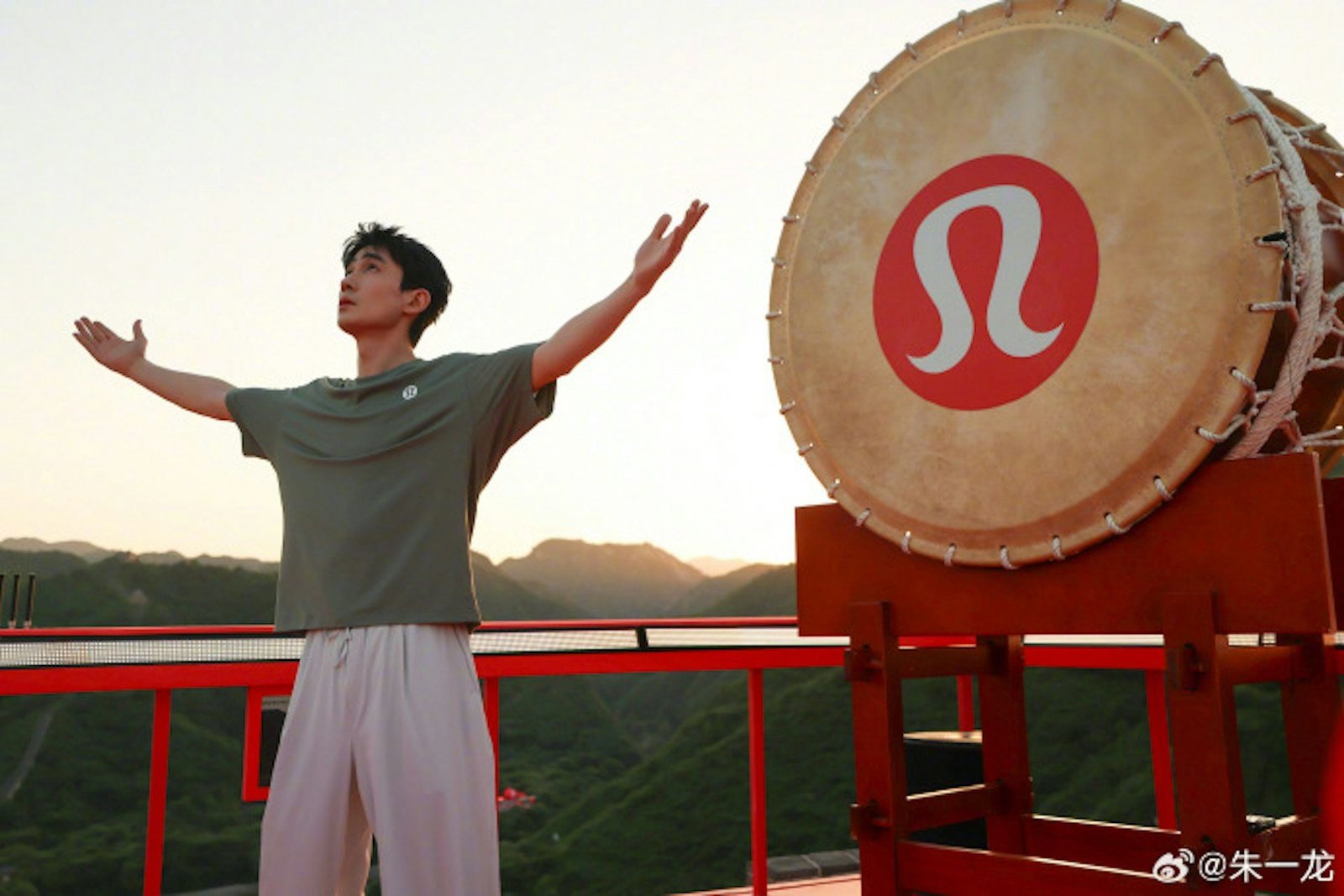
The Great Wall was built to stop nomads, not Japan.
For most of its history, it faced north, raised against the Xiongnu, the Mongols, the steppe confederacies that swept into China across centuries. When the Manchu Qing dynasty conquered China in the 17th century and absorbed Mongolia and Manchuria as imperial territory, the Wall became strategically irrelevant. A defensive perimeter with nothing left to defend.
Then came 1931.
Japan invaded Manchuria in September of that year. By 1933, Japanese forces had pushed south to the Wall itself. The battles for passes including Gubeikou (古北口), north of Beijing, were fought along its length. Over sixty thousand Chinese soldiers died at those gates trying to stop Japanese forces from breaking into China proper. They defended the passes for weeks, taking heavy casualties. But when the Tanggu Truce was signed in May 1933, they were ordered to withdraw. The line was not broken until the political compromise. But the image of men dying at the Wall to keep an invading army out of China lodged itself permanently in national memory.
A 1935 film made in direct response to the invasion gave that memory its lyric. That lyric became the national anthem of the People’s Republic of China. Most Chinese people know the words: “With our flesh and blood, we shall build a new Great Wall.”
The Wall was no longer an abandoned fortification. It had become the symbol of Chinese survival against Japan.
Chiang Kai-shek, then president of China, commended the units that took the heaviest losses at Gubeikou with a formal honorific: the Great Wall Corps. That unit still exists. It is one of the ROC Army’s elite formations, stationed today in Chiayi County, Taiwan. Its badge shows the Great Wall climbing a ridge to a fortified tower, with the ROC national flag flying from its ramparts.
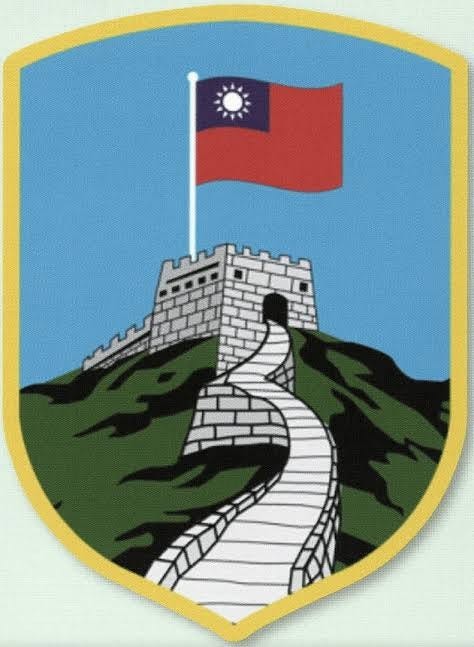
The lyric plays at every PRC ceremony. The badge sits on a sleeve in Taiwan. Both sides of the strait carry this memory. The Wall means the same thing to both.
When Lululemon placed a Japanese taiko drum on a Great Wall beacon tower, it did not stumble into a fringe cultural sensitivity. It put a piece of Japanese aesthetic culture on the load-bearing symbol of Chinese nation-building.
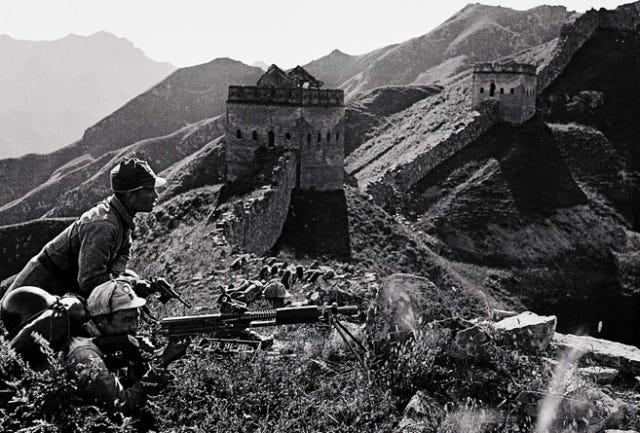
Over the fourteen years of China’s War of Resistance, fighting along the Great Wall came and went in waves. A bloody battle in one pass, months of silence, then the crack of rifles again at another section. It was never a single front — it was a recurring wound.
Lululemon’s response accelerated the damage.
Promotional posts disappeared. No formal apology followed. The absence of a direct, public acknowledgment read as evasion rather than humility. A containable crisis became a boycott. Not because Lululemon’s Chinese customers are reflexively anti-Japan. But there is a categorical difference between embracing Japanese culture and watching a foreign brand treat the most charged site in Chinese historical memory as a marketing backdrop.
That pivot from crisis to boycott was not inevitable. It was built, one deleted post at a time.
China is rebuilding cultural confidence. Guochao — literally ‘national wave’, the movement to reclaim Chinese aesthetics in contemporary design and consumption — is its commercial expression: consumers who want to feel proud of where they come from, and will pay to feel that way. Even for foreign brands in China, contributing to that reconstruction earns loyalty that no standard marketing campaign can replicate.
Adidas has run this play well. Their line of sportswear featuring traditional Chinese-button closures needed no campaign. The product spoke for itself. Their annual Chinese New Year sneaker collection works on the same logic. They say Chinese New Year, not Lunar New Year. That is not a small decision.
“Lunar New Year” gained traction in Western institutions during the 2010s, driven partly by Korean and Vietnamese diaspora communities who celebrate Seollal and Tết respectively. The logic was pluralism. The problem is that the Spring Festival (春节) originated in China. When Apple, Nike, and major retailers quietly retired “Chinese New Year” from their seasonal communications, the message received in China was not “we acknowledge all of Asia.” It was “we have made Chinese culture anonymous.” Pluralism, in practice, meant removing the origin label from a holiday that had one. That registered as erasure, not inclusion
Adidas chose specificity. Chinese consumers noticed.
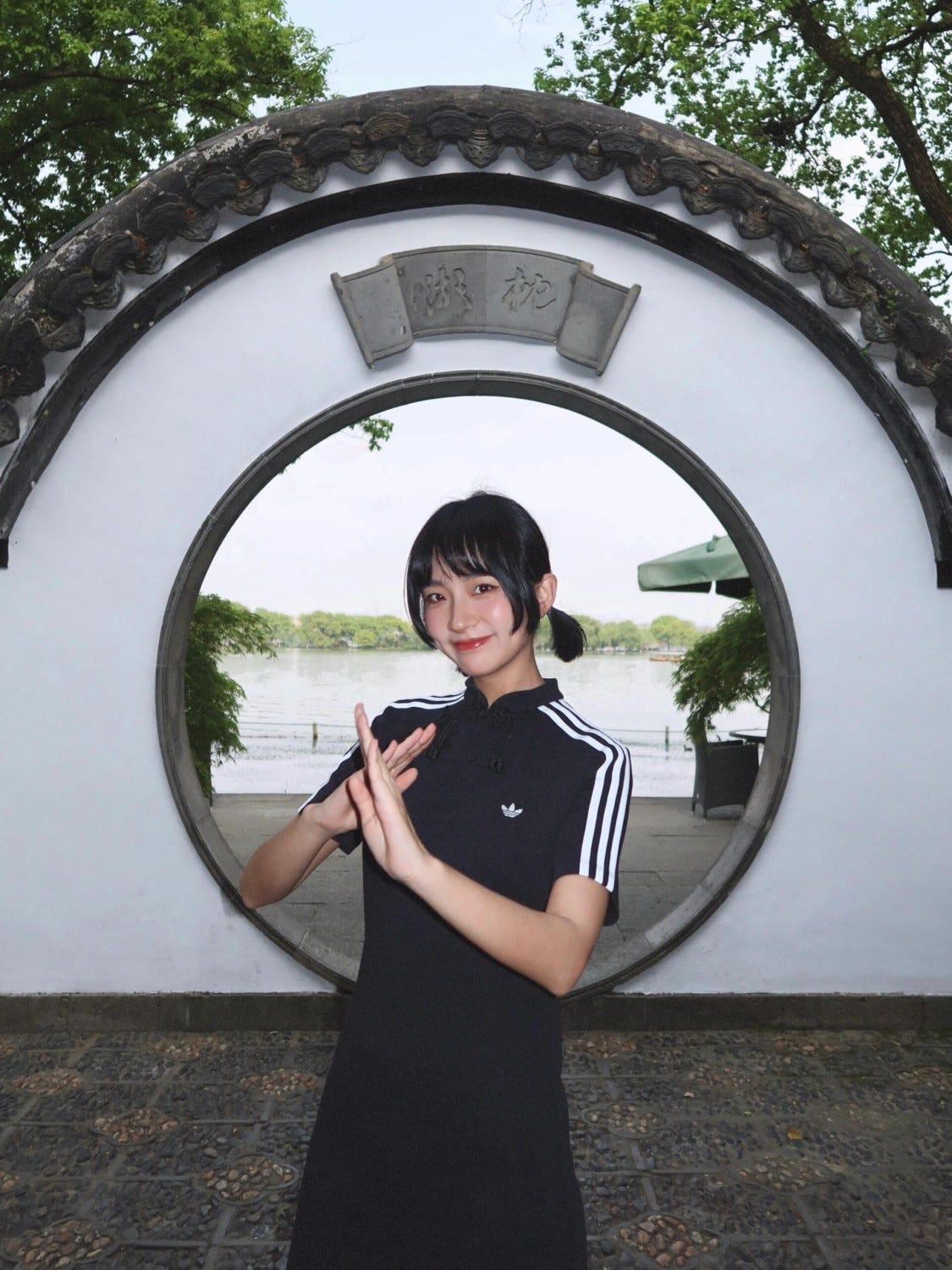
For decades, Western was aspirational in China. To own Western was to arrive. That asymmetry is gone. Today’s affluent Chinese consumer does not need foreign validation. What they want from foreign brands is not admiration but respect: the sense that the brand sees China as a full equal. There is a difference between those two things. Chinese consumers can feel it.
Either Lululemon did not understand Chinese culture, or they understood it too well. Incompetence or contempt. Neither is recoverable by deleting a post.
The more sophisticated trap is one Lululemon approached but did not fully stumble into.
East Asian cultures share deep aesthetic and ritual DNA. As China reconstructs its cultural heritage, it regularly reclaims elements that also exist, sometimes more vividly, in Japan and Korea. A foreign brand reaching for something authentic for the Chinese market can end up substituting Japanese aesthetics for Han ones. Chinese consumers have a precise phrase for this: 以倭代汉— ‘passing off Japanese as Han.’ It is not received as a mistake. It is received as an insult.
The risk compounds. Use Korean aesthetics to represent China and you can simultaneously alienate Chinese consumers who feel erased and Korean audiences who feel their culture has been harvested as a prop. One careless brief. Two damaged markets.
Lululemon’s error was not this subtle. Chinese drum culture is not obscure or dying. Upright ceremonial drumming, entirely distinct from Japanese taiko in posture, grip, and instrument construction, is practised across China. There was no ambiguity to hide behind. They hired a taiko team, placed a taiko drum, trained their celebrity in taiko technique, and called it guochao. That is not a cultural grey zone. That is a research failure that required active effort to achieve.
No consultant checklist catches this.
The most accurate read on China’s national sentiment does not come from Chinese consultants who know how things look from inside the culture, or from Western executives who completed a Shanghai posting. It tends to come from Japanese nationals who have spent years living in China.
Call it an asymmetric advantage. Japanese long-termers in China know Japanese cultural forms well enough to spot when something Japanese is being mislabelled as Chinese. And they have lived long enough inside Sino-Japanese social dynamics to absorb something that takes years to understand: Chinese people hold hospitality and hostility toward Japanese people in simultaneous suspension, often in the same conversation, sometimes in the same person. That is not a contradiction you can read about. It has to be lived.
AEON, the Japanese retail group, operates across China. Their stores are consistently full. AEON never pretended to be Chinese, never confused its own identity with its market, and never tried to flatter its way into Chinese wallets. It showed up, read the room correctly for decades, and stayed.
The drum was on the beacon tower because Lululemon never found that advisor. AEON learned the same lesson in year one.

Looks more Chinese – https://en.wikipedia.org/wiki/Drum_Tower_of_Xi%27an#/media/File:Xi'An_Drums.jpg
Not so Japanese – https://en.wikipedia.org/wiki/Taiko#/media/File:TaikoDrummersAichiJapan.jpg