The global cleaning robot market is still growing at a double-digit rate, and the two Chinese leaders reported the same quarter with opposite outcomes. IDC put second-quarter global shipments of home cleaning robots at about 11.205 million units, up 21.5 per cent, with robot vacuums alone at 7.885 million units, up 22 per cent.
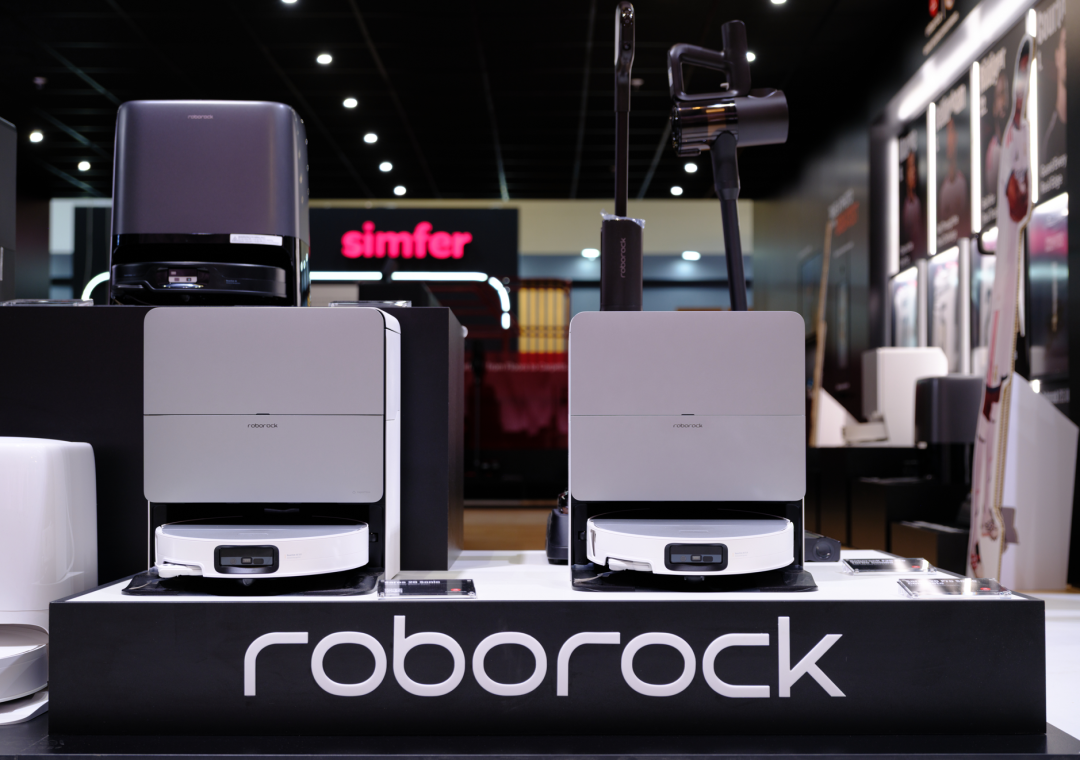
Roborock, the global volume leader, reported revenue of RMB 15.699 billion for the first nine months, up 30 per cent, and net profit of RMB 1.466 billion, up 41.23 per cent. Third-quarter revenue of RMB 5.614 billion grew 34.85 per cent, an acceleration on the first half. The stock rose 18 per cent on the result and the company carried a market value of RMB 33.5 billion.
Ecovacs reported revenue of RMB 14.987 billion, up 16.39 per cent, and net profit of RMB 1.368 billion, down 3.47 per cent. Net profit excluding non-recurring items fell 19.7 per cent.
Export is the growth engine for both
Roborock’s result rests on overseas volume. Its international revenue grew 53 per cent in the first half and rose to 60 per cent of the total, supported by category leadership in several markets and heavy spending on brand.
Ecovacs took a similar route out of a soft domestic market. Overseas revenue reached RMB 5.11 billion in the first half, up 45 per cent and 49 per cent of the total, while domestic revenue grew 1.6 per cent.
The divergence is in what each company did with the same export opportunity. Ecovacs spent RMB 4.123 billion on sales in the first three quarters, 27.5 per cent of revenue. Roborock spent RMB 3.445 billion, or 22 per cent, and put more of the difference into product development. Both strategies produced revenue growth. Only one produced profit growth.
Ecovacs has a second, more mechanical problem. Memory chip prices rose sharply year on year, and the company had stockpiled semiconductor components ahead of the increase, which pushed cash flow negative and lifted inventory to RMB 5.41 billion at the end of September, up 66 per cent. Rising input costs and a stockpile built to defend against them both landed on the gross margin line at once.
Concentration that does not soften competition
The market is concentrated and getting more so. Five brands, Roborock, Dreame, Ecovacs, Xiaomi and MOVA, account for about 75 per cent of units and 82 per cent of value. Concentration has not reduced the intensity of competition, it has focused it.
Dreame has taken the second position with 21.2 per cent of global shipments on the back of international growth, pushing Ecovacs to third at 16.2 per cent. The response from everyone in the category has been more aggressive pricing and more marketing spend, which grows revenue and compresses margin in the same motion.
The next phase of the competition is technical. The differentiator is increasingly the combination of large models with 3D visual perception, which produces better handling of cluttered rooms and better cleaning decisions rather than a better brush. Firms that can fund that development out of gross margin will keep the pricing power. Firms that have to fund it out of a promotional budget will keep buying share.
Editor’s note: This is an adapted translation of the original OFweek report. It has been trimmed and restructured for readability for an international business audience. The full original (in Chinese) is at https://robot.ofweek.com/2026-11/ART-8321203-12003-30709935.html.