Tariffs did not stop Chinese cars. New trade restrictions are arriving anyway.
In the first three quarters of 2026 China exported 1.83 million vehicles to the European Union, up 87 per cent year on year and already above the whole of 2025, according to Cui Dongshu, secretary general of the China Passenger Car Association. The anti-subsidy duty on China-built battery-electric cars remains in force, and the fast-growing hybrid categories have now moved onto the negotiating table.
For Europe’s car industry the competition is getting harder to answer simply. Chinese brands keep taking share inside Europe, while European carmakers’ engineering, manufacturing and supply chains remain tightly bound to China. Trade disagreements keep surfacing, and industrial cooperation cannot be avoided.
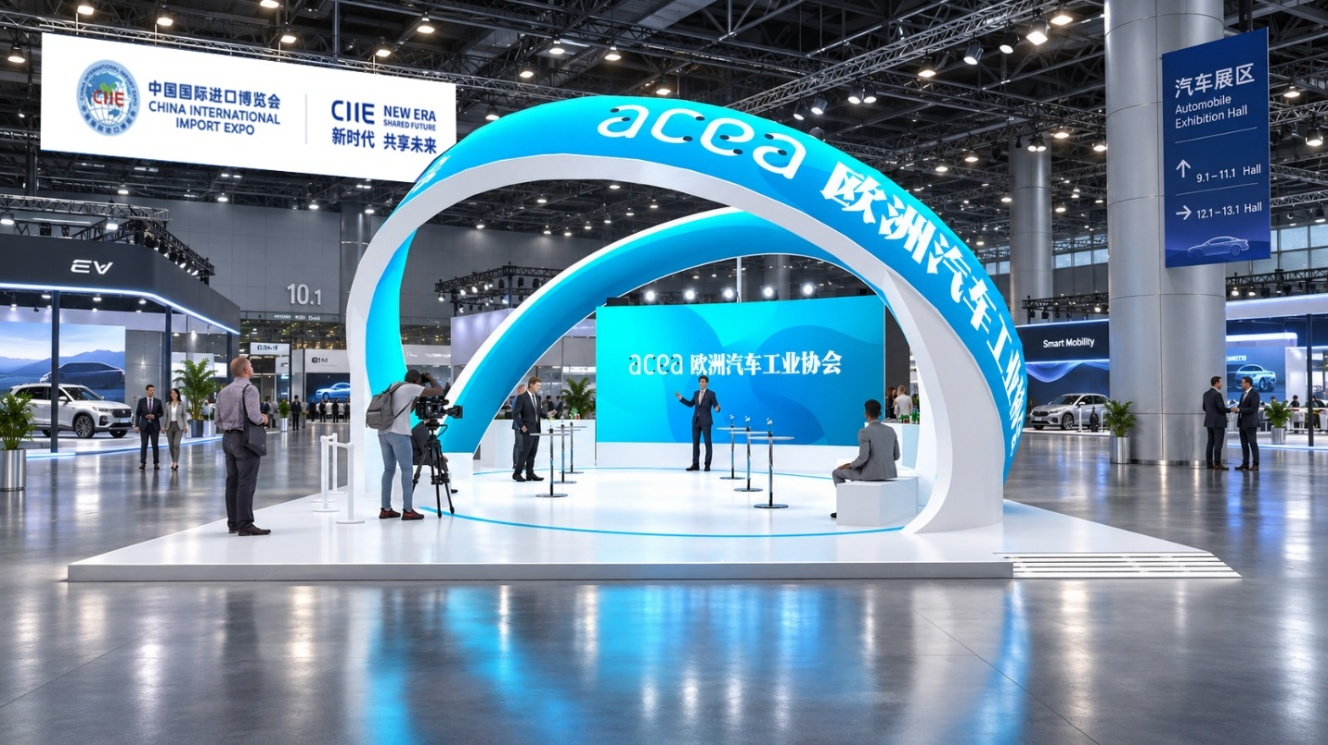
On 5 November, as the ninth China International Import Expo opened in Shanghai, ACEA, the association representing Europe’s major manufacturers, appeared as an exhibitor for the first time.
“Trade measures cannot solve all the industry’s problems. The auto industry itself should play a more active role, doing research, speaking up, and using its expertise to support solutions in international trade,” Zhang Shuo, chief representative of ACEA’s Beijing office, told Gasgoo.
After tariffs, a quota
In October 2024 the EU imposed countervailing duties on China-built battery-electric passenger cars. The extra duty raised the cost of some models entering Europe, yet exports kept growing. Cui’s data shows exports of plug-in hybrids to the EU up 372 per cent in the first three quarters of 2026, and ordinary hybrids up 91 per cent.
Plug-in hybrids have now entered EU-China trade talks. At the second round of the trade and investment consultation mechanism in Beijing on 8 and 9 October, the two sides reached an understanding on hybrid vehicle trade, with upward adjustments based on the 302,000 hybrids the EU imported from China in 2025.
Foreign media reported on 12 October that the EU plans a safeguard measure capping hybrid imports at 350,000 units in the first year, rising 6 per cent a year for four years. The detailed implementation rules are still unclear.
A tariff changes the cost of importing. A quota changes whether you can import at all. Companies now have to plan not only the price at which they enter Europe but the number of cars they are allowed to bring.
The pressure behind this is visible in ACEA’s own figures. In a statement on 9 October the association said Chinese brands’ share of Europe’s ordinary hybrid market rose from 2 per cent in 2024 to 14 per cent in the first half of 2026, and their share of plug-in hybrids rose from 2 per cent to 25 per cent.
General secretary Sigrid de Vries warned that a sudden severe imbalance in the European market, with a price war resembling China’s, would deal a serious blow to the wider European economy.
ACEA’s concern is not only volume but the pricing behaviour behind it. At the same time the association welcomed the de-escalation achieved through consultation. Zhang called the October talks very important progress, saying negotiation helps create room for orderly market entry and future industrial cooperation.
Why a shrinking import market still matters
ACEA also has to answer its members’ concerns inside China, and one is the steady contraction of the imported car market. China’s whole-vehicle imports reached about 1.43 million units in 2014. By 2025 the figure had fallen to 476,000, down 32.4 per cent. In the first three quarters of 2026 imports fell a further 20.1 per cent to 288,000.
Against that backdrop ACEA made the super-luxury segment a priority at its first expo appearance. Ferrari, Lamborghini, Bentley, Rolls-Royce, Porsche and Aston Martin are taking part in a high-end dialogue, alongside China’s Hongqi Jinkuihua.
The practical ask is regulatory. Small-volume, high-value cars need a flexible rulebook, Zhang argues, because certification and technical compliance costs are hard to spread over low volumes. Europe, the United States, Japan, South Korea and Britain already run small-volume approval procedures. ACEA plans to lead a working group on luxury car industry development that would take these questions into sustained policy dialogue.
ACEA also opened a FUTUREDRIVEN HUB in hall 7.2 of the National Exhibition and Convention Center, positioned as an industry living room rather than a product stand, and put commercial vehicles on the agenda with Daimler Truck, Volvo Trucks and Scania executives. It has set up an “ACEA and Friends” mechanism to connect international manufacturers with leading Chinese supply chain firms, and co-authored a China automotive industry toolkit with Chinese think tanks.
Zhang sees room for cooperation on connectivity, autonomous driving, research investment and regulatory dialogue. Whether the working group produces actual regulatory proposals is the test, and it happens after the show closes.
Editor’s note: This is an adapted translation of the original Gasgoo report. It has been trimmed and restructured for readability for an international business audience. The full original (in Chinese) is at https://auto.gasgoo.com/news/202611/6I70477037C108.shtml.