The most consequential deal in China’s premium electric car market this autumn was not a car launch. It was a change in a shareholder register.
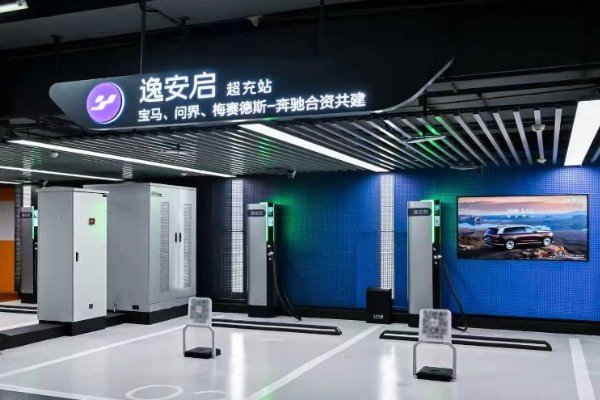
On 29 September, Seres completed the transfer of its stake in Yianqi, the premium fast-charging brand. BMW, Mercedes-Benz and AITO, the Seres brand, now hold 33.3 per cent each in a jointly operated network.
From tools to traffic
On 29 October the venture held a brand relaunch, issued a new identity, shipped version 3.0 of its app, and reframed its purpose. The old positioning was a charging tool. The new one is a premium user ecosystem entry point, which in practice means the company wants the app to own more of the customer relationship than a plug and a payment screen.
That is a familiar move for anyone who has watched charging businesses elsewhere. The asset is expensive, the electricity margin is thin, and the only durable upside is what happens around the charger. Coffee, retail, servicing referrals and data all monetise better than a kilowatt hour.
Why three rivals agreed
AITO has crossed one million cumulative deliveries and is now a genuine premium volume brand. That scale creates a problem the company could not solve alone: buyers of a car priced against German competitors expect charging to feel comparable, and building a dense high power network from zero is a multi-year, capital-heavy exercise.
BMW and Mercedes had the opposite problem. Both had invested in premium charging sites in China and both faced the utilisation arithmetic that comes with a small installed base of their own electric vehicles in the market. Sites that cannot be filled are not an asset.
Bringing the three together converts a duplicated cost into a shared one. The network stays open to every electric vehicle brand in China, which is the part that matters strategically. This is not three incumbents forming a bloc against Chinese manufacturers. It is three incumbents accepting that charging behaves like infrastructure, and infrastructure rewards density rather than exclusivity.
The template for Europe
The same logic is now circulating in Europe, where Chinese premium brands are entering markets that German manufacturers already cover with their own charging investments. The Chinese arrangement offers a template: rather than each brand defending its own corridor, pool the sites and compete on the product.
There is an obvious obstacle. Joint ventures among direct competitors require each party to accept that a shared asset weakens the differentiation story they tell dealers and shareholders. BMW, Mercedes and AITO have just demonstrated that the arithmetic overwhelms that objection once volumes are large enough on one side and utilisation is weak enough on the other.
The test will be whether the network actually densifies, or whether a jointly owned utility simply becomes a slower moving one. Three owners with equal votes is not a structure known for speed.
Editor’s note: This is an adapted translation of the original 36Kr report. It has been trimmed and restructured for readability for an international business audience. The full original (in Chinese) is at https://36kr.com/p/4058093363630984.