Qilinbo, a Chengdu company building software for embodied machines, has closed an angel round in the tens of millions of renminbi. Chengdu Fangcun Engine Technology and a group of individual investors put in the money. The company will spend it on core research, engineering headcount and commercial rollout.
Qilinbo was founded in December 2025 and does not build robots. It builds the layer above them: the software that decides what a single machine should do next, and the system that decides which machine in a group should do it.
Two engines, one architecture
The stack has a device side and a cloud side. On the device, the Lingyan Engine handles task understanding, planning and autonomous execution for a single robot. In the cloud, the Yanzhen system allocates tasks across different robot bodies, matches resources and coordinates joint work.
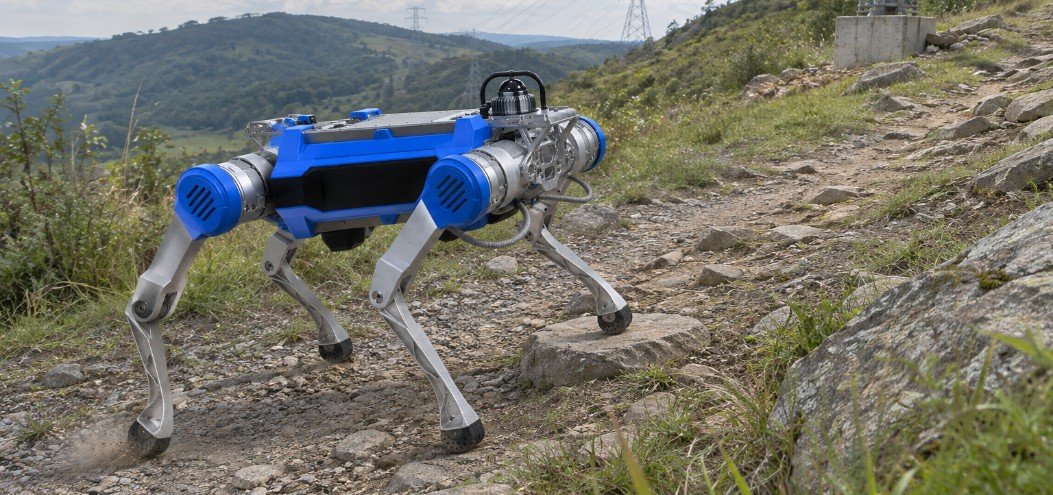
The division matters because it is where most Chinese embodied deployments currently stall. A robot dog that can walk a corridor is common. A robot dog that discovers an anomaly on the fourth floor, requests backup, and gets a second machine dispatched to the right point at the right time is not.
Qilinbo’s answer is that the device decides how a task is executed, while the cloud decides who executes it and in what combination. The Lingyan Engine is already portable across quadrupeds, industrial arms and humanoids, all of which can connect to the Yanzhen scheduler.
Why OpenHarmony is the sales argument
Co-founder and chief executive Tang Zuolin came out of Motorola’s embedded, chip and driver teams, then became a core contributor to the OpenHarmony base and to a domestic Python framework. That background shaped the product decision.
His reasoning is procurement-led. Mining, oilfields, energy and government projects carry explicit requirements on data autonomy and, increasingly, on domestic hardware. Many embodied systems in China were built on a single foreign compute platform, which becomes a problem at exactly the moment a project enters a regulated industry.
The second argument is cost. Domestic chips are adequate for on-device inference, and pairing them with OpenHarmony gives buyers more room on purchase price, supply channels and deep tuning. The catch is that domestic stacks demand full-stack tuning work, from kernel trimming and compilation to driver adaptation and operator optimisation. That is the team’s stated strength rather than a marketing line.
Education pays for the factory
Qilinbo’s first revenue is not industrial. It ships desktop tracked robots and desktop robot dogs to schools and universities, aimed at AI literacy courses and at teaching that combines HarmonyOS with embodied systems. That business already generates stable cash flow.
The education segment functions as the validation bed for both engines. Every teaching deployment produces task data against a known body and a known environment, which the team uses to iterate before moving to industrial quadruped and industrial arm deployments.
Beyond that, the target workloads are ones where people struggle to be present continuously. A campus patrol dog with a thermal imaging module collects heat readings at fixed points and sends them back, so a duty officer at a control desk can judge risk without walking the route. Oilfields, mines and forest fire prevention are on the same list.
Tang has said the company is watching humanoids and would deploy the Yanzhen system on them once a clear task loop exists in a specific setting. That is the correct order. The software layer is the durable asset, and the body is whatever the customer already bought.
Editor’s note: This is an adapted translation of the original 36Kr report. It has been trimmed and restructured for readability for an international business audience. The full original (in Chinese) is at https://36kr.com/p/4052696726328452.