Toyota Motor lifted its full-year guidance and set out a shareholder return programme worth up to USD 89 billion, a combination that pushed the world’s largest carmaker to its steepest single-day share gain in close to four decades.
The stock closed up 17 per cent on 5 November. Investors had spent the week selling artificial intelligence names after the US midterms and rotating into blue chips, and Toyota gave them a reason to stay.
The cash question, answered
Toyota will return up to JPY 14 trillion, about USD 89 billion, to shareholders by March 2031. The previous five-year window carried roughly JPY 7 trillion, so the commitment doubles.
Christopher Richter, a Japan autos analyst, said the market was surprised by both the upgrade and the payout. He pointed to the balance sheet: Toyota holds about JPY 9.5 trillion in cash, a reserve that has annoyed parts of the shareholder base for years and that he argues still needs to be worked down to lift return on equity.
Hybrids carried the quarter
Operating profit rose 34 per cent year on year in the July to September quarter, ahead of expectations, as higher petrol prices pushed buyers toward hybrids.
For the six months to September, revenue came in just under JPY 27 trillion, up 9.5 per cent. Operating profit reached JPY 2.19 trillion, up 9.2 per cent, and net profit JPY 2.24 trillion, up 26.1 per cent on strong hybrid demand, favourable exchange rates and cost reductions.
Toyota said a weaker yen and lower US tariffs partly offset the impact of falling sales in China. The company now expects operating profit of JPY 3.9 trillion, about USD 246 billion, for the year to March, a 15 per cent increase on its previous forecast.
The result validates a strategy that looked defensive for years. Rivals poured capital into battery-electric line-ups and then booked multi-billion-dollar impairments when demand softened. Toyota kept refining hybrid technology it commercialised with the Prius decades ago, and rising fuel costs from the Iran conflict turned that patience into margin.
A robotics division, not a robot car
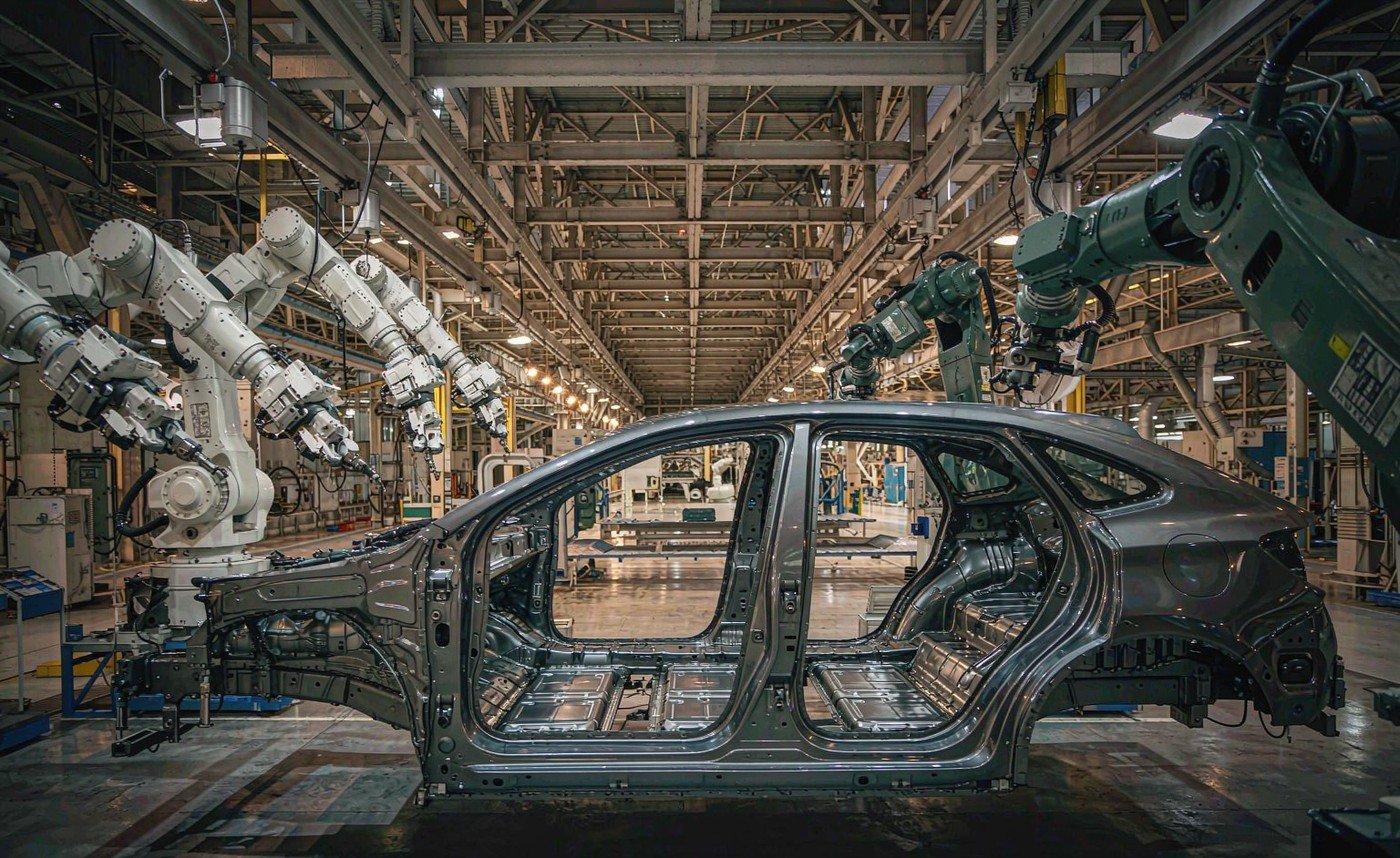
Buried below the financial headlines was a structural decision. Toyota said it will establish a dedicated robotics business unit to supply robots to manufacturing and other industries, and to treat the unit as a pillar of future growth.
That places an incumbent automaker directly into the industrial automation market that Japanese suppliers have dominated and that Chinese entrants are now pricing down. Toyota has spent years building automation for its own plants. Selling that capability outward turns an internal cost centre into a product line.
On China, chief financial officer Yoichi Miyazaki said higher fuel prices have weighed on consumer confidence in an intensely competitive market, but that the decline has been contained. “We have arrested the decline in market share and are now beginning to win some of it back,” he said.
China has become a reference point for the global industry across manufacturing, product design, software and robotics, and Toyota’s new unit will be measured against Chinese cost curves rather than Japanese ones.
Editor’s note: This is an adapted translation of the original Gasgoo report. It has been trimmed and restructured for readability for an international business audience. The full original (in Chinese) is at https://auto.gasgoo.com/news/202611/6I70477207C101.shtml.