The first Chinese AI-generated feature film to receive a theatrical release licence has now been in cinemas for 11 days. It has taken RMB 1.678 million, and on weekdays some screenings sell fewer than one ticket.
That is awkward for Bona Film Group, the producer. It is more awkward for Shengshu Technology, the Tsinghua-linked video model company credited as chief technical partner. The film, a Sanxingdui-themed production, was supposed to be the proof that Shengshu’s Vidu model belongs inside film production. Instead it is the counter-example.
RMB 6 billion raised, and a deadline slipping
Shengshu has raised more than RMB 6 billion this year. A USD 500 million B+ round in July, according to Bloomberg, took its post-money valuation above USD 2 billion, and the company is preparing a Hong Kong listing. The market’s question has changed from how good the technology is to how much money it makes.
The technology record is real. Founder Zhu Jun is deputy director of Tsinghua’s Institute for AI. The team’s U-ViT architecture was published in September 2022, three months before OpenAI’s DiT. Vidu launched in April 2024 as the first Chinese video model publicly benchmarked against Sora, and its standout capability is reference-image-to-video: upload a few images of a character, prop or location, and the model holds them consistent across shots. Overseas creator communities rate that highly for anime, brand work and serialised shorts. They also note consistency degrades past about five reference images, and that Kling is stronger on longer clips and human faces.
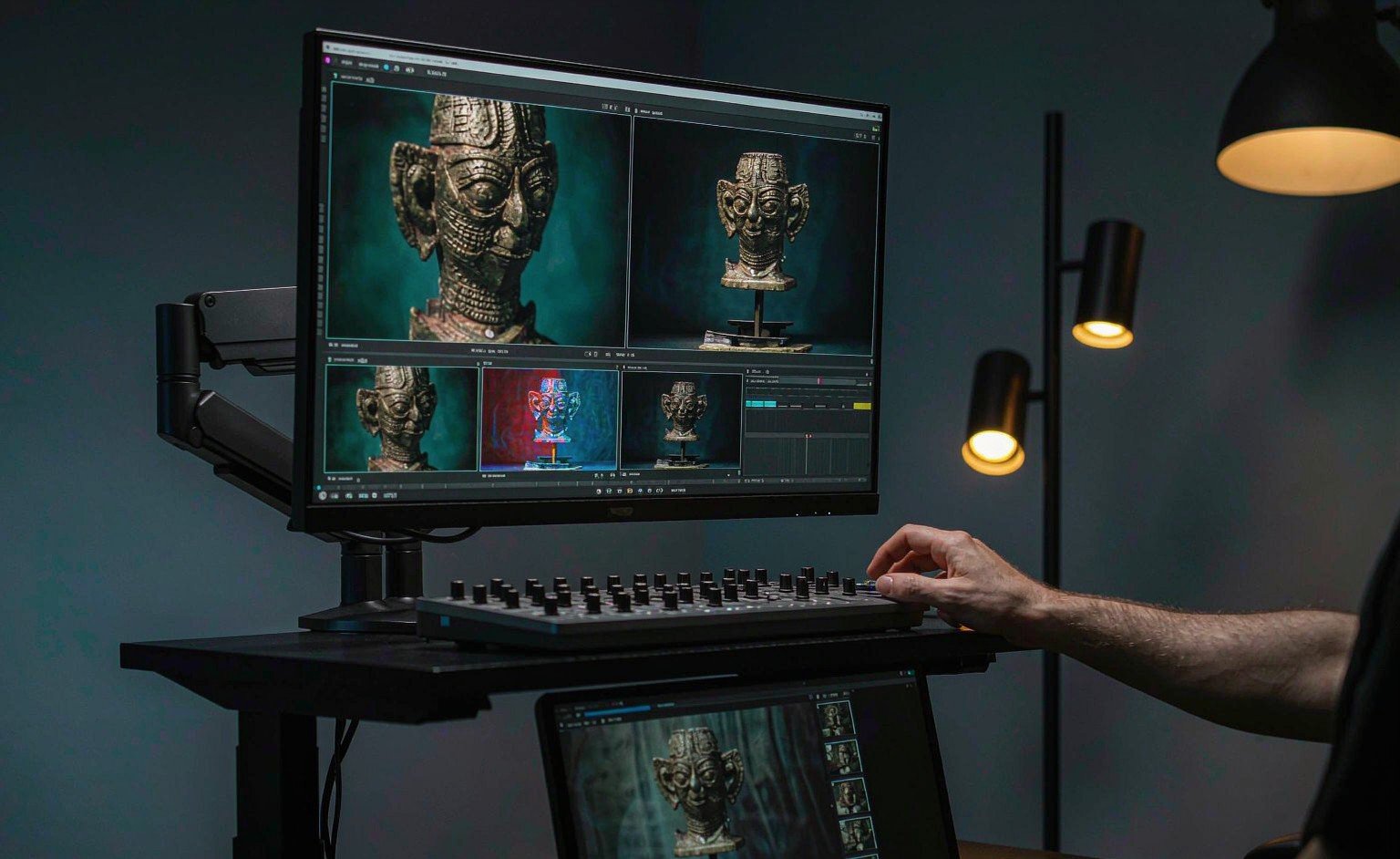
Third-party rankings trace the same profile. Vidu Q3 topped the Artificial Analysis chart in February and had fallen to ninth by April. The Q4 Preview released in October entered third on the image-to-video leaderboard and did not appear on text-to-video at all, where its best result was 25th.
The price war nobody can win
Commercially the early numbers were good. Shengshu says annual recurring revenue passed USD 20 million within eight months of launch, with more than half of generation volume coming from advertising, e-commerce and anime. At the A+ round in February it claimed revenue growth above 10-fold. It has published no figures since.
The problem is that this is the same business ByteDance, Kuaishou and Alibaba are in: sell model calls, bill by the second, rely on clients who burn a lot of footage. The Q4 Preview launched at RMB 0.09 per second for 540p. Kling and MiniMax cut prices in the same window. Google’s Gemini Omni 1.2 Flash pushed 720p to about USD 0.07 per second. Kling raised close to USD 3 billion in July at an USD 18 billion valuation. ByteDance’s Seedance 2.0 is reported to be booking more than RMB 1 billion a month.
Platforms can lose money on models because they own distribution. Shengshu cannot. Its differentiation sits precisely where the competition is thickest, in anime shorts and advertising, which is also the most price-sensitive segment.
The world model pivot
The company’s answer has been to reframe itself upward. It open-sourced the Motus world action model with Tsinghua in December 2025, released Motubrain in April and Motus2 for dexterous robot manipulation in September. By the USD 500 million B+ round in July it was describing itself as a general world model company, with Vidu as the digital half and robotics as the physical half.
The logic is not subtle. Video generation is a content tool. World models connect to embodied intelligence and to AGI, and the valuation ceiling is completely different. More than 30 companies claimed to be building world models in the first half of 2026, spanning video, 3D, embodied foundation models and games. Li Fei-Fei’s World Labs opened a June paper by noting that world model is simultaneously the most important and the most abused term in AI. Yann LeCun has argued repeatedly that modelling action by generating pixels is wasteful and doomed. ByteDance researchers found in an ICML 2025 paper that video models are near-perfect inside their training distribution and fail outside it, imitating the nearest training sample rather than learning physics. Shengshu says Motus beats the mainstream Pi0.5 model by about 40 per cent on multi-task success, a number drawn from its own releases and simulated benchmarks.
OpenAI offers the more telling precedent. In March it shut down the Sora app and API and moved the research team to world simulation and robotics. Even OpenAI concluded video generation was hard to monetise, and it has ChatGPT revenue underneath to fund the long game. Shengshu has a video API and a shareholder that is also a competitor: Alibaba Cloud led the roughly RMB 2 billion B round in April, one day before Vidu’s full range went live on Alibaba Cloud’s Bailian platform.
The listing timetable has slipped from the first half of 2026 to a filing next year. In the same period MiniMax, which grew revenue nearly threefold to USD 117 million in the first half while losing USD 358 million, fell back below its IPO price. Zhipu lost more than 40 per cent in September. The higher the private mark, the higher the public price has to be, and the longer the wait, the more selective the buyers get.
Editor’s note: This is an adapted translation of the original 36Kr report. It has been trimmed and restructured for readability for an international business audience. The full original (in Chinese) is at https://36kr.com/p/4062358515307657.