Nine Chinese EV challengers and alliance brands reported October deliveries, and the split was unusually clean. Four posted gains on both a yearly and monthly basis. Five declined on at least one measure, and two of those halved.
The leaders
Leapmotor delivered 106,100 vehicles worldwide in October, up 51 per cent year on year and 0.4 per cent month on month, its fourth straight month above the 100,000 mark and another monthly record. The four product families, A through D, all contribute volume, and overseas expansion is now adding to the total. Year to date the company has delivered 772,700 units against a full-year target of 1 million, which requires an average of 113,700 a month across November and December.
Xpeng delivered 50,200 vehicles, up 19.6 per cent year on year and 21.8 per cent month on month, a record. MONA capacity ramp and the L03 build-up drove the sequential gain, and overseas deliveries reached 13,326 units, up 166 per cent and a record of their own. The newly launched MONA L05 only begins volume delivery on 1 November.
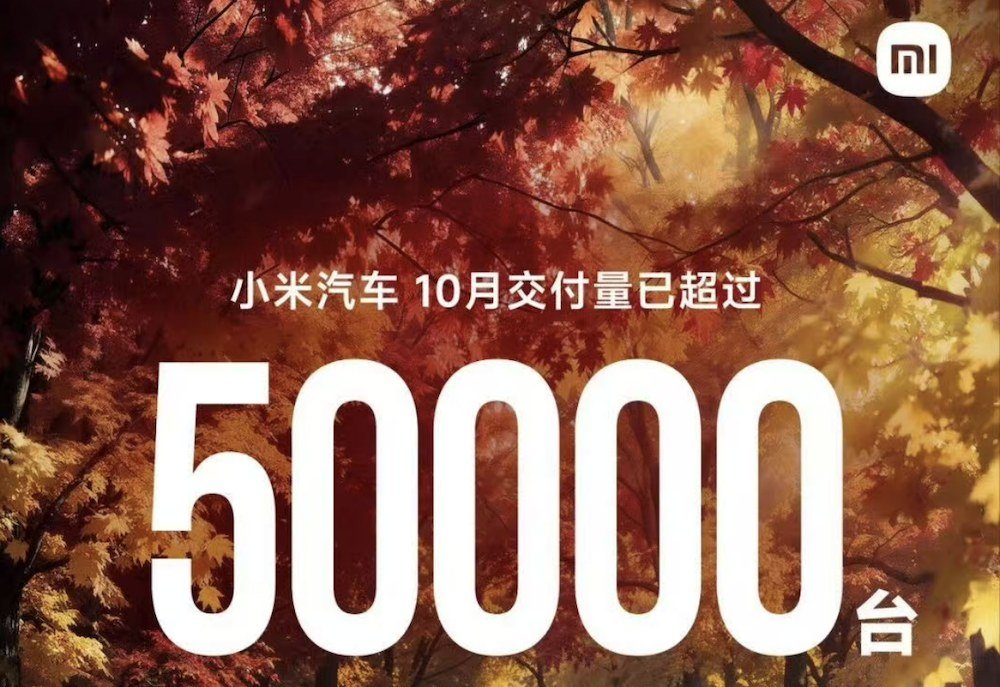
Xiaomi cleared 50,000 for the second time, after December 2025, in a third consecutive monthly step from over 30,000 in August and over 40,000 in September. The Pengcheng series, which began delivery on 12 September and contributed over 10,000 units in 19 days that month, had its first full month and drove the increase alongside the SU7 and YU7. Retail volume for January to September was 286,500 units, putting the ten-month total near 336,500 against a 550,000 annual target that now needs 106,800 a month.
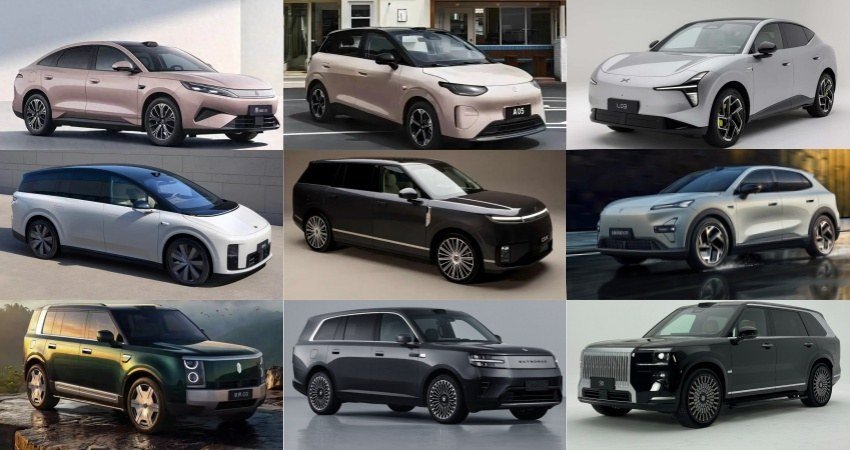
GAC’s Aion and Hyptec line delivered 42,400, up 56.79 per cent year on year and 19 per cent month on month, its eighth consecutive month of annual growth.
The decliners
Nio group delivered 34,200 vehicles, down 15.2 per cent year on year and 8.5 per cent month on month. The Nio brand accounted for 18,100, up 5.7 per cent year on year but down 15 per cent month on month. Onvo delivered 8,383, roughly halving year on year, and only Firefly grew on both measures at 7,738 units. The group has had no new mainstream model since the ES9 launch and is running on the ES8 and ES9.
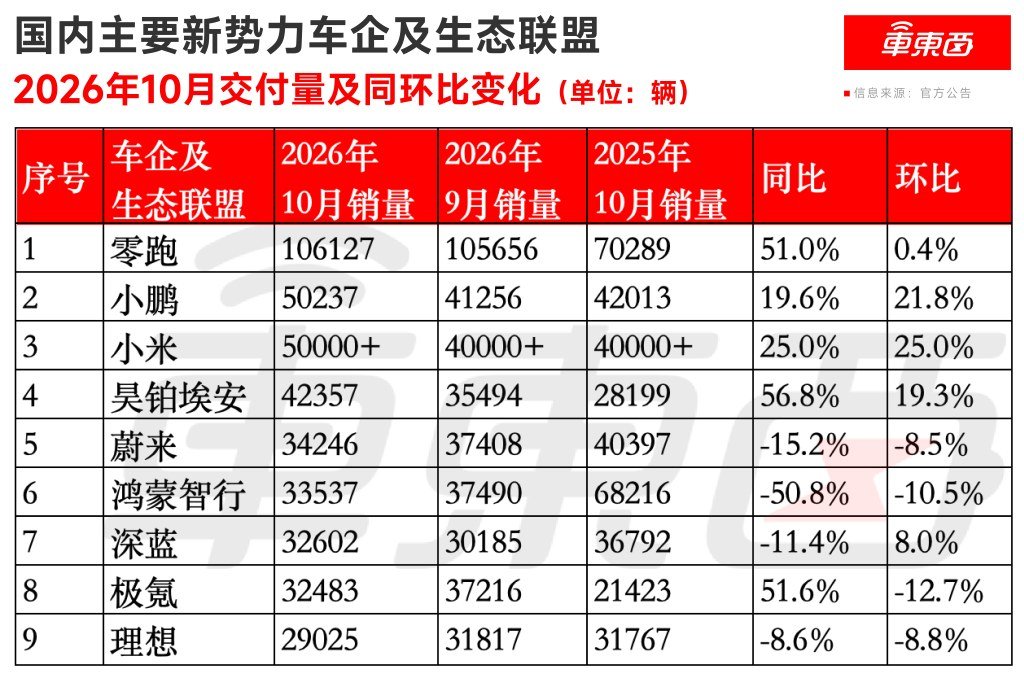
Huawei’s HIMA alliance delivered about 33,500, halving year on year and down 10.5 per cent month on month.
Deepal sold 32,600 worldwide, down 11 per cent year on year but up 8 per cent month on month. Zeekr delivered 32,500, up 51.6 per cent year on year and down 12.7 per cent month on month, its first sequential decline after eight months of double growth, with the 9X and 7X carrying volume and exports beginning to contribute. Li Auto delivered 29,000, a decline.
What October actually measures
Chinese EV demand has not cracked. What has changed is that the penalty for a stale line-up now arrives inside a quarter. Leapmotor, Xpeng and Xiaomi all had a specific supply or launch event pulling volume forward, while Nio and HIMA are between model cycles and losing ground to brands that are not.

Two thresholds are visible in the data. The first sits near 50,000 units a month, where a brand covers fixed development cost across enough cars to price competitively. The second sits at the annual target, where the last two months of the year force discounting to close a gap, which is where the margin damage in this market gets done.
For European competitors, the relevant line is Xpeng’s export figure. 13,326 units in a single month, up 166 per cent, is a Chinese brand building overseas volume off domestic scale rather than off a separate export product line.
Editor’s note: This is an adapted translation of the original Chedongxi report. It has been trimmed and restructured for readability for an international business audience. The full original (in Chinese) is at https://chedongxi.com/p/379126.html.