MetaCircle, registered in Chinese as Yuanhuan Zhineng, was founded four months ago and has already closed two consecutive rounds totalling several hundred million renminbi. The money goes into core algorithm work on its meta model, early product exploration, hiring, and the release of its own benchmarks.
The seed round was led by Shunwei Capital, with Shanghai Future Industry Investment Fund, Xinglian Capital and Junli Capital following. The seed-plus round brought in industrial and state-linked investors including Shanghai Semiconductor Industry Investment, 360’s strategic investment arm, Shoucheng Capital and funds under Shanghai’s AI industry series, alongside dual-currency funds such as Baidu Ventures, Shanxing Capital and Yunshi Capital.
The argument against scaling alone
The world currently uses large language models to think. Scientific discovery, modelling the physical world and the design of AI itself are problems that language alone handles poorly. What those problems need is a lower-level intuition.
MetaCircle’s product is a meta model: a machine that generates model architectures and training hyperparameters directly. Handed an unfamiliar model, it predicts how that model will perform and which scenarios it suits, which is close to giving the industry a view from above. That is also where it diverges from the fashionable route of recursive self-improvement.
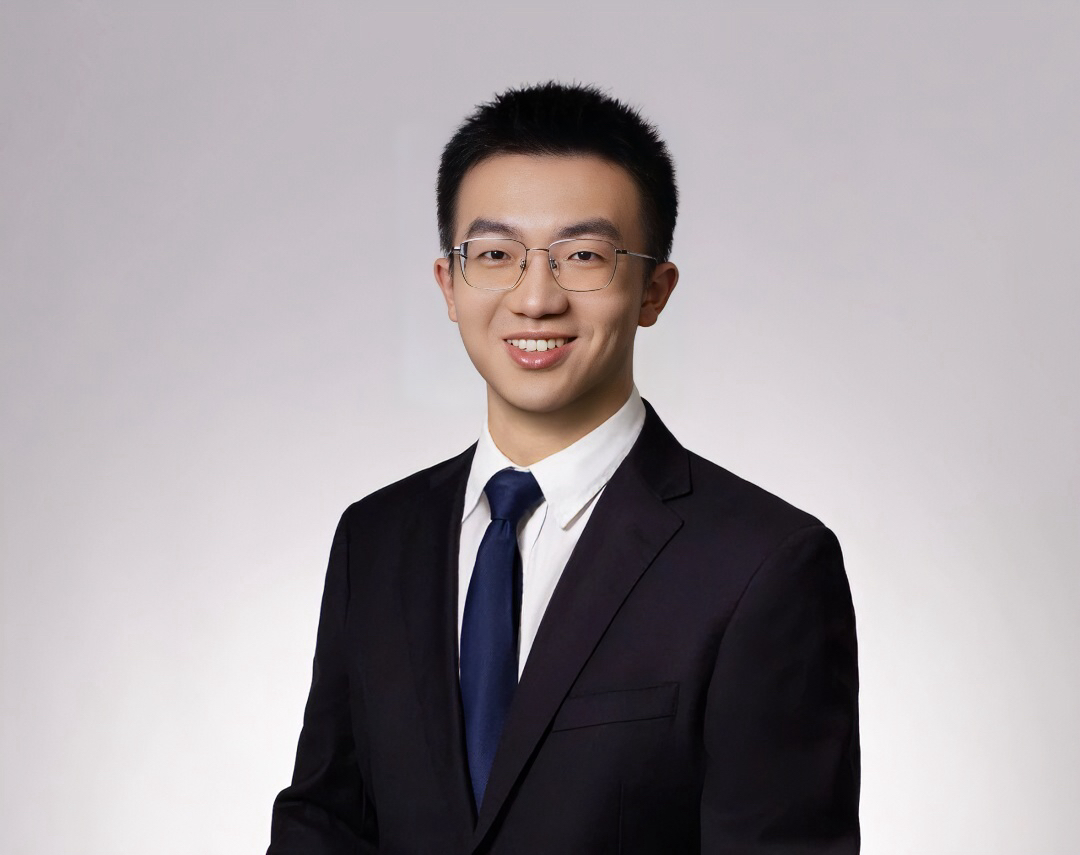
Founder and chief scientist Liu Ziming describes self-improvement through language models as trekking off-trail. There is no map, no directional intuition, and the only way through is to burn compute on trial and error. A meta model, in his account, learns the rules behind how a model performs, which is the equivalent of holding the whole map plus a positioning system, with first-order and global information to guide the next step.
Who Liu Ziming is
Liu was born in 1998 and is now an assistant professor at Tsinghua University’s AI institute. He studied physics as an undergraduate at Peking University, took his doctorate at MIT, and did postdoctoral work at Stanford in neuroscience and AI.
His best-known result is KAN, the Kolmogorov-Arnold Network, which replaces the fixed activation functions of a conventional neural network with learnable ones and turns the model from a black box into something closer to a white box. Since its release in 2024 it has gathered more than 16,000 stars on GitHub and more than 5,700 citations on Google Scholar. KAN is also the technical core of the meta model.
The plan for next year is a general meta model, version 1.0, not restricted to a scenario, that generates specialised models for vertical domains. The team is also about to publish Architecture IQ, a benchmark it built to measure how good a model, or a human researcher, is at the intuition behind training a model.
What the round does not settle
Several hundred million renminbi across four months, in a market where generalist robot and model rounds have become harder to close, buys time rather than proof. A benchmark that measures intuition is only useful if the intuition transfers, and the first general meta model has not shipped.
The interesting part is the ambition. If the architecture search problem can be learned rather than brute-forced, the cost of every model trained afterwards falls, and the companies that own the search layer sit above the labs rather than beside them. If it cannot, the result is another research group with excellent citations and a product still one year away.
For now the specification is a promise: a machine that, given an unfamiliar model, tells you what it will do before you spend the compute to find out.
Editor’s note: This is an adapted translation of the original Leiphone report. It has been trimmed and restructured for readability for an international business audience. The full original (in Chinese) is at https://www.leiphone.com/category/industrynews/HzAPRXlFEuzBUnsf.html.