Beijing has issued a three-year action plan for the embodied AI and humanoid robot industry, and it is unusually specific about where parts should come from.
The document, published by the Beijing Municipal Bureau of Economy and Information Technology, covers 2026 to 2028 and sets out six engineering programmes: an embodied intelligence upgrade, coordination of the Jing-Jin-Ji industrial chain, technology sourcing, scaled deployment, industrial ecosystem leadership and safety governance.
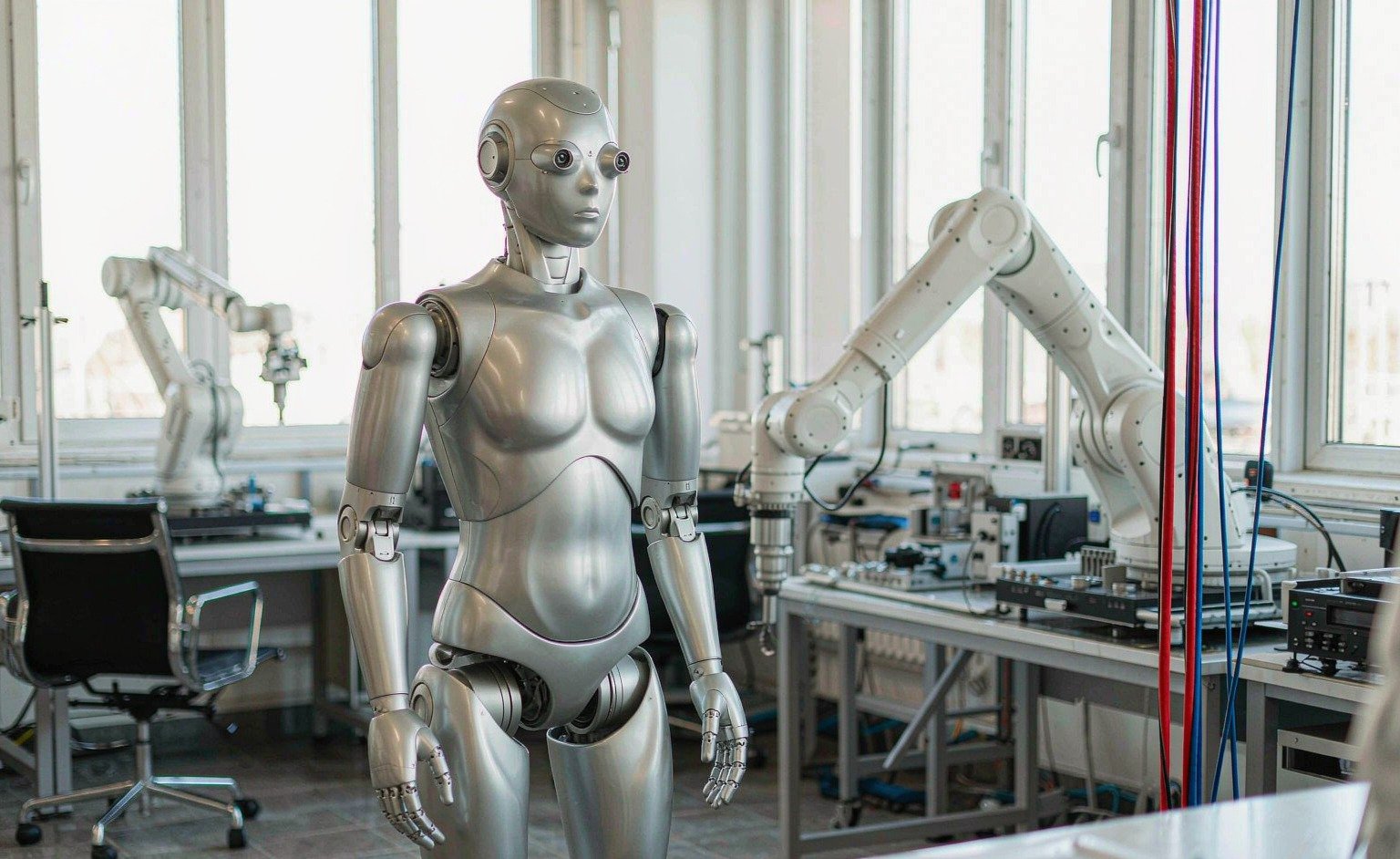
The 2028 targets
By 2028 the city aims to cultivate at least five humanoid robot manufacturers of international standing and ten that lead domestically. Embodied intelligence models, robot bodies and key technologies are all meant to reach an internationally first-class level.
On manufacturing, the goals are geographic and quantitative. The Jing-Jin-Ji region, meaning Beijing, Tianjin and Hebei, is to account for 25 per cent of national humanoid robot production capacity, and the localisation rate for key components is to exceed 60 per cent.
The plan also calls for a safety governance system covering the full lifecycle with multiple departments involved, and positions the city as a technology source and industrial innovation hub for the sector.
The car industry is written into the plan
The most consequential clause is a short one. The plan says the city will actively bring in supply chain companies from adjacent industries, naming intelligent connected vehicles specifically.
Concretely, it commits to building at least ten shared machining platforms across Jing-Jin-Ji with fast-response capability in structural part machining, SMT placement and wiring harness manufacturing. The stated purpose is to cut the delivery time for samples after a component design change down to one or two days. It also calls for research and manufacturing parks organised around the integration of automotive and machine systems, and of mechanical and electrical systems.
That is a direct transfer of capability rather than an aspiration. China’s automotive tier-one network already runs precision machining, harness assembly and high-volume injection moulding at automotive quality grades. Humanoid robots need roughly the same processes in far smaller volumes, which is exactly the gap a shared platform solves.
Deployment targets and the existing base
On the demand side, the plan targets at least 20 reference application scenarios in industry, 20 in services and 10 in special-purpose work by 2028. It also aims to nurture at least 200 specialised, refined, distinctive and innovative small and medium enterprises, and to lead or participate in at least eight international standards and 30 national standards.
The starting point is not zero. Yizhuang, Beijing’s advanced manufacturing zone, already hosts more than 300 robotics and embodied intelligence companies, with a combined industrial chain scale above RMB 20 billion. The plan’s own language describes the automotive supply chain’s existing strengths in precision machining, wiring and scale manufacturing as the base being folded into humanoid robot cost reduction.
For component makers, the commercial logic is straightforward. A shared platform with one to two day sample turnaround changes the economics of prototyping, and a 60 per cent localisation target is a procurement instruction as much as an industrial policy goal.
For anyone selling into the region, the deadline structure matters more than the headline numbers. Capacity share, localisation rate and scenario counts are all measurable, and they will be measured before 2028.
Editor’s note: This is an adapted translation of the original Gasgoo report. It has been trimmed and restructured for readability for an international business audience. The full original (in Chinese) is at https://www.gasgoo.com/apps/robot/news/.