Honor has given its humanoid robot programme a legal entity, a capital base and a first customer. The customer is Honor itself.
Corporate registry data shows the handset maker has established Shenzhen Honor Qidian Intelligent Technology as a wholly owned subsidiary, with registered capital of RMB 100 million. The legal representative is Peng Qiuen, the group’s chief financial officer, and the registered business scope covers the manufacture of service consumer robots alongside intelligent robot research, development and sales.
What Honor has already shown
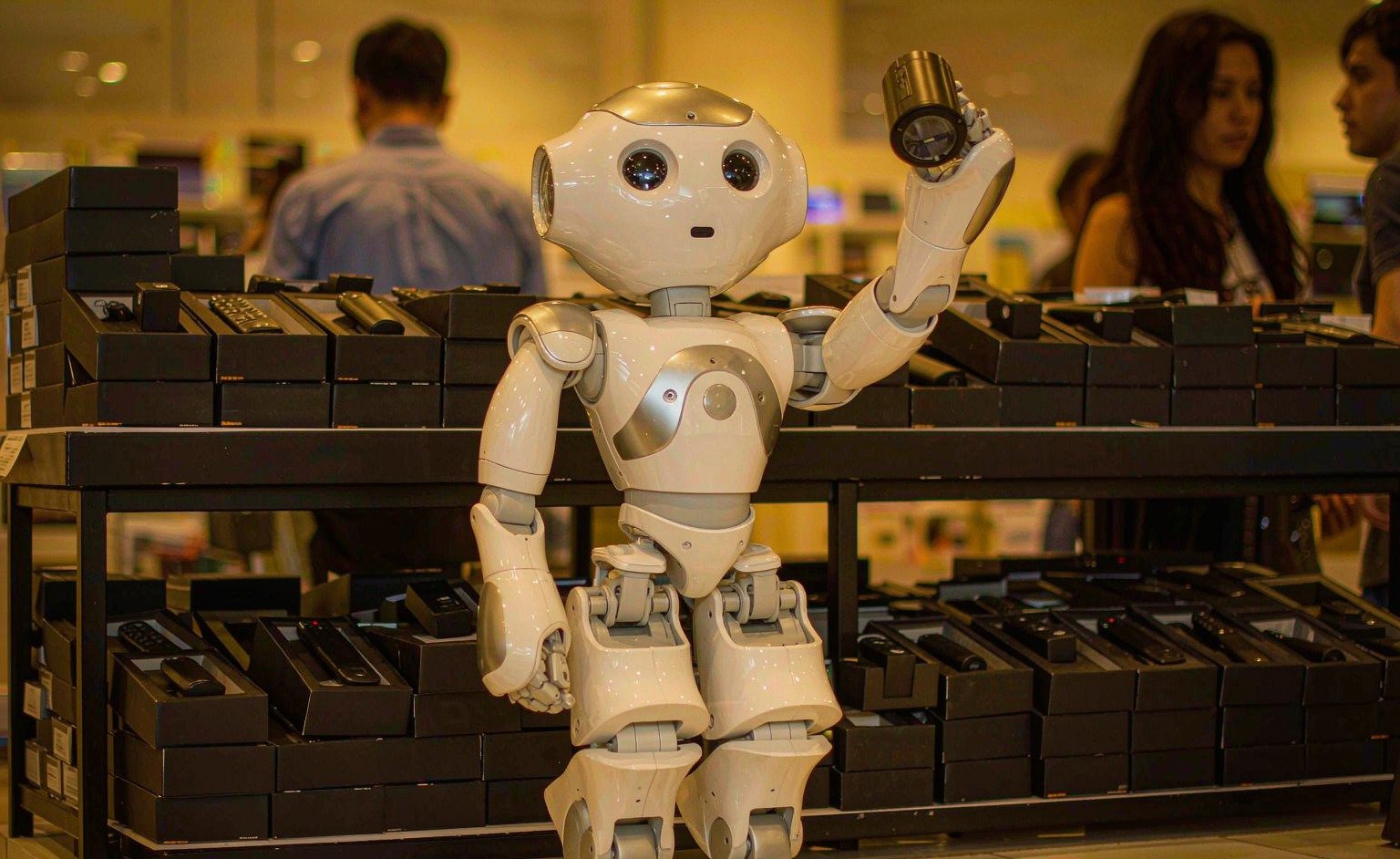
Two machines have been on public display. Lightning stands 169 centimetres tall, runs on joint modules rated at 400 newton-metres of peak torque, and covered 100 metres in 8.83 seconds in a robot sprint event. Yuanqizai is aimed at human interaction and reception work. Both have appeared repeatedly at events and in offline stores.
Local media report that Honor plans small-batch production this year. Once capacity allows, the first deployment will be in-store sales assistance across its national retail network, which the company treats as the first commercial proving ground for the category.
The commercial logic is not complicated. Honor already has the physical space, so display costs are close to zero. Robots in stores draw foot traffic as novelty hardware, and a real retail environment generates continuous human interaction data that feeds back into the models. Consumer electronics experience in AI interaction and supply chain control transfers, at least in part.
The supply chain question
The caveat is where the machine actually comes from. Honor describes the motion control algorithms, the integrated joint modules and the large model as self-developed. Much of the rest is not.
3D vision cameras, lidar, the complete torso and limb structural components and micro liquid cooling pumps are supplied by a group of third-party manufacturers under joint custom development. The machine is an integration project as much as a design project.
That creates a specific risk profile. A sprint record is the output of an entire supply chain, not of one company’s algorithm. Moving from demonstrations to batch delivery makes delivery stability, cost control, repair and version iteration the binding constraints. If core hardware depends on external custom supply, changes in delivery, pricing or iteration cadence at a supplier flow straight through to the robot programme.
Compared with vertically integrated robotics firms, the integrate-and-customise model starts faster and builds a shallower moat.
Store guidance is harder than it looks
Retail assistance also carries a trap that is easy to miss. Store floors are noisy, crowded and full of unscripted behaviour. A robot that has performed reliably on a stage has to hold a conversation, answer questions and handle interruptions without falling back on a script.
Novelty decays. Consumers who photograph a humanoid on their first visit will ignore it by the third. If the machine cannot do substantive sales work, it becomes an expensive display fixture, and the store manager will notice before the brand team does.
For the handset industry, entering humanoids is a positioning move against a shrinking domestic replacement cycle, a bet on the next intelligent terminal. Position does not equal victory. Capital, channel and brand give Honor a strong starting position, but RMB 100 million of registered capital is a starting line, not a signal of success.
Technology demonstration, small-batch production and commercial deployment are three different problems. Honor has solved the first, is starting the second, and has chosen the least forgiving possible venue for the third.
Editor’s note: This is an adapted translation of the original OFweek report. It has been trimmed and restructured for readability for an international business audience. The full original (in Chinese) is at https://robot.ofweek.com/2026-11/ART-898890-12003-30711280.html.