Geely sold 904,823 vehicles outside China in the first ten months of 2026, up 168 per cent year on year. That already exceeds its entire 2025 export volume. October alone was 107,000 units, the fifth consecutive month above 100,000.
The growth did not come from new factories. Geely has built almost none. It borrows other companies’ plants, brands and dealer networks instead, and the pattern differs by market.
The chairman’s rule
Li Shufu, chairman of Geely Holding, set out the logic at the 2026 World Intelligent Connected Vehicle Conference in October. Buying land, building plants, installing equipment and hiring staff is too expensive. Geely would rather use capacity that already exists, together with partners.
Geely Auto put the same position to Gasgoo directly: to meet growing demand the company is studying several ways to expand capacity, is maximising the use of idle capacity in each region, and is not building new car plants or expanding existing ones.
Europe: buy a door, then rent the hallway
Geely entered Europe through ownership. Volvo came in 2010 and gave it a route into the European industrial system. Lynk & Co followed with subscription models and city-centre stores, then discovered that direct retail is expensive to scale and shifted to dealer networks. By 2025 Lynk & Co had 125 European retail points, 80 of them operating, and by September 2026 the network passed 140.
In September 2026 Volvo and Lynk & Co agreed that from January 2027 Volvo becomes Lynk & Co’s exclusive distributor in Europe, handling commercial operations while Lynk & Co keeps design, engineering, certification and brand strategy. Lynk & Co gets a service network without paying to build one. Volvo gets more volume through assets it already owns.
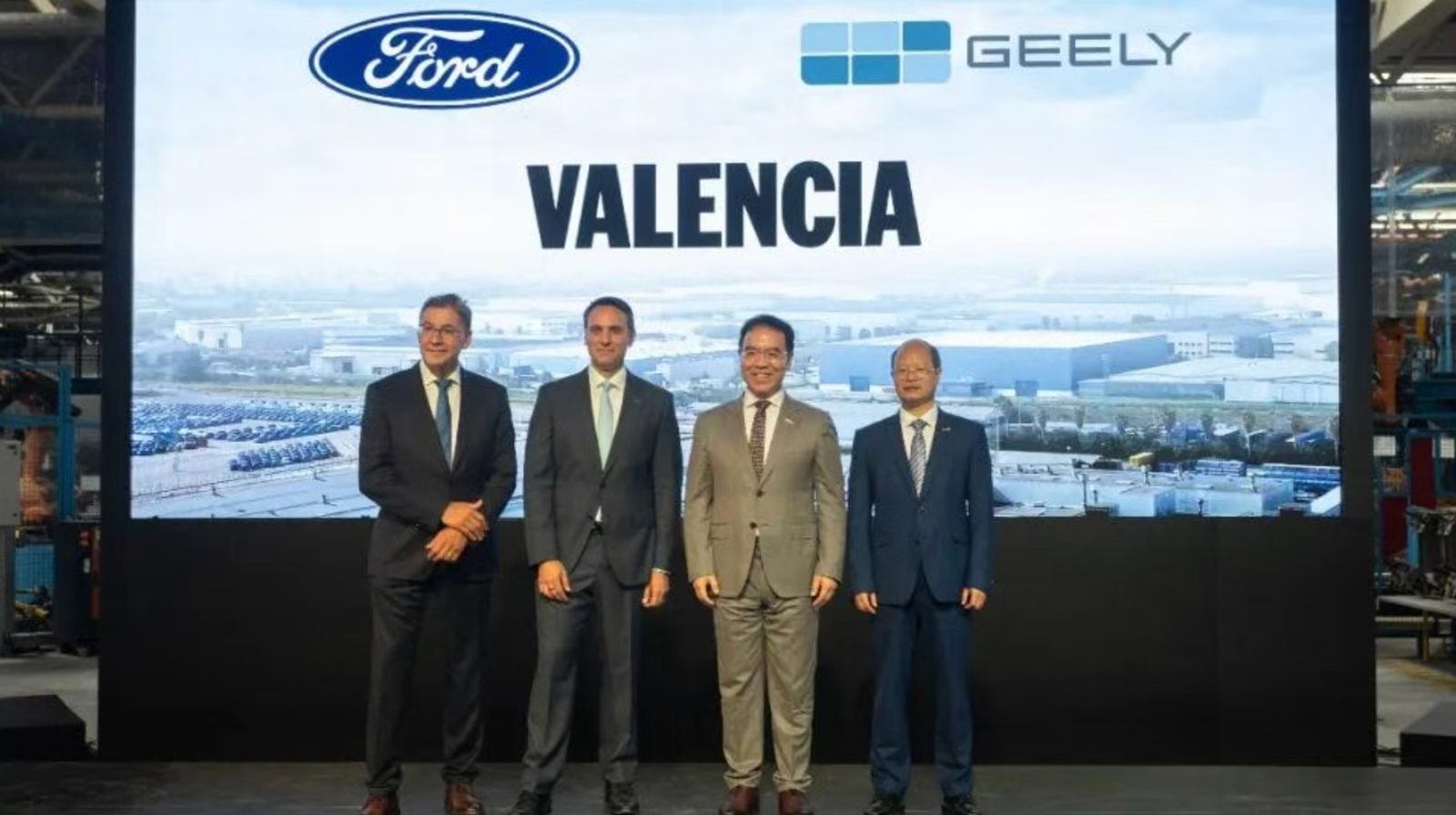
Production follows the same instinct. In July 2026 Geely and Ford formed a Spanish joint venture around the Valencia plant: Ford 66 per cent, Geely 34 per cent, potential capacity around 500,000 units, first models from 2028. Geely avoids greenfield capital and shortens the run-up to local production. It also accepts that a majority partner sets the production schedule.
Southeast Asia, Korea, Brazil: three different trades
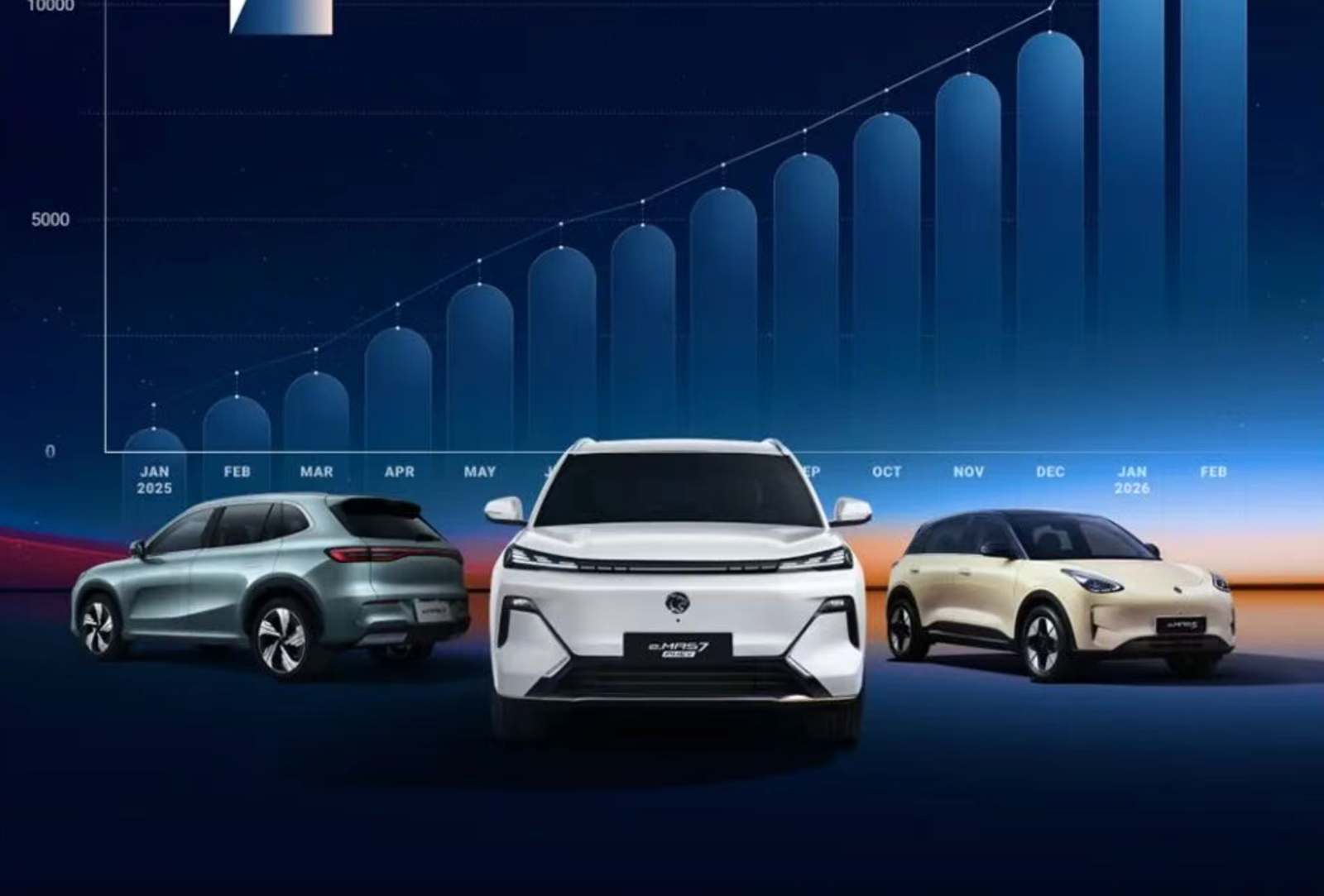
Proton is the Southeast Asian anchor. Geely bought 49.9 per cent in 2017 and inherited a Malaysian brand, a manufacturing base and a dealer network. In September 2025 Proton opened a dedicated EV plant at Tanjung Malim with 20,000 units of initial capacity, expandable to 45,000. The e.MAS 7 rolled off first, built on the same platform as the Geely Galaxy E5 and adjusted for Malaysian demand. Proton has already exported left-hand-drive X50s to Vietnam, 200 units at the end of 2024, with more than a thousand Geely-branded vehicles following in 2025.
Korea is a technology trade. Geely paid about RMB 1.376 billion for 34.02 per cent of Renault Korea in 2022, contributing CMA architecture and hybrid technology while Renault Korea ran development, brand, production and sales. The Grand Koleos, launched in 2024, has sold about 22,000 units in Korea.
Brazil goes further. In November 2025 Geely took 26.4 per cent of Renault Brazil, with Renault still controlling, and committed BRL 3.8 billion to localise production using Renault’s existing industrial base. The first Geely EX5 EM-i left Renault’s Curitiba complex in September 2026.
The export map is no longer concentrated
In the first three quarters, pan-European exports passed 140,000 units, up 298 per cent. ASEAN passed 170,000, up 145 per cent. Latin America and Africa passed 180,000, up 236 per cent. Eastern Europe passed 170,000, up 114 per cent. The Middle East and the rest of Asia-Pacific passed 110,000, up 126 per cent.
New energy vehicles were 484,000 units, or 61 per cent of exports. In the UK, Geely passed 10,000 cumulative registrations by October 2026, with more than 5,000 in September alone, less than a year after entering.
Demand is now outrunning supply in places. In Brazil the order backlog is estimated at 20,000 to 30,000 vehicles.
The cost of borrowing
Shared capacity does not make European production cheap. Industry estimates put European manufacturing cost 70 to 100 per cent above China, once labour, energy, supply chain and compliance are counted. Local assembly only becomes economic at volume, with the plant loaded.
Governance is the second bill. A 66 per cent partner decides how the line is run. Geely participates through a joint venture structure rather than directing the plant. The same applies across the network: partners hold the local licences, the workforce, the supply chain and the dealers, and their view of product planning and investment timing will not always match Geely’s.
After-sales is the third. A dealer network can be borrowed. Responsibility for the owner cannot. Parts supply, technician training, warranty policy, software updates and complaint handling all sit with the brand, and for smart EVs the software keeps changing after delivery.
Geely has proven it can reach 900,000 exports a year by renting the global industry’s spare capacity. Whether rented capacity turns into dependable delivery and service is the next question, and it is a harder one.
Editor’s note: This is an adapted translation of the original Gasgoo report. It has been trimmed and restructured for readability for an international business audience. The full original (in Chinese) is at https://auto.gasgoo.com/news/202611/13I70477769C109.shtml.