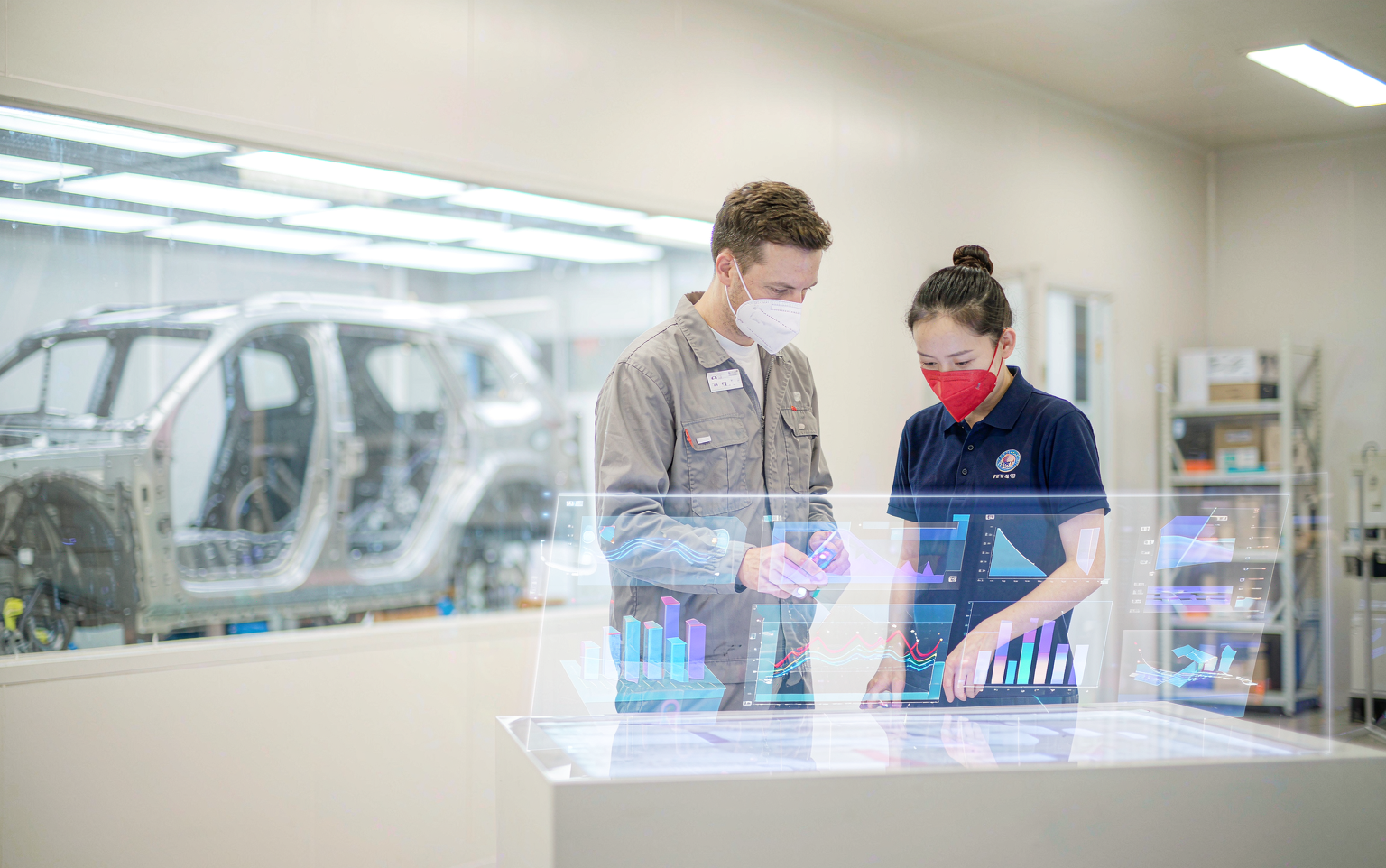
ZF and Mengshi, the premium off-road brand owned by Dongfeng, marked the first milestone of their data interconnection project at ZF’s Anting plant in Shanghai on 6 November. The programme started in July 2026, and the first phase of data exchange and output conversion landed in October.
At the event the two teams completed the first production data transmission. ZF says it is the first supplier to achieve deep data fusion with Mengshi and to put AI use cases into production with the brand.
What is actually connected
The project covers real-time quality data exchange and full-process traceability, quality data early warning, and joint development of AI application scenarios. Both sides describe the next phase as extending the connection into deeper scenarios to support a transparent supply chain.
Read plainly, a carmaker can now see how a part was made while it is being made, not after a warranty claim arrives. For an off-road brand selling vehicles that are used hard and often far from a dealer, field failure data is expensive to collect and slow to arrive. Supplier process data arriving in real time is cheaper and faster.
The part suppliers usually refuse
Quality data has historically been a negotiated asset. A supplier releases summary reports and certificates of conformity, and keeps the process parameters, the rework logs and the scrap rate. That asymmetry protects the supplier in a dispute and protects its pricing, because the customer cannot see how much yield is being lost.
A live link removes that asymmetry. It is a genuine transfer of power from supplier to customer, and it is not usually volunteered.
The logic for accepting it is market structure. China is the world’s largest automotive market and its OEMs move fast on supplier selection. A tier one that declines to open its process data can be replaced by one that agrees, and ZF competes in China against local suppliers who have fewer legacy objections.
Where this goes
The strategic question is whether this becomes the template. If a Chinese OEM can require real-time quality data as a condition of business, the same requirement will eventually appear in contracts for European and North American programmes, because the supplier’s internal systems will already support it.
That is the quiet part of the announcement. ZF is not describing a customer relations exercise in Shanghai. It is describing an operating standard it will have to run everywhere, because maintaining two levels of transparency across one global quality system is more expensive than running one.
Editor’s note: This is an adapted translation of the original Gasgoo report. It has been trimmed and restructured for readability for an international business audience. The full original (in Chinese) is at https://auto.gasgoo.com/news/202611/13I70477783C103.shtml.