Who should be Nvidia’s next chief executive? The interim finance chief, the engineer who runs technology, or the inventor of CUDA? The candidates may not know either, and the answer may only be clear years after one of them takes the job. A more useful question is whether the role demands that much brilliance at all.
Buffett’s ham sandwich test
Warren Buffett once said that if a business is good enough, even a foolish nephew could run it, and that a ham sandwich could run Coca-Cola. A great business needs a brilliant founder to build it, but once built it does not rely on a brilliant leader to keep going. Is Nvidia that kind of company?
AMD has found out how hard a software moat is to cross. Nvidia introduced CUDA in 2006, a full stack from chip architecture to algorithm libraries. Today more than 7.5 million developers use CUDA and other Nvidia software, over 6,000 professional applications depend on its computing platform, and more than 78 per cent of the TOP500 supercomputers run on Nvidia. A newcomer’s first choice is still CUDA.
Jeff Bezos calls this a flywheel: once a system crosses a threshold, internal forces keep it turning. Developers attract customers, customers buy hardware, the ecosystem attracts more developers. Huang gave the flywheel its first push. It now turns on its own. Replacing Nvidia is not a matter of swapping one chip for a cheaper AMD card. An entire system has to move: toolchains, software stacks, procurement contracts and customer relationships.
Relationships, or chips?
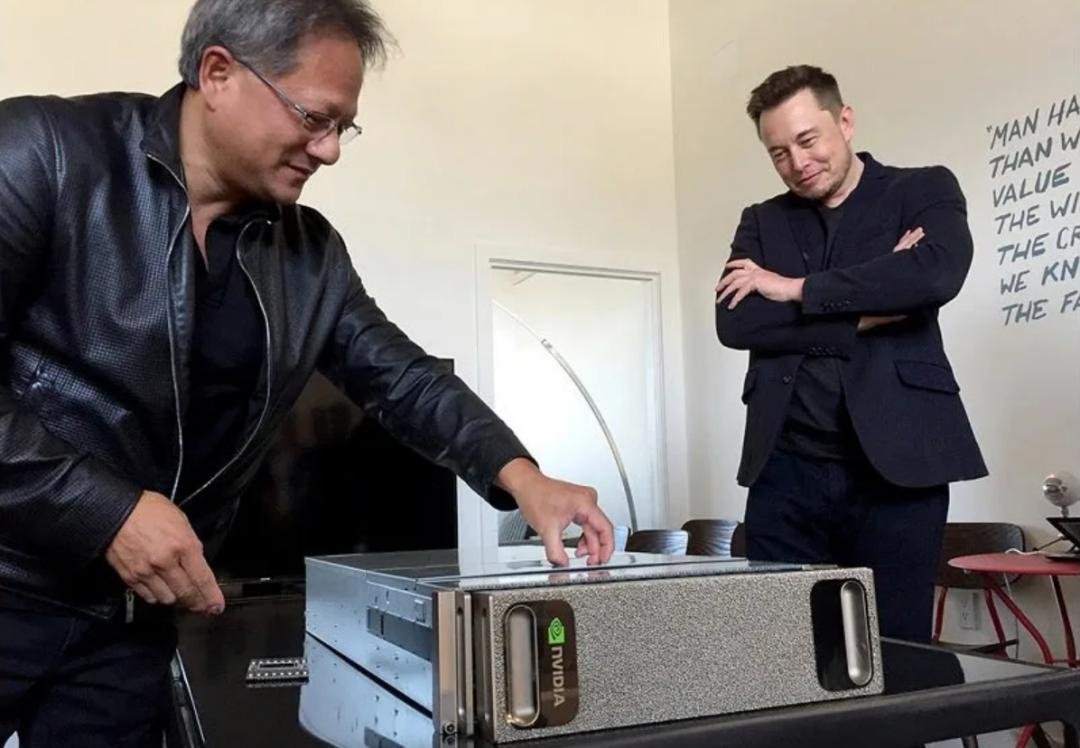
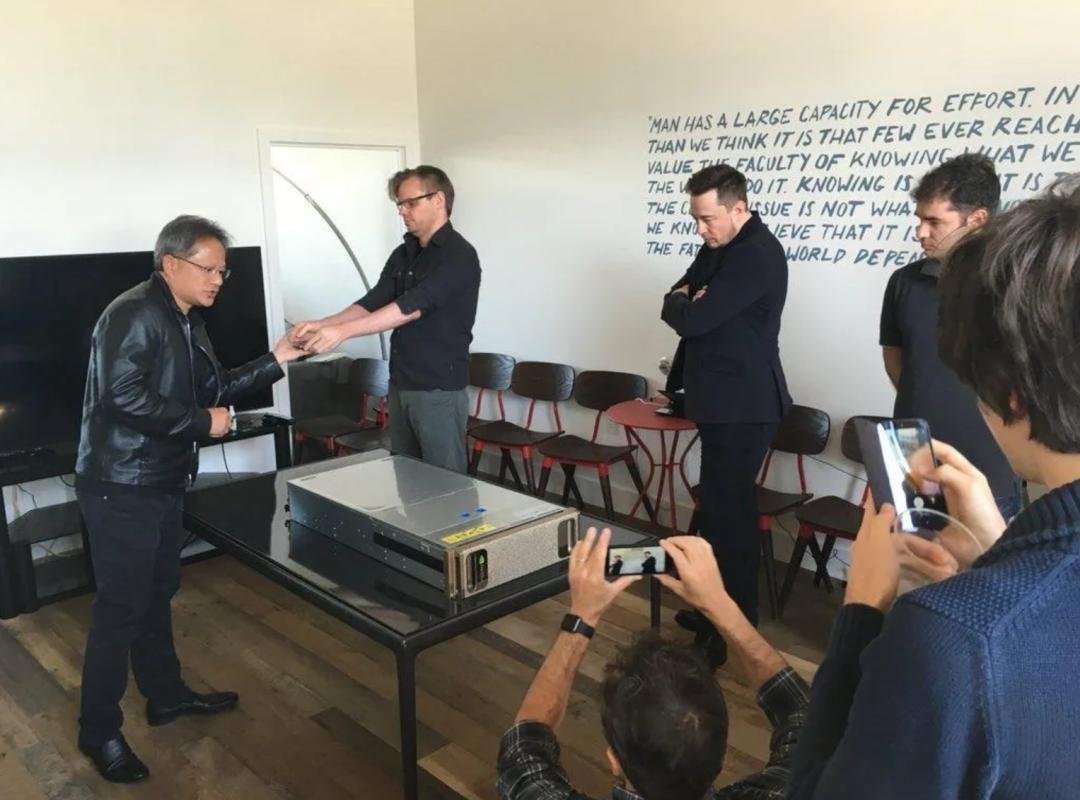
Huang’s most visible job may be relationship management. He meets thousands of customers a year, manages supply with TSMC and government relations across the world. In 1996 he flew to Sega alone after a chip for the company went badly wrong and talked Sega into converting a penalty into an investment, saving Nvidia from a cash crisis. In 2016 he carried the first DGX-1 supercomputer into OpenAI’s office himself.
But the direction of dependence is no longer one-way. People may socialise with Huang to get GPUs. At an Oracle analyst meeting in 2024, Larry Ellison and Elon Musk were recorded pleading with him to take their money and sell them more. A former director of compute supplier Megaspeed, another figure in the recent storm, had bought more than USD 4.6 billion of Nvidia hardware during his acquaintance with Huang.
A business that needs its chief executive to wine and dine customers every night could suffer when he leaves. A business where even Elon Musk has to beg to pay is a different proposition. Nobody will strip the servers out of a data centre because a different person holds the title.
The Cook precedent
Steve Jobs built the moat. Tim Cook did not create another iPhone moment. He shipped a luxury watch and a headset that sold modestly. Yet over fifteen years he took Apple from USD 350 billion to USD 4.6 trillion in market value, and investor Duan Yongping has argued he was the better chief executive. Without Jobs there would be no Apple. After Jobs, Cook made it ten times larger.
A great business model, once built, stops depending on a great operator, because sooner or later every company is run by an ordinary one. The strongest case for Nvidia’s next leader is not that they must be a genius. It is that the system was built so that they do not have to be.
Editor’s note: This is an adapted translation of the original 36Kr report. It has been trimmed and restructured for readability for an international business audience. The full original (in Chinese) is at https://m.36kr.com/p/4075258538316677.