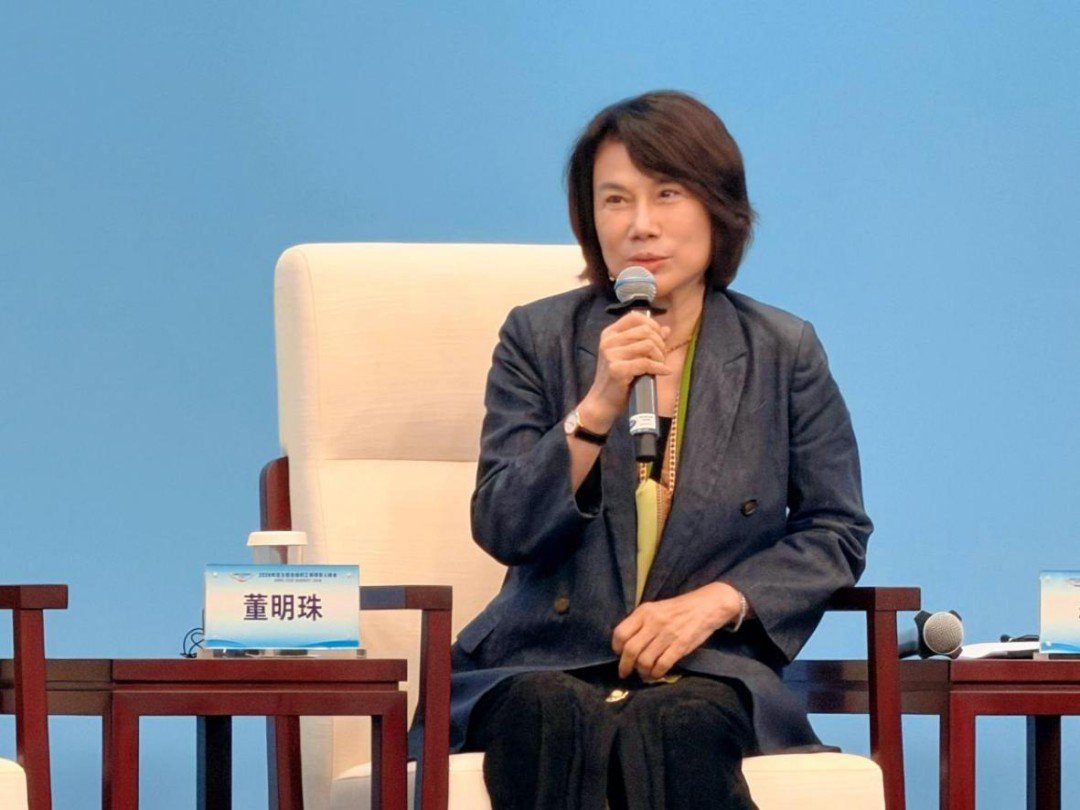
At a recent APEC summit, Dong Mingzhu sent a clear signal. Gree holds a full set of servo, reducer and driver capabilities, but has chosen not to push its own branded humanoid machine. Instead it is opening up supply to other manufacturers. The remark exposes a core reality of the embodied-intelligence industry: the tolerance for error in the whole-machine race has become extremely low, and even a traditional manufacturing giant is reluctant to fight it out in the ring.
The delivery test for whole machines
From an industry research view, the whole-machine segment is in a period of severe internal competition. Prototype development, demonstration iteration and brand marketing are expensive, while order authenticity and delivery stability face harsh market tests. A string of blow-ups in the sector has taught the market the lesson repeatedly. A company going down the whole-machine route must carry the pressure of scenario validation, after-sales service and iteration, plus a long customer acceptance cycle. Outsiders see a demo. The company carries very low error tolerance and a high risk of breaking its cash flow.
The manufacturing long board
By contrast, the component or shovel-seller route shows real anti-fragility. Whichever body maker wins, servos, reducers and drivers remain rigid demand. The approach spreads the risk of any single body failure and leaves the uncertainty with the customer while keeping deterministic revenue for the supplier. Gree is not alone. More manufacturers with automation depth, such as Inovance, are moving the same way. For components the core metrics are long-term consistency, yield, cost control and delivery stability, exactly the long-held strengths of appliance and car manufacturers. In capital markets, suppliers with an industrial base and reliable shipments are valued more solidly than pure body narratives, and hold their ground better when primary-market valuations correct.
Stable does not mean easy
Objectively, the component route is stable but not simple. Traditional industrial servos cannot be reworked and dropped straight into a humanoid. Humanoids demand far greater force-control precision, lower latency and lighter weight than industrial robots. Vision-tactile-language-action models create new demands for novel tactile sensors, and integrated joints are a new category with high technical and research barriers. Firms doing only low-end substitution will still be washed out in the next round of consolidation. Official media has already set the tone: PowerPoint decks and framework orders no longer count in embodied intelligence. That filter applies upstream too. Body makers now buy only components that ship reliably in volume and have been validated over long periods on real machines. Upstream competition is, in the end, competition over delivery certainty.
The winners in humanoids will not all be whole-machine brands. Before a universally accepted body architecture exists and commercial loops are still being explored, building reusable, standardisable core components may be the highest-value and most cycle-resistant position available.
Editor’s note: This is an adapted translation of the original OFweek report. It has been trimmed and restructured for readability for an international business audience. The full original (in Chinese) is at https://robot.ofweek.com/.