Eight days after one bet was repriced, the pattern became clear. When memory maker ChangXin listed on 27 July at 8.66 yuan and closed at 49, its market cap reached about 3.3 trillion yuan. Alibaba held 4.97% before the offering, roughly 4.48% after dilution, worth about 147 billion yuan and a paper gain near 140 billion on a 7.6 billion yuan cost.
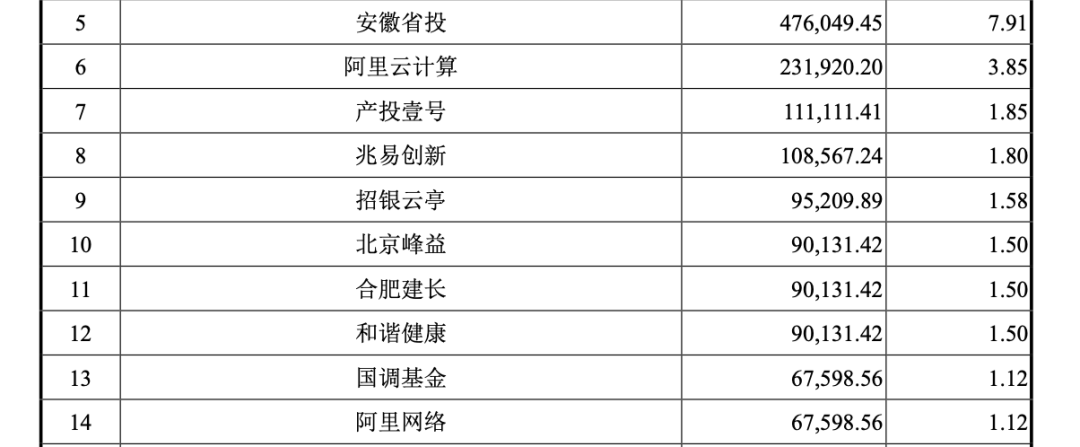
Alibaba’s AI investing has become a structure: model companies return equity value, rising compute demand feeds Alibaba Cloud orders, and a memory bottleneck is met with an upstream stake. It resembles the group’s old playbook, except today it backs interdependent, sometimes competing, firms.
The history is consistent. A 2017 DAMO Academy with a 15 billion dollar three-year plan, the 2019 Hanguang 800 inference chip, and 2023 Qwen routed into DingTalk and Tmall Genie, with Alibaba Cloud supplying training and inference and Pingtouge the silicon. By May 2026 management said the 380 billion yuan AI-and-cloud infrastructure plan would be exceeded. The strength is solving internal problems first, then externalising the capability as infrastructure.
But the AI value chain is more fragmented, spanning chips, memory, data centres, base models, video models, agents and consumer apps, and no single firm can guess every route internally. So Alibaba reopened external investing: it backed Kimi in 2024 and joined Tencent and Baidu in Kling’s over 19 billion yuan round, while its cloud arm put 6.1 billion yuan into ChangXin in June 2025 to become the top industrial investor.
The shift is in control. Past strategic bets moved to equity, then control and integration, as with UC and Ele.me. Kimi, Kling and ChangXin stay independent, closer to Tencent’s minority model, yet Alibaba still wants cloud orders and supply-chain ties. No control endpoint, but industrial synergy remains.
No new Taobao
In March, Alibaba formed the Token Hub business group under Wu Yongming, unifying Qwen, MaaS, Wukong and AI innovation around creating, delivering and consuming tokens, with Qwen wired into Taobao’s 4 billion-plus items. It is a familiar path: need becomes goods, payment stays inside the group. But AI has no settlement desk; a token proves usage, not a transaction. Alibaba Cloud’s external revenue is up 40%, with AI products at 30% of it and an annualised run-rate above 35.8 billion yuan, yet the full AI profit is still scattered across ledgers.
Kimi’s users will not auto-enter Qwen, Kling’s revenue will not auto-hit Alibaba Cloud, and ChangXin’s profit may mean higher cloud costs. The portfolio lowers single-route risk but has no centre yet to gather the value. Alibaba bought more possibilities, not a new entrance.
Read the original report (Sohu IT)
Translated and adapted from Sohu IT (it.sohu.com).