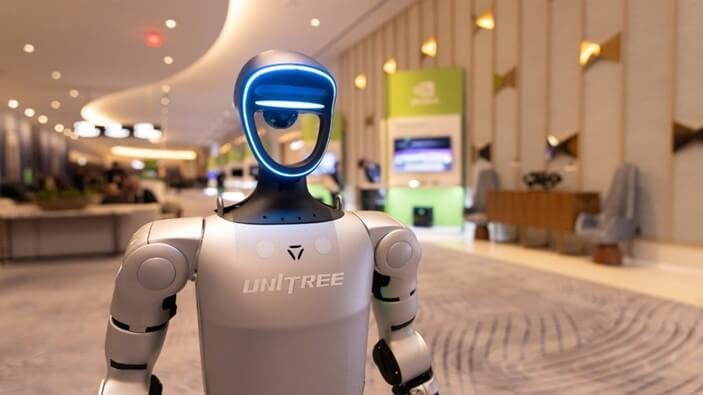
How the Robot Belt is fitting Silicon Valley
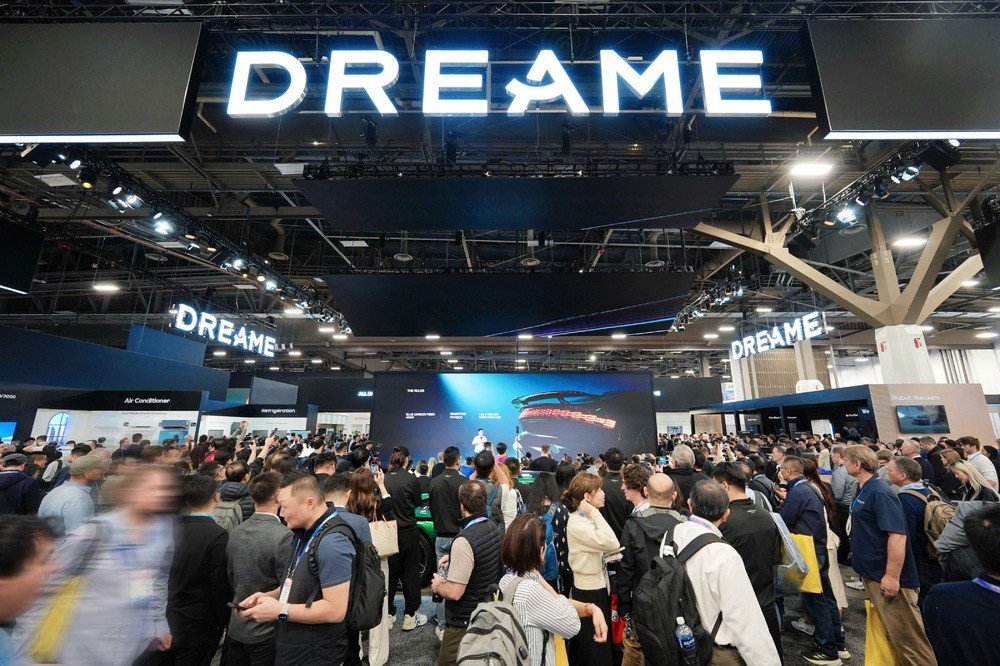
For decades, the Consumer Electronics Show (CES) was a festival of pixels. We marveled at televisions that grew wider and phones that grew smarter. But walking the halls of the Las Vegas Convention Center this week, the static hum of screens has been replaced by the rhythmic whir of servo motors. The era of “Physical AI” has arrived, and unlike the software revolution that preceded it, this one has a body.
And predominantly, that body is built in China.
The Legion Has Landed
While Silicon Valley spent 2025 refining the minds of artificial intelligence, the manufacturing hubs of the East were busy building its hands. The “China Legion” of robotics companies has descended on Vegas not as manufacturers of toys, but as architects of a new labor force.
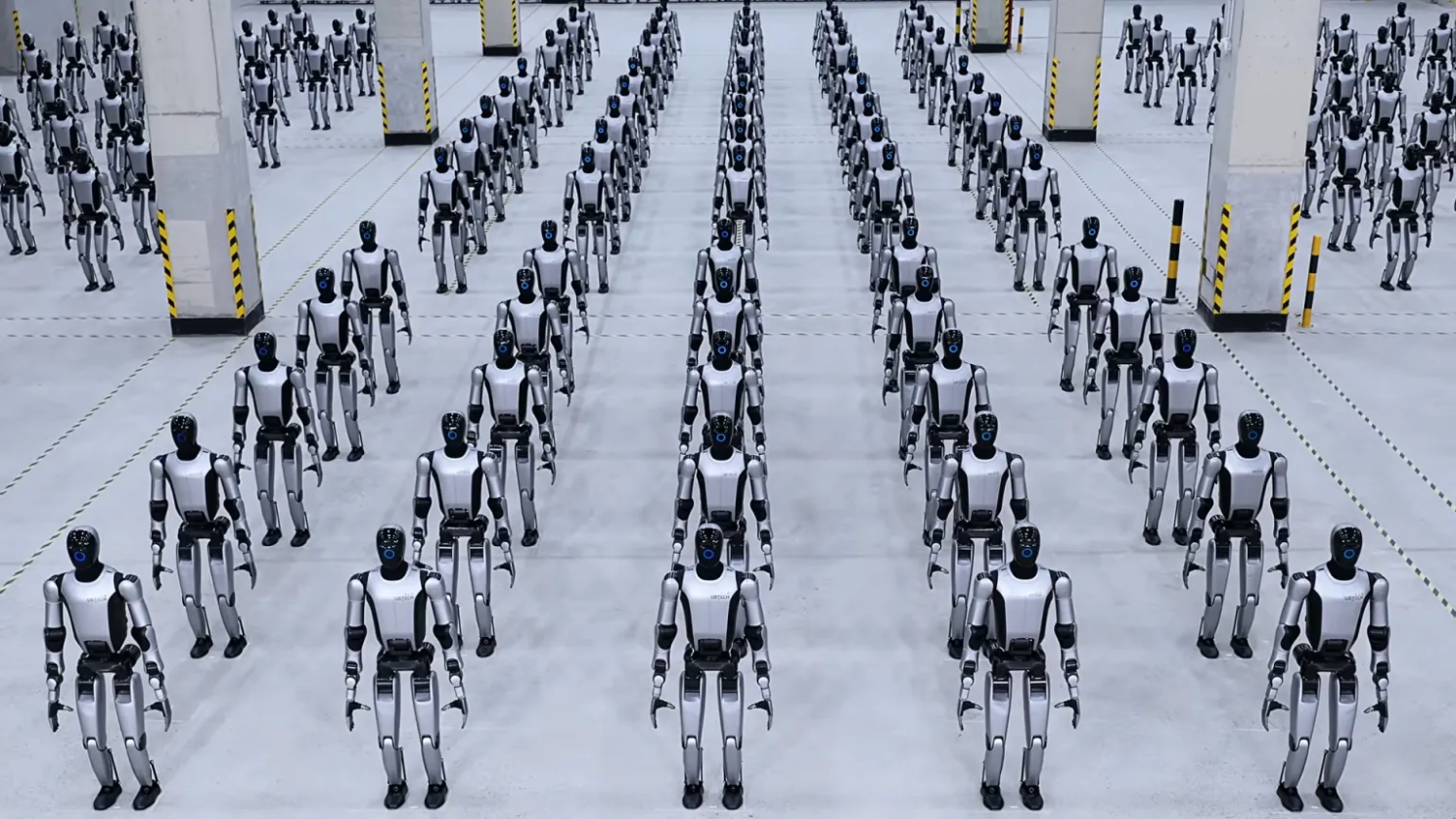
Take Unitree Robotics, whose H2 humanoid drew gasps not for its resemblance to a human, but for its superhuman agility—executing a 360-degree aerial kick that would shame a martial artist. But the real story isn’t the stunts; it’s the scale. Data from Omdia reveals that Agibot (Zhiyuan) quietly shipped over 5,100 units last year, capturing nearly 40% of the global market. These aren’t research prototypes; they are factory-ready workers, deployed in logistics hubs from Hangzhou to Shenzhen.
From Vacuuming to “Embodied Intelligence”
The most subtle yet profound shift can be found in the domestic sphere. Dreame Technology, once known for chasing Dyson’s tail in the vacuum market, has unveiled a “Bionic Multi-Joint Robotic Arm” that extends 30 centimeters to manipulate objects, effectively blurring the line between a cleaning appliance and a household droid. This is the promise of Embodied Intelligence: AI that doesn’t just understand your command (“Clean the kitchen”) but perceives the physical chaos of a lived-in home and navigates it with tactile precision.
The Silicon Brain and the Robot Body
Powering these metal bodies is a new generation of silicon. Nvidia’s Jensen Huang, in a keynote that felt more like a victory lap, unveiled the Rubin platform. Succeeding the Blackwell architecture, Rubin integrates the new “Vera” CPU, designed specifically to handle the staggering “token-to-motion” latency requirements of physical AI.
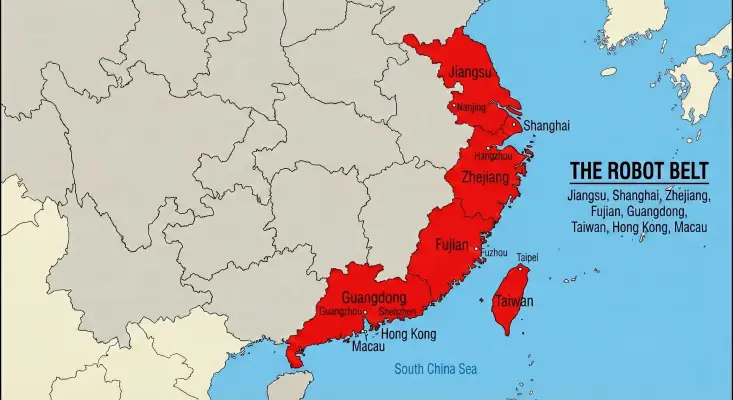
However, the glitzy presentations at CES mask a profound shift in the planet’s industrial geography. The real story of 2026 is the emergence of the “Robot Belt”—a colossal, integrated industrial corridor stretching across the southeastern coast of China.
Comprising the powerhouse provinces of Jiangsu, Zhejiang, Fujian, and Guangdong, the financial and logistical hubs of Shanghai, Hong Kong, and Macau, and the semiconductor fortress of Taiwan, this Robot Belt has surfaced on the global stage as a singular, undeniable force.
Fitting the Valley: A Dangerous Symbiosis
The relationship between this Robot Belt and Silicon Valley is becoming the defining narrative of the decade. It is a complex dance of fitting and friction, cooperation and competition.
Traditionally, the division of labor was clear: Silicon Valley provided the Brain—the neural networks and the foundational models—while the Robot Belt provided the Body—the servos, the sensors, and the precision manufacturing required to bring code to life. It was a perfect, if uneasy, symbiosis. The Valley dreamed; the Belt built.
But as CES 2026 demonstrates, that clean line is blurring. The Robot Belt is no longer content with merely being the muscle. Driven by the fierce internal competition of the Greater Bay Area and the Yangtze River Delta, the Belt is rapidly growing its own Brain. From Shanghai’s algorithm labs to Taiwan’s chip foundries, the region is closing the “synaptic gap” with the West at breakneck speed.
They are fitting Silicon Valley not just by supplying the hardware it desperately needs to manifest its AI into reality, but by challenging its dominance in the very intelligence that drives it. The Robot Belt has arrived, and it brings a message to the high desert of Nevada: The future needs a body to move, and we are the ones who make it walk.