The Changing of the Guard: How Chinese Marques Conquered 17% of Indonesia’s Car Market in 12 Months
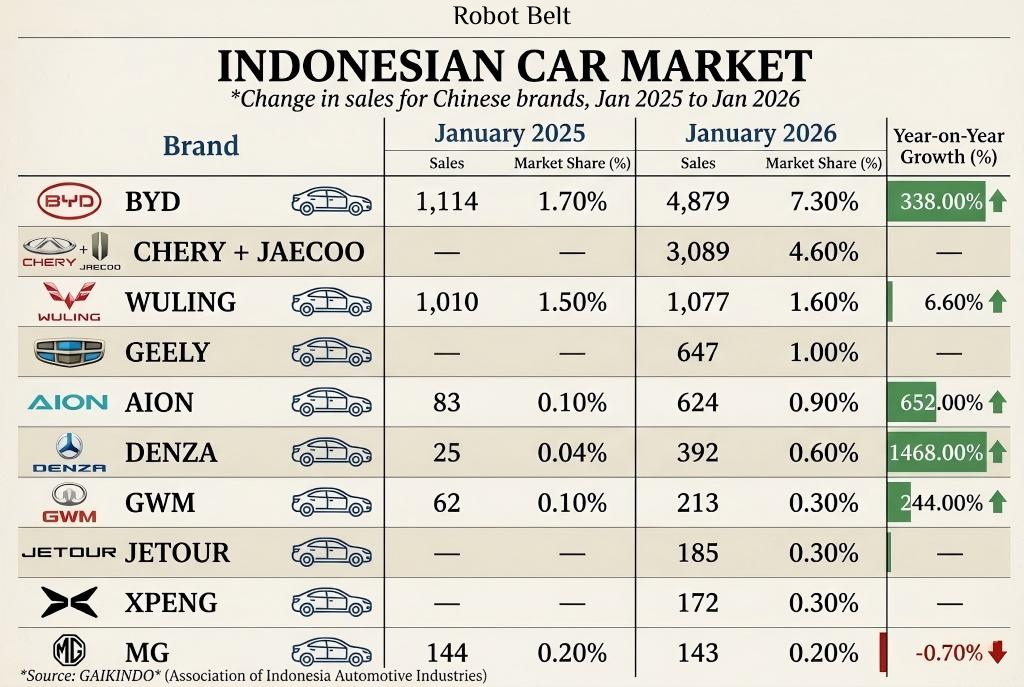
The Indonesian automotive landscape is undergoing a seismic shift. If you rewind just twelve months to January 2025, Chinese brands were shifting around 3,000 units, scraping together a mere 5% of the total market . Fast forward to January 2026, and the picture is unrecognisable: sales have rocketed to 11,421 units, commanding a 17.1% market share .
That is nearly a four-fold increase in volume and more than triple the market footprint in a single year . But this is not merely a flash in the pan; it represents a fundamental restructuring of the region’s automotive hierarchy.
Beyond the Fringe: A Structural Leap
In the motoring industry, breaking the 15% market share barrier is a critical tipping point . Sitting at 5% means you are a peripheral player, a niche alternative; breaching 17%, however, elevates you to a structural participant . By January 2026, Chinese manufacturers had secured the influence to dictate pricing, product life cycles, and overall market expectations .
“From 5% to 17%, the core is not just growth, but a change in structural position. Chinese brands have completed the leap from marginal supplements to mainstream participants .”
The New Hierarchy
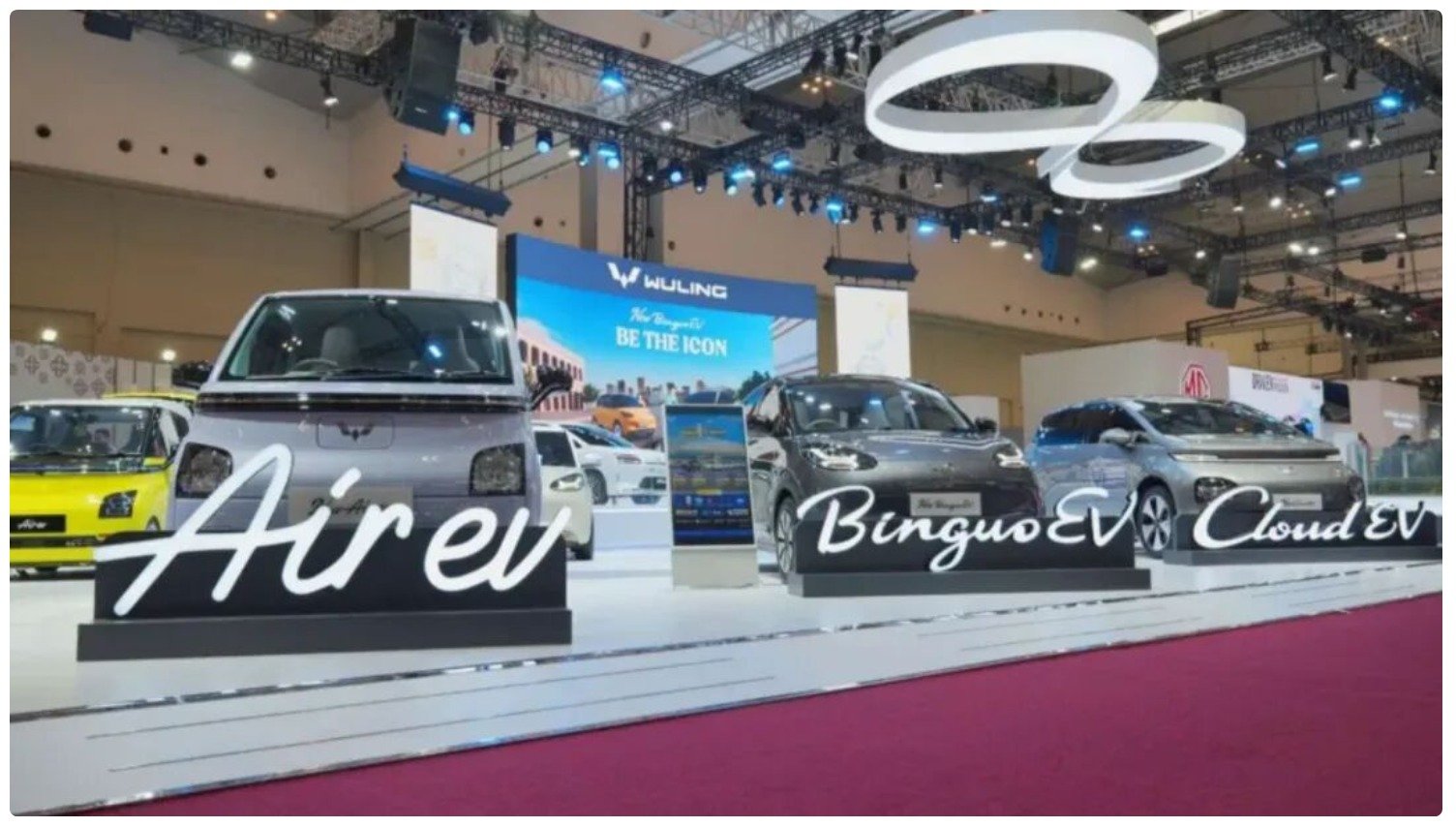
This surge isn’t just the BYD show anymore. Back in 2025, China’s presence was structurally simple, propped up almost entirely by BYD . Today, a well-defined tier system has emerged :
- First Tier: BYD leads the charge .
- Second Tier: Chery and Jaecoo have established themselves as a formidable supporting force .
- Third Tier: Wuling and Aion sit comfortably in the mid-pack .
- Fourth Tier: Challengers like Geely, Denza, GWM, Jetour, and Xpeng are rapidly gaining ground .
With this second tier reaching a stable scale, the rules of engagement have changed . The market has moved past the volatility of single brands and entered an era of systematic competition, testing everything from product layouts to local channel capabilities .
The Spark: New Energy Vehicles
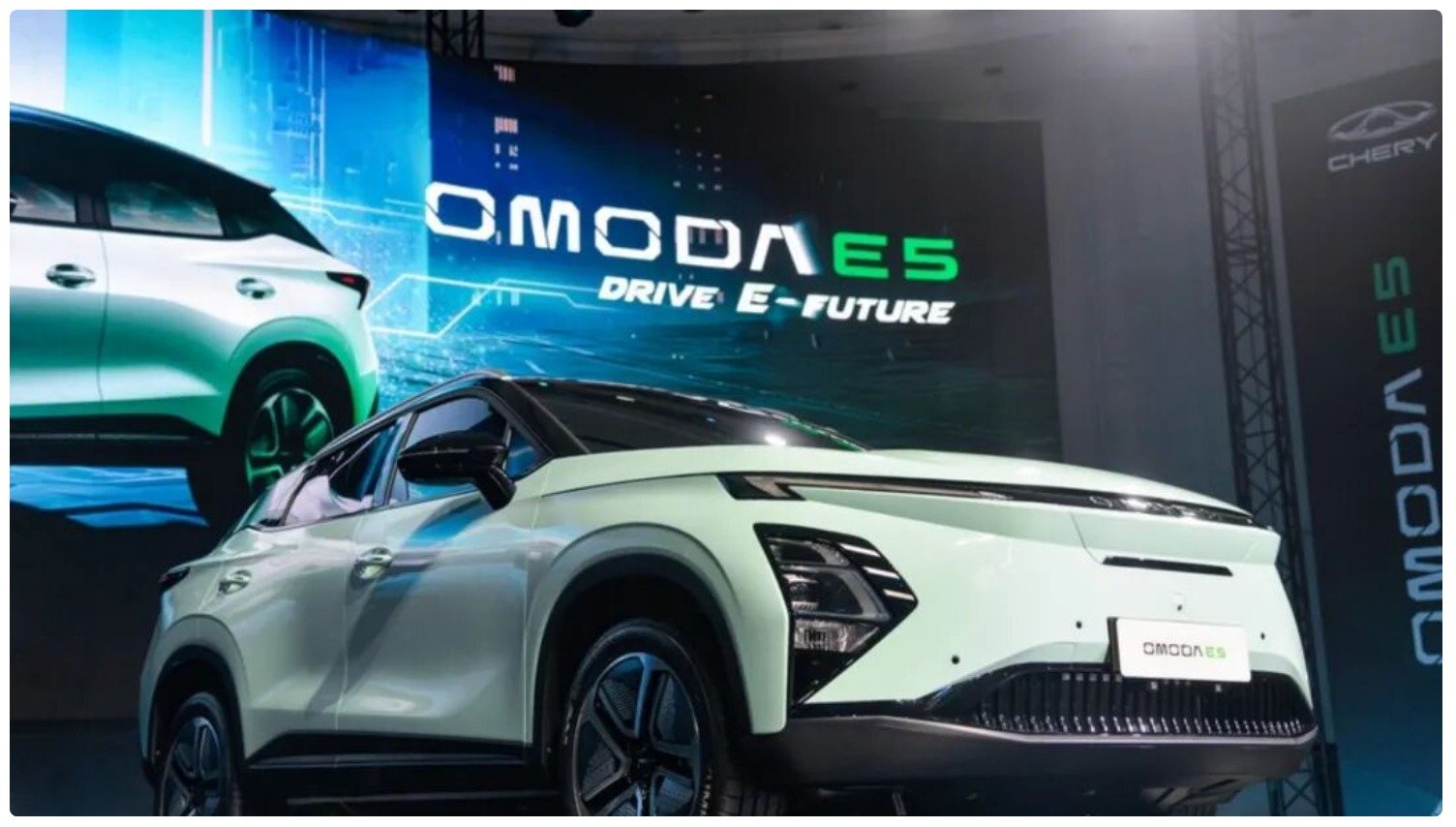
Make no mistake, this coup is entirely electric. The core driver of this massive growth sits squarely in the New Energy Vehicle (NEV) sector . Brands like BYD, Aion, and Denza are inherently EV-focused, whilst Chery and Jaecoo are aggressively expanding their electrified portfolios .
Historically, Indonesia has been a stable fortress for small petrol cars . However, as consumer habits upgrade and government policies shift, EVs are becoming the new disruptive variable . These cars aren’t just winning on price; they offer a generational leap in technology, standard kit, and long-term running costs .
Waking the Japanese Giants
So, where does this leave the traditional establishment? Japanese marques—namely Toyota, Daihatsu, and Honda—have dominated Indonesia for decades, bolstered by mature petrol vehicle networks and deep local roots . While that legacy advantage won’t vanish overnight, the cracks are beginning to show.
In January 2026, giants like Toyota and Honda witnessed a dip in their sales . The Japanese establishment has been demonstrably slower out of the gates regarding EV development compared to the Chinese contingent . As the market skews heavily towards electric propulsion, the sheer scale of the old petrol networks will inevitably lose its bite . The Japanese haven’t lost the war yet, but the pressure has now materialised .
Indonesia is barrelling headfirst into an EV-led restructuring cycle . The true test for the next phase? Seeing who can turn this explosive disruption into long-term dominance.