Finding a working public fast charger used to be the whole requirement. It is now the entry ticket, and the map of who has built them is lopsided in a way European policy has not yet answered.
The International Energy Agency puts the global stock of public fast chargers at about 2.7 million units at the end of 2025, with roughly 720,000 added in that year alone. More than 81 per cent of them, around 2.2 million, are in China. Four out of every five public fast chargers in service worldwide stand in one country.

Europe regulates density, not throughput
The European Union reached 110,000 chargers at 150 kilowatts or above in 2025, up 30 per cent, and current rules require a high-power station every 60 kilometres on motorways. With density approaching compliance, attention has moved to quality. Victoire Couelle of Transport and Environment said the focus is now on infrastructure quality, including price transparency, rather than on how many units get built.
The United States added about 18,000 public fast ports in 2025, up roughly 30 per cent, taking the total to around 70,000, and reached close to 81,000 by September this year. Charging sessions grew 26 per cent to 50.4 million in the third quarter. Canada ended 2025 at 8,804 ports and reached 9,615 by September, with 3.84 million sessions in the third quarter, up 37 per cent.
The utilisation problem
Graham Evans of Mobility Global offers a working threshold for a fast charging site: roughly one port for every 200 electric cars on the road. Below that ratio a site struggles to earn back its investment, and the number shifts with location, since rural sites and neighbourhoods with high home-charging rates carry lower utilisation by construction.
Japan is the counter-example. Electric penetration below 3 per cent, an official target of 300,000 ports by 2030 that implies roughly tenfold growth, and no viable business model. Koji Endo of SBI Securities said plainly that the business does not make money yet.
The power race
EVgo plans equipment rated up to 750 kilowatts in 2027, before any car in the United States can accept that rate. Four years ago 85 per cent of its network was 50 kilowatts, and two thirds of it now supports 350. Mercedes-Benz put 710-kilowatt charging capability on the 2028 AMG GT SUV, a figure its global charging partnership manager Fabian Prinz described as still rare in Western markets and increasingly common as Chinese brands arrive in Europe.
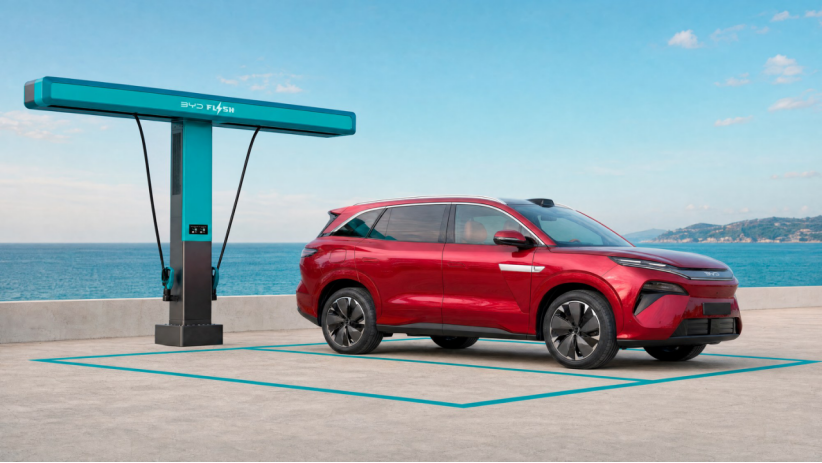
BYD intends to deploy 3,000 Flash ultra-fast units in Europe by 2027, and its Atto 8 moves from 10 to 97 per cent in nine minutes on the upgraded Blade battery. Tu Le of Sino Auto Insights expects China to export charging infrastructure the way it exported cars, which is what Akshay Singh of PwC meant by being leapfrogged rather than outrun.
Building chargers ahead of the cars is now the standard move among large operators, and it is expensive. High-power equipment costs money that utilisation will not repay for years, which is why the sector keeps consolidating towards operators who can wait.
Editor’s note: This is an adapted translation of the original Gasgoo report. It has been trimmed and restructured for readability for an international business audience. The full original (in Chinese) is at https://auto.gasgoo.com/news/202611/11I70477657C501.shtml.