Warehouse automation leader Hai Robotics refreshed its listing application on 13 September, restarting its Hong Kong IPO and positioning itself as a candidate for the first automated case-handling robot listing on the exchange, following an initial filing in February 2026.
Before the IPO the company completed 15 equity financing rounds worth about RMB 4.133 billion, a dense run that showed strong investor appetite, capped by a Pre-IPO+ round in January 2026. Its backers read like a roster of top Chinese funds: the XBOT PARK fund founded by Li Zexiang, Gao Bingqiang and Gan Jie provided early seed support, followed by Best Express, Legend Star, Source Code Capital, Sequoia China, DG Capital, Walden International and General Atlantic. After its Series E the company reached a post-money valuation of RMB 10.9 billion, keeping it a unicorn in the warehouse robotics lane.
It is still in the Hong Kong exchange’s enquiry and hearing stage and has not listed, but the use of proceeds is clear. According to the prospectus, the money will go to upgrading ACR solutions, software, algorithms and its next-generation technology stack, expanding global manufacturing and strengthening supply-chain resilience, scalability and quality consistency, widening global commercial reach and service capability, and working capital.
Hai Robotics is one of the breakout names in Li Zexiang’s robotics portfolio. Chen Yuqi founded the company in 2016 with Fang Bing and Xu Shengdong, alumni he met at Hong Kong Polytechnic University and ETH Zurich, and Li Zexiang serves as chief adviser. As e-commerce, new retail and smart manufacturing grew, warehouse orders fragmented, labour costs rose, and manual warehousing struggled with low efficiency, poor fault tolerance and wasted space, making automation a hard requirement.
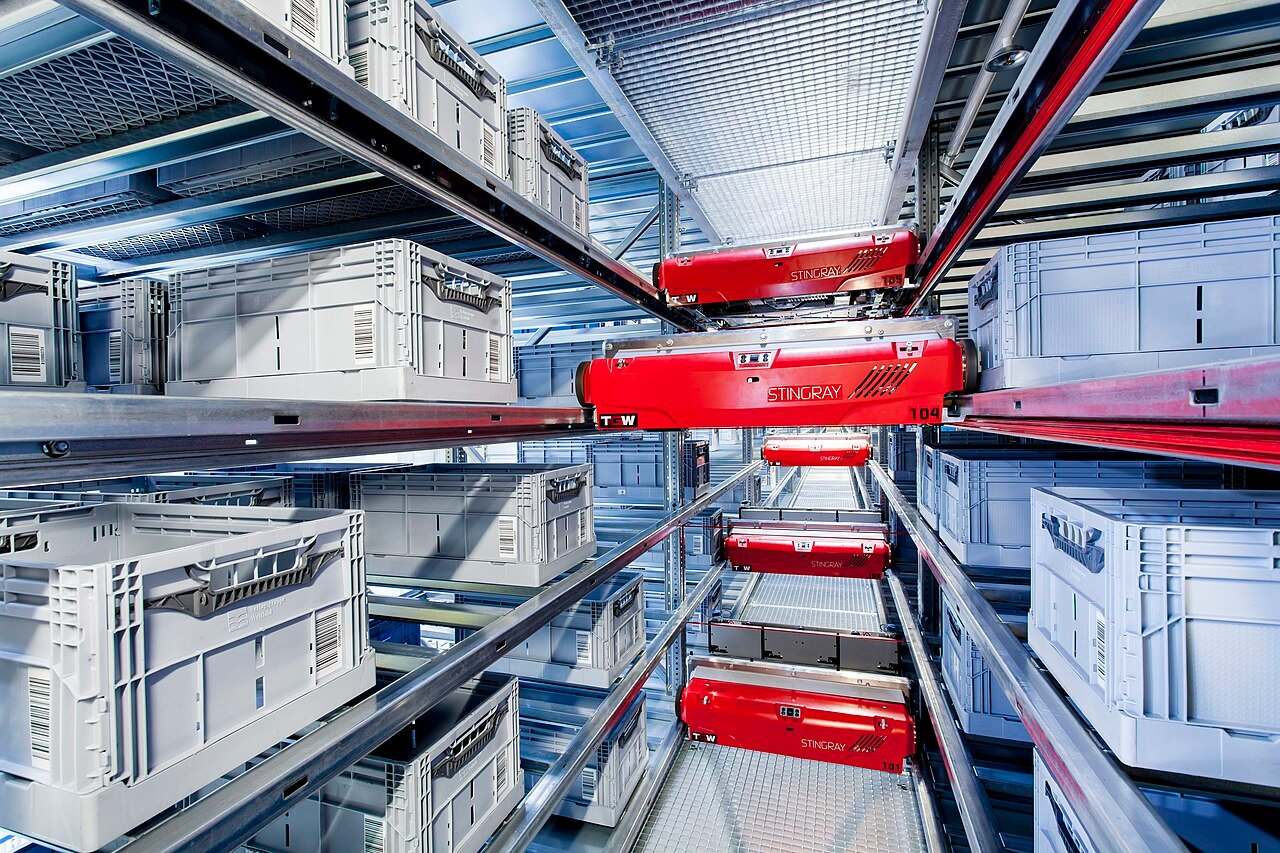
Players took different routes. Geek+, the sector leader, became a full-domain warehouse AMR provider covering shelf-to-person, case-to-person and pallet-to-person flows. Hai Robotics narrowed in on piece-picking, the most time-consuming and labour-intensive task, and pioneered the ACR solution. An ACR, or automated case-handling robot, can climb high racks on its own and precisely pick and place individual cases, completing put-away, picking and transport without moving whole rack groups and without rebuilding the warehouse structure, sharply raising density and throughput.
From the first HaiPick System 1 in 2017 to the HaiPick Climb in 2025, which supports storage heights up to 15 metres and was the world’s first single-side climbing ACR solution in large-scale commercial use, and an upgrade in 2026, the company developed its robot body, localisation algorithms, control system, fleet scheduling and warehouse management software in-house. It spent about RMB 1.028 billion on research from 2023 to 2025 and a further RMB 249 million in the first half of 2026, filing 2,495 patent applications globally by 30 June 2026, the most comprehensive portfolio among ACR providers.
That built a two-product matrix of ACR case-handling robots and AMR mobile robots, serving high-density piece-picking in e-commerce, third-party logistics and retail, and line-side material handling in electronics and industrial production. HaiPick System 1 was once the revenue engine, taking 92.8 per cent of 2023 revenue at RMB 748 million, but its share fell to 29.7 per cent at RMB 332 million in the first half of 2026 as newer products took over. HaiPick System 3 reached RMB 607 million in the first half of 2026, 54.3 per cent of revenue and the largest source. HaiPick Climb, launched in 2025, brought in RMB 149 million, 13.3 per cent of revenue. HaiPick System 2 contributed RMB 24 million, 2.1 per cent.
By 2025 revenue, Hai Robotics served seven of the world’s ten largest fashion and apparel companies and seven of the ten largest third-party logistics firms, with customers including Anta, Li-Ning, L’Oreal, Kohler, Philips, Maersk and Panasonic Logistics. By 30 June 2026 it had signed more than 2,000 projects and delivered more than 1,600, creating a loop from small pilots to efficiency validation to large-scale repeat expansion.
New orders reached RMB 2.353 billion in the first half of 2026, up 48.8 per cent year on year and close to 80 per cent of all of 2025. Orders in hand exceeded RMB 4.1 billion at the end of June 2026. Revenue rose from RMB 807 million in 2023 to RMB 1.36 billion in 2024, up 68.5 per cent, and RMB 2.017 billion in 2025, up 48.3 per cent, then to a first-half 2026 record of RMB 1.118 billion, up 70.2 per cent.
Like most robotics science-and-technology firms it is still loss-making. Net loss widened from RMB 1.009 billion in 2023 to RMB 1.256 billion in 2024, up 24.5 per cent, then narrowed to RMB 828 million in 2025, a 34.1 per cent reduction. Adjusted net loss was RMB 695 million, RMB 544 million and RMB 468 million across the three years. In the first half of 2026 revenue was RMB 1.118 billion, up 70.2 per cent, with a net loss of RMB 431 million and an adjusted net loss of just RMB 208 million. Across three and a half years the company lost RMB 3.524 billion, but as ACR case-handling spreads through piece-picking, the candidate for Hong Kong’s first ACR listing has a path to balance growth with profit.
Editor’s note: This is an adapted translation of the original OFweek Robot report. It has been trimmed and restructured for readability for an international business audience.