More than 40 robotics firms showed up to actually work, and the hard part is just starting
The wind in robotics is shifting in a way that matters more than any new demo. At the recently closed 2026 Bund Conference, more than 40 embodied-AI vendors appeared together, but the detail worth noting was not whether a machine could run, jump or backflip. It was that the robots were placed in pharmacies, factories and laundries to do a job.
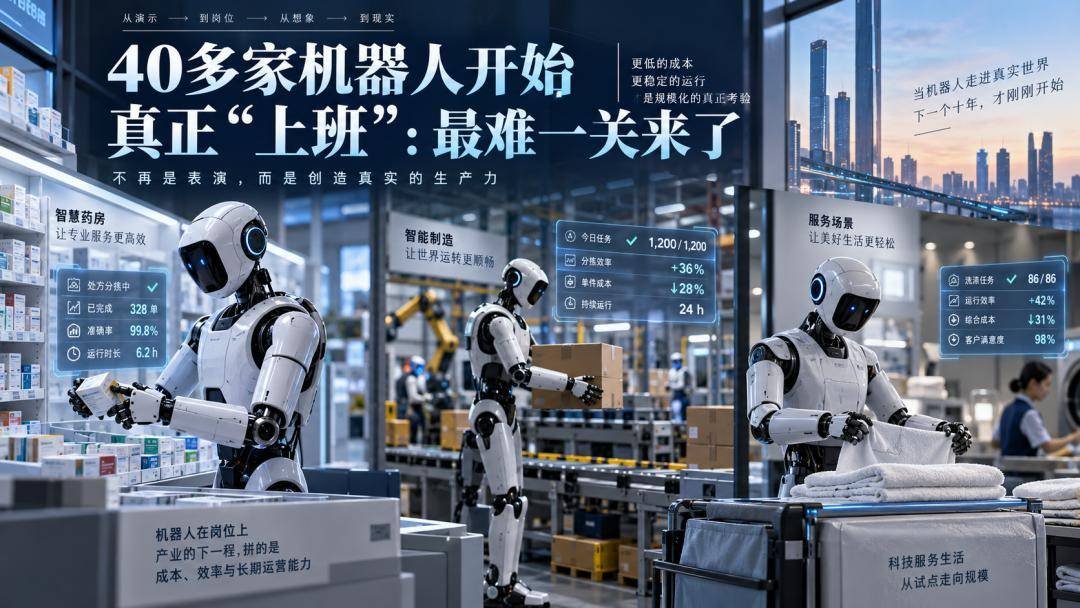
That marks a dividing line. The field is crossing from can you build the robot to can you make it finish a shift reliably, continuously and cheaply. The second question is almost certainly the harder gate in the whole industry.
The rules of the game changed while the demos were still touring. For years the most shareable robot clips were dancing, running, boxing, even backflips. Those displays are not meaningless. Balance, instruction-following and limb coordination are real progress. But a buyer weighing a purchase asks a different thing: will it work all day without a handler, and what does each task cost.
The honest numbers still temper the hype. Most humanoids today live in showrooms, labs and data-collection loops, and the share earning real revenue in factories and shops remains low. Crossing from prototype to durable throughput, the kind a finance team can model, is the gate nobody has cleared at scale.
The firms that win this turn will not be the best dancers. They will be the ones whose robots show up the next morning, plug into a real workflow, and actually finish the work. The spectacle got the category funded. The shift from demo to dependable labour is what decides who is still standing.
Editor’s note: This is an adapted translation of the original Sohu IT report. It has been trimmed and restructured for readability for an international business audience. The full original (in Chinese) is at https://www.sohu.com/a/1077209399_120354834.
Translated and adapted from Sohu IT (link).