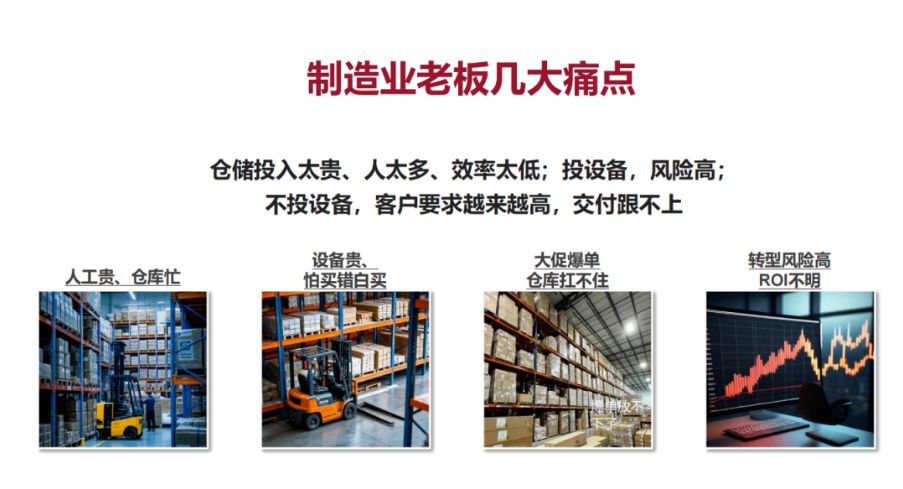
The hardest part of automating a warehouse has rarely been the robots. It is the bill: buy the hardware, absorb the depreciation when orders dip, and hope the technology does not age out before the loan is paid.
Shenzhen’s Bangqi Tech thinks the answer is to stop selling robots altogether. Its new Robot-as-a-Service (RaaS) model asks clients for zero upfront investment and a ‘move-in ready’ deployment, then charges for outcomes rather than assets.
From buying assets to subscribing to results
Under RaaS, a customer hands over floor space and Bangqi delivers the whole stack: its LDS production-coordination system, its ADS multi-brand robot scheduling system, and clusters of AMRs and AGVs. The client gets a 24/7 unmanned warehouse without hiring or maintaining anything.
The pitch is financial as much as technical. Bangqi founder and chair Wu Xiaoqian says the model converts traditional capex into opex, with Bangqi absorbing depreciation, iteration, maintenance and failure risk. The two sides, in her framing, are bound to the same goal of cutting cost and lifting efficiency.
What the numbers claim
Bangqi says the approach can cut per-item inbound and outbound costs by 35 per cent, raise storage utilisation by 40 per cent, lift picking efficiency by 300 per cent and halve labour cost. Its ‘industrial AI agent plus robots plus warehouse operations’ solution has been deployed in more than 2,000 projects globally, with a 100 per cent repurchase rate among leading clients including CATL, EVE Energy, Sunwoda, Geely, Li Auto, China National Pharmaceutical and SF DHL.
The logic is a kind of digital levelling: by removing the heavy-asset barrier, Bangqi argues, small and mid-sized manufacturers can adopt unmanned warehouses at low risk. In a decade when uncertainty is the only constant, renting the robot may beat owning it.
Translated and adapted from OFweek Robotics (robot.ofweek.com).
Source: https://robot.ofweek.com/2026-07/ART-8321203-8120-30694085.html