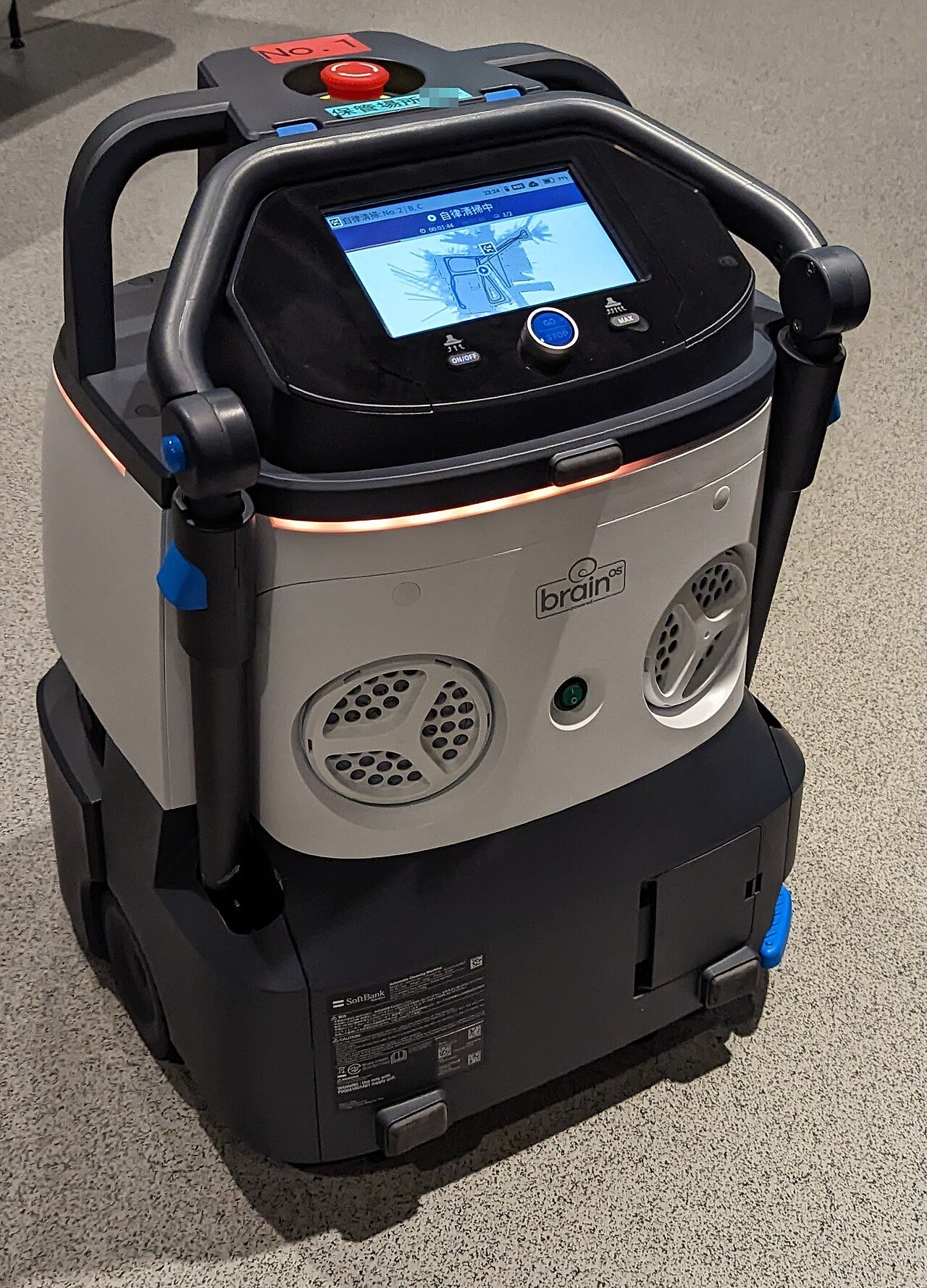
Siasun Robotics announced that its wholly owned subsidiary Shenyang Dianshi Technology will increase capital through public listing on the Beijing Property Exchange, bringing in at least three investors for a combined amount of no less than RMB 50 million, at a price no lower than the asset-appraisal result filed with state assets authorities.
After the increase, Dianshi will no longer be consolidated into Siasun’s statements. Siasun currently holds Dianshi 100 per cent through its own subsidiary Shenyang Xinzhi Investment. Backed by Siasun, Dianshi focuses on cleaning-robot R&D and commercialisation, industrial mobile robots and commercial scenarios, and the fusion of AI with next-generation service robots, aiming to lead in industrial intelligent cleaning and low-speed autonomous driving.
Dianshi built the StarGuard line of industrial cleaning robots and automatic workstations. As one of China’s first intelligent cleaning robots built for industry, StarGuard uses industrial-grade SLAM navigation and new path-planning algorithms with front, rear and side visual protection for flexible obstacle avoidance, a zero-dead-angle turning radius for tight spaces, eight hours of continuous operation per charge, and auto-charging and water-swap for 7×24 unattended runs that cut labour cost.
The QD750 is built for industrial cleaning, the QD450 scrubber-dryer targets the pain of high labour and low intelligence in traditional cleaning, and the D700C sweeper handles textile, footwear, automotive and warehouse floors, from fine clippings to long cloth strips and bottles. StarGuard fits cement, epoxy, tile and other floors across new-energy battery, photovoltaic, auto-parts and other complex plants. Its industrial sweepers have won batch orders, and its low-speed autonomous-driving products have scaled orders in photovoltaics after a Dongfeng Liuzhou plant.
In lithium battery, Dianshi’s first large-scale cleaning-robot project landed with leading firms, and it won a global first intelligent-cleaning-robot project with a major customer. By official data from October 2025, StarGuard covered over 60 per cent of high-end firms in the lithium-battery industry. Revenue ran RMB 5.94 million, RMB 17.42 million and RMB 28.23 million across 2023 to 2025, a 118.05 per cent three-year compound rate, with net losses narrowing. In the first half of 2026 revenue was RMB 14.93 million with a net loss of RMB 3.28 million. As of 30 June 2026, assets were RMB 43 million, liabilities RMB 36 million, net assets RMB 7 million. On a 30 September 2025 base, net assets were RMB 10.02 million, assessed at RMB 49.58 million, a 394.86 per cent premium.
Editor’s note: This is an adapted translation of the original OFweek Robot report. It has been trimmed and restructured for readability for an international business audience.
Translated and adapted from OFweek Robot (https://robot.ofweek.com/2026-07/ART-8321203-8120-30695241.html).