On 4 September, Singapore robotics firm Hivebotics closed a US$6 million Series A round, a modest sum next to the hundreds of millions common in China’s robot sector, yet notable for who wrote the cheque. The round was led by Vertex Ventures Southeast Asia and India, with Fareast Land Development, the property arm of Taiwan’s Far East Group, and Rigel, an Asian smart-sanitaryware manufacturer, joining as investors. The backing from a property group and a bathroom-fixtures maker signals buyers solving a real operational problem rather than speculators chasing hype.
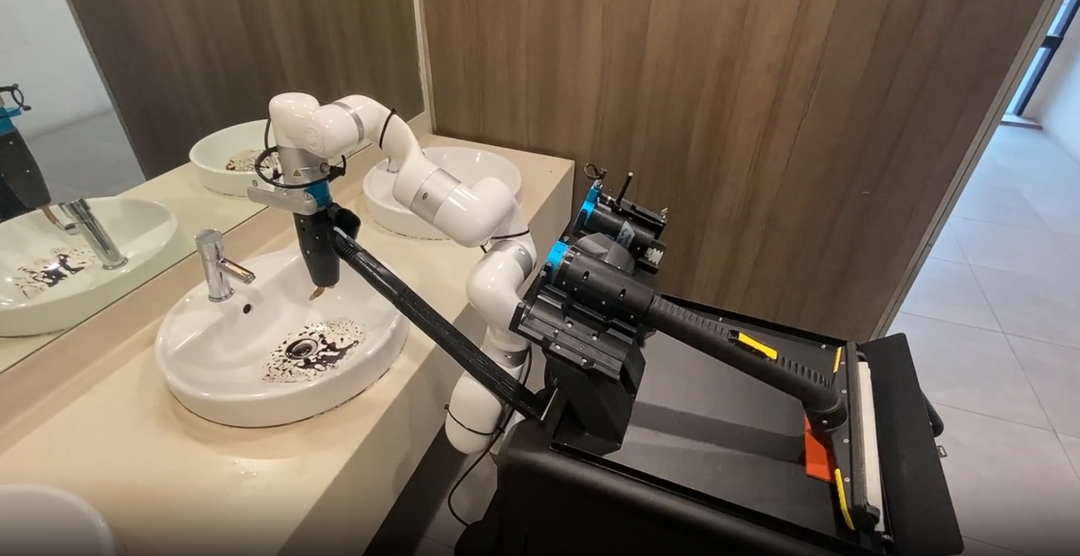
Hivebotics’ first product, Abluo, is a mobile robot fitted with articulated arms built to clean a full commercial restroom, covering toilets, urinals, wash basins and floors. It works by non-contact methods: high-pressure steam, directed cleaning agents, vacuum extraction and drying. Onboard cameras identify each fixture and software plans the cleaning route in real time.
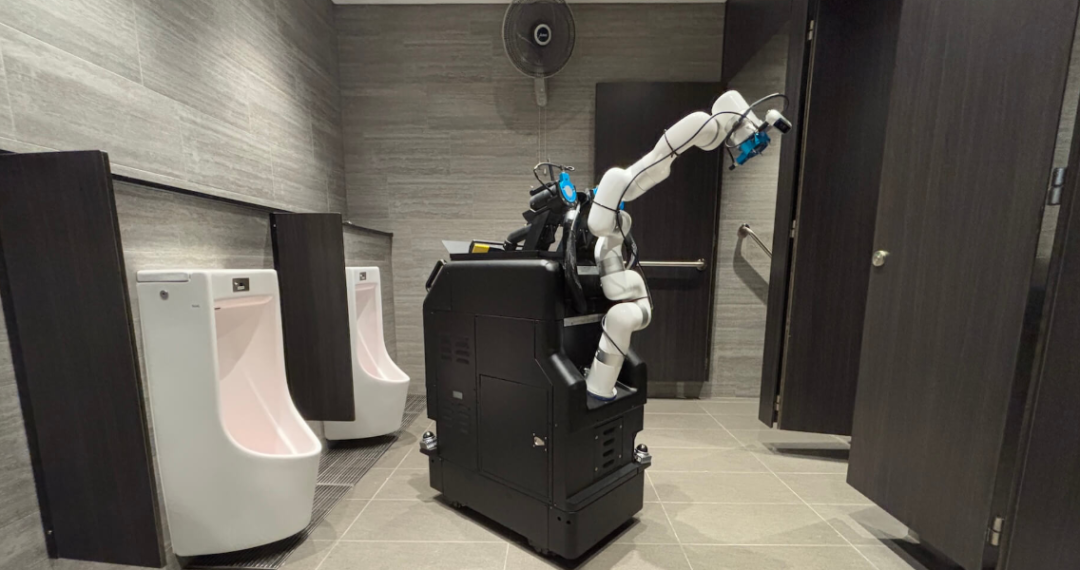
Against roughly 30 minutes of manual labour per restroom, Abluo needs only about five minutes of human inspection. The non-contact approach lowers cross-infection risk, and a steam nozzle handles stubborn stains and dried paper.
Over the past twelve months Abluo has run nearly 10,000 hours across more than 20 sites in Asia, Europe, the Middle East and North America, including hospitals, airport terminals and shopping malls. It has completed trials at Singapore Changi Airport and entered a pilot at Metroplaza in Kwai Fong, Hong Kong.
Founded in 2021 and spun out of the National University of Singapore, Hivebotics grew from a pandemic-era pain point: a severe shortage of cleaning staff. Its two founders, Rishab Patwari as chief executive and Nguyen Tuan Dung as co-founder, both graduated from NUS in 2023 and spent time working as cleaners in universities, malls and hotels, even mixing miso and yeast to simulate waste for training.
The wider washroom-cleaning robot niche is still small but growing. Global sales reached about US$150 million to US$159 million in 2025 and are forecast to reach US$277 million to US$279 million by 2032, a compound annual growth rate of roughly 8.1 per cent to 8.4 per cent. In labour-tight markets like Singapore, cleaning-staff turnover can run as high as 200 per cent to 400 per cent a year, making automation compelling.
Editor’s note: This is an adapted translation of the original OFweek Robotics report. It has been trimmed and restructured for readability for an international business audience. The full original (in Chinese) is at https://robot.ofweek.com/2026-09/ART-8321203-12006-30701963.html.
Translated and adapted from OFweek Robotics (https://robot.ofweek.com/2026-09/ART-8321203-12006-30701963.html).