A robot that answers in 400 milliseconds has stopped waiting for you to say its name. AgiBot’s new model removes the wake word, and that single design choice says more about where humanoid interaction is heading than any benchmark score.
What was released
WITA-Omni is an end-to-end multimodal interaction model for embodied systems. It accepts audio, video, touch and the robot’s own proprioceptive state as inputs, and produces motion and facial expression as outputs. It is already deployed on shipping hardware, demonstrated on the Expedition A3-Ultra at the company’s innovation day.
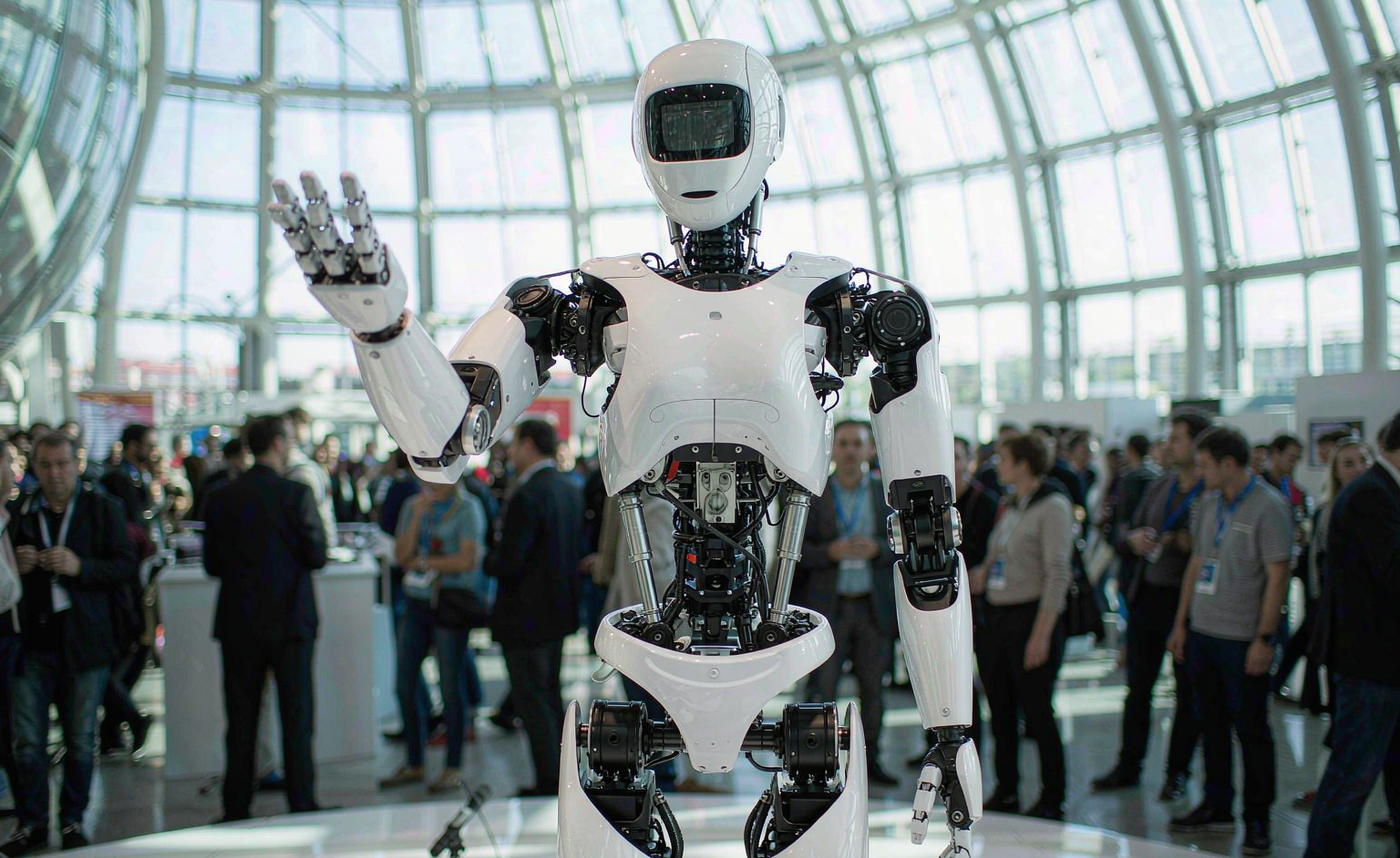
Response latency is about 400 milliseconds at its fastest and 600 milliseconds on average. The system supports full multimodal rejection, meaning it can decline to respond to input that is not addressed to it, and it uses voiceprint, lip movement and visual localisation together to suppress background noise.
The engineering underneath
The model runs a streaming full-duplex architecture with a fast and a slow path. The fast path handles comprehension and immediate reply. The slow path handles reasoning, planning and long horizon tasks, and both share the same context, which is how the system can hold a conversation while still executing a multi-step task.
It covers more than 100 languages and dialects without switching modes, does simultaneous interpretation in stream, and renders dozens of intensities of synthetic emotion on a face screen. AgiBot reports first place on four embodied interaction benchmarks, DailyOmni, ActivityNet-TimeLens, MMAU and EmbSpatialBench.
Why latency is the product
Every humanoid demo in the last two years has run through the same sequence. Wake word, upload, inference, download, gesture. The delay is small in absolute terms and enormous in social terms, because a two second pause is the difference between a machine that responds and a machine that computes at you.
Removing the wake word changes what the device is for. A robot that can be addressed at any moment, and can tell whether it is being addressed, is a robot that can stand in a lobby or a showroom without a handler. AgiBot has already deployed units in entertainment and guided tour settings, doing knowledge briefings and park navigation in public environments.
That is a narrow commercial use, and it is where interaction models get their data. The value is not the tour guide. The value is a million hours of unscripted public conversation that no laboratory can generate.
Editor’s note: This is an adapted translation of the original Gasgoo report. It has been trimmed and restructured for readability for an international business audience. The full original (in Chinese) is at https://www.gasgoo.com/robot/news/.