A spec-to-price strike
On the evening of 21 September Unitree launched the Dex5-S, a five-finger dexterous hand with 22 degrees of freedom, sized 1:1 with a human hand, starting at RMB 39,900. Thumb and little finger get 5 degrees each, index, middle and ring 4 each, and the little finger adds a roll axis. At 620 grams with an aluminium shell, 22 fully direct-drive motors, per-joint impact protection, up to 1000 Hz control over gigabit, and a palm camera, it can unscrew caps, open cans, cut paper with scissors and juggle a lemon in the demo.
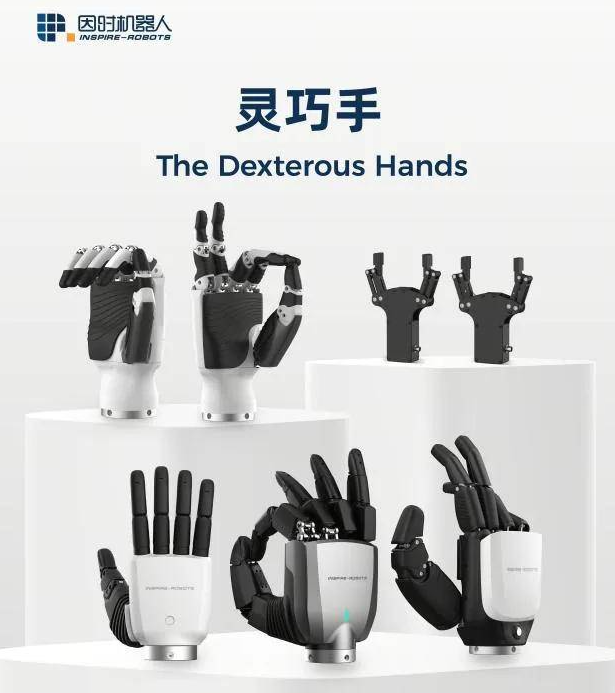
Read against the industry, the price is not a routine update. It is Unitree’s first move beyond the whole body after its 19 August STAR Market listing at about RMB 61 billion market value as “A-share humanoid first share”. Its first big play was not a new humanoid but a component track once guarded by specialists, and its former hand suppliers included Yinshi Robotics.
The price history is a compressed Chinese cost-cut story. Imported hands once cost RMB 1 million. In 2020 Yinshi pushed the first domestic hand under RMB 100,000. By 2025 the norm fell to RMB 20,000 to 50,000. In 2026 some products dropped under RMB 10,000, and six-degree hands for humanoids hit RMB 6,000 to 8,000, an over 80 per cent drop. Against that, Unitree’s RMB 39,900 is not the cheapest, but its kill shot is spec-to-price: four years ago RMB 40,000 bought a 6-degree Yinshi hand, now the same budget buys 22 degrees of direct-drive with joint protection, a near fourfold freedom jump that directly squeezes the specialists’ high-end core.
Two valuation logics under attack
Lingxin is the most visible name: under two years and seven rounds, a near RMB 1.5 billion Series B in February 2026, a April B+ at USD 3 billion (about RMB 20.5 billion), and a new round eyeing USD 6 billion (about RMB 42.4 billion) with talk of a 2027 Hong Kong IPO and a trillion-yuan forecast. Its backing is real market share: over 80 per cent of the global high-degree-of-freedom hand market, over 10,000 cumulative orders, 4,000 units a month at peak, RMB 260 million 2025 revenue up over twenty-five times. But a RMB 42.4 billion target already exceeds GGII’s forecast of a USD 5 billion (about RMB 33.9 billion) global hand market by 2030, so the gap between revenue and valuation rests on “high-degree leader plus data ecosystem” imagination. Unitree, a body maker shipping tens of thousands of units with its own 20,000-plus loading demand, now enters the same spec at half to a third the price, shaking that imagination’s pricing base.
Yinshi is the opposite extreme: ten years on micro servo-cylinders, China’s first commercial five-finger hand maker, GGII’s China shipment leader with over half the 2025 market of about 19,200 units, nearly 10,000 delivered in 2025 and a 2026 target of 30,000 to 50,000. Its clients include Unitree, AgiBot, UBTECH, CATL and BYD. Yet analysts note shipment leadership has not brought matching valuation, because capital prices “mass-production certainty” far below “imagination”. Now Unitree’s in-house hand opens a second cut in its most important customer base: when the biggest customer becomes a competitor, “certainty” itself needs repricing.
The enclosure of the whole-body makers
Pull back and Unitree is only the latest mover. Body makers building their own hands is now an open strategy. Tesla Optimus Gen 3 has 22 degrees and tactile sensors, Musk conceding the forearm and hand are harder than the rest. Xpeng IRON has 21 degrees per hand and 76 overall. AgiBot spun out Linjie for hands, four rounds and RMB 10 billion valuation in about five months with over 20,000 delivered. UBTECH and Star Era also mostly self-develop.
Dongwu Securities estimates the long-run hand share of humanoid cost at 20 to 30 per cent, second only to the body actuation system. Such a valuable link cannot stay outsourced forever, and in the first half of 2026, with about RMB 43.8 billion in embodied-intelligence funding, components took 14.4 per cent, for the first time exceeding the 12.8 per cent for whole bodies, showing capital already betting on the hand’s positional value while body makers turn the fight into a war of attrition.
Three filters for any hand-maker
For readers tracking the track, three questions test whether a hand-maker’s valuation still holds. First, is the customer base independent of body makers? Revenue concentrated in one or two body makers that self-develop hands (Unitree for Yinshi) discounts growth. Counter-examples are Yinshi’s move into industrial automation and medical, and Lingxin’s long-tail research clients, the further from body makers the safer. Second, has it passed the “10,000-unit validation”? Lingxin’s founder Zhou Yong argues before 10,000 units a hand is a lab haute couture. GGII sees China hand sales of 70,200 units in 2026, up 265.63 per cent, and over 430,000 by 2030, but orders land with real deliveries, not funding news. Third, is there an ecosystem moat beyond hardware? Lingxin bets on “hardware plus data plus skill store”. Yinshi holds the cost line through cross-industry cylinder reuse. Pure hardware price wars end without profit. The story must reach beyond hardware.
Unitree’s RMB 40,000 for 22 degrees looks like a hand price cut but is really a signal: once the humanoid price war’s first round ends, value is shifting to the end-effector, and the path is defined by the biggest shipper. For Lingxin and peers, every pre-IPO valuation must answer one question: after body makers self-develop, what moat remains? The good news is hands approach an industrial-standard tipping point at over 60 per cent annual price drop. The bad news is no one yet knows who defines the hand.
Editor’s note: This is an adapted translation of the original OFweek Robotics report. It has been trimmed and restructured for readability for an international business audience. The full original (in Chinese) is at https://robot.ofweek.com/2026-09/ART-8321201-12003-30704930.html.