Zhidx reported on 9 September that Hangzhou three-dimensional compute-in-memory AI chip firm Weina Hexin has closed a RMB 1 billion C1 round and will soon reach scaled commercialisation and mass production, joining the first group of three-dimensional compute-in-memory AI chip companies worldwide to do so.

The round drew professional investors including Youyi Capital, Yuanhao, Jinpu, Sunshine Life, Yuanhe Puhua, Delian, Kuanqiao Hengsong and Houxue, plus industrial backers MegSmart, Henxu, Huaqin and a well-known large-model company, with several existing shareholders following on. Founded in 2021 and spun from the Peking University Zhejiang Institute of Information Technology, it is led by founder, chief scientist and chairman Ye Le, an associate professor at Peking University’s School of Integrated Circuits.
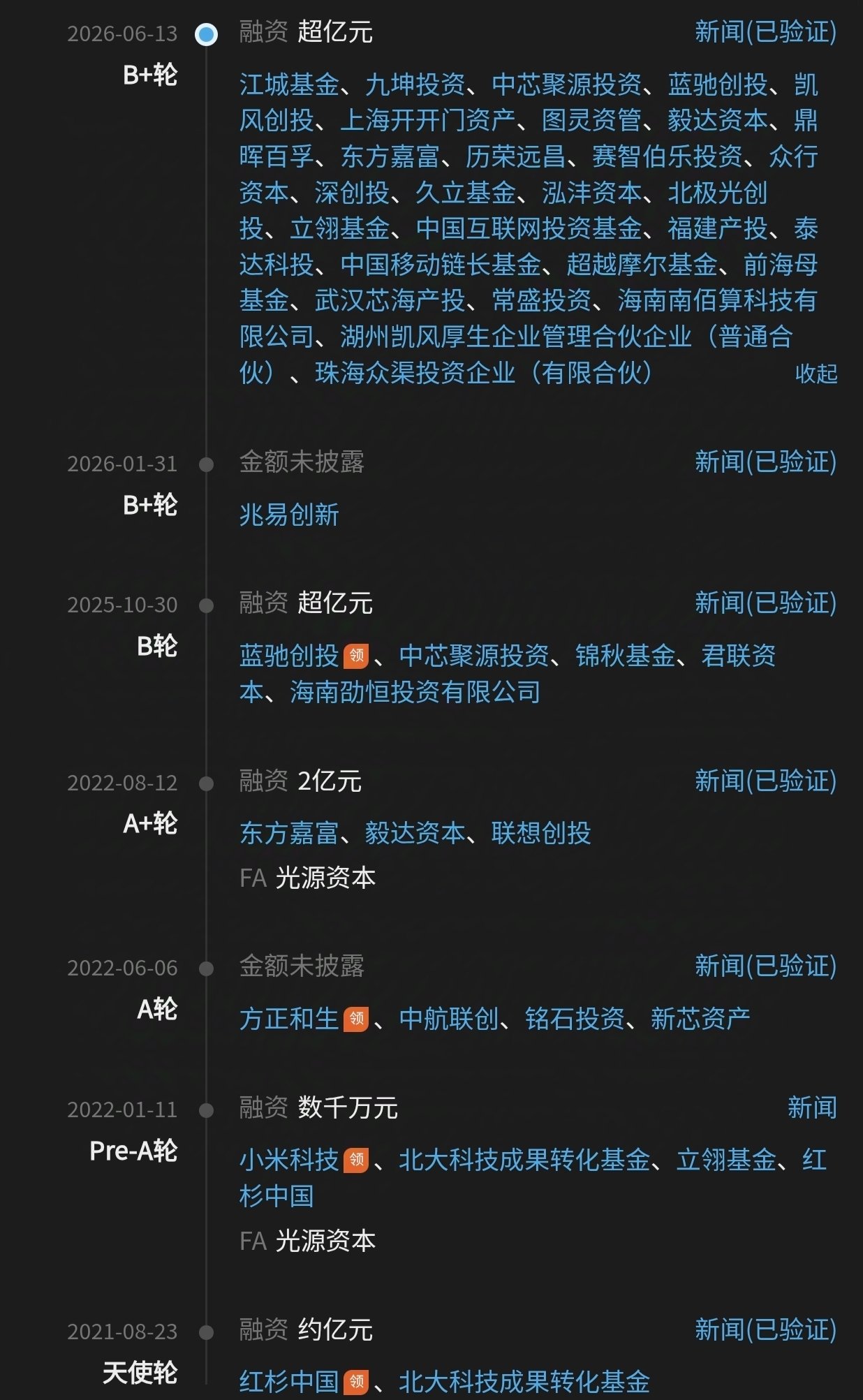
Corporate records show roughly seven earlier rounds, with shareholders including Xiaomi, Lenovo Capital, GigaDevice, SMIC Juyuan, the China Mobile chain fund, CNII and Shenzhen Capital. In June the firm said its B-series total exceeded RMB 1 billion, meaning it has raised more than RMB 2 billion in under a year.
Breaking the memory wall with compute in memory
Weina Hexin builds 3D-CIM architecture AI inference chips that fuse DRAM near-memory computing, SRAM compute-in-memory and RISC-V heterogeneous compute-in-memory, attacking the memory wall and power wall of the von Neumann design to deliver high throughput, low power and low cost for large-model inference.
It chose an SRAM path, embedding compute units inside storage and running the matrix and tensor maths central to inference in parallel on the array. Measured on taped-out silicon, its SRAM compute-in-memory chip reaches four to six times the compute density and five to ten times the energy efficiency of a von Neumann chip.
Product lines span edge and cloud. The LP-CIM series works with memory makers to give edge AI a cost-effective option, while the cloud chip reaches advanced-node-class compute on mature process, a path toward process independence. Having completed chip, board, server and full software stacks, it will send samples to multiple-scenario customers this year.
Its ecosystem spans storage makers, large-model firms, phone and PC makers, server and cloud providers and main-control chip firms, targeting AI phones, AI PCs, AI NAS and cloud token factories with inference solutions.
More images from the source report:


Editor’s note: This is an adapted translation of the original Zhidx report. It has been trimmed and restructured for readability for an international business audience.
Translated and adapted from Zhidx (https://www.zhidx.com/p/592220.html).