On 18 August, Xiaomi president Lu Weibing and chief financial officer Lin Shiwei took an earnings call to answer questions on the group’s second-quarter results and, above all, its car business. The headline number was a deepening loss in the unit that holds Xiaomi’s smart electric vehicles and artificial-intelligence work, even as volume kept climbing.
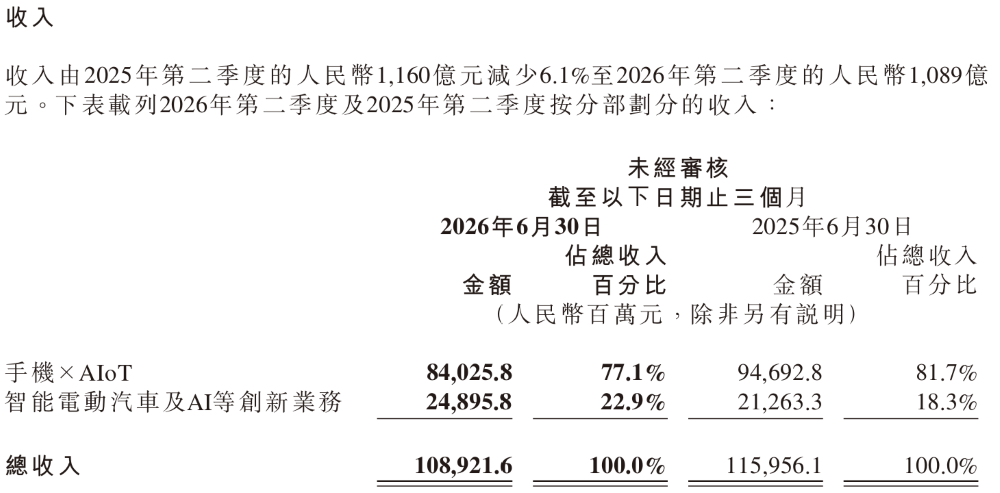
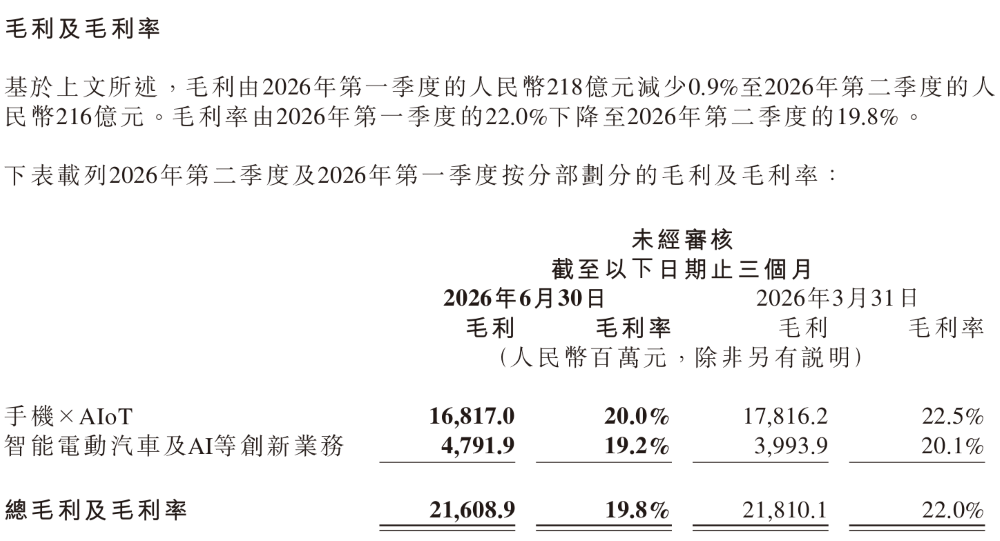
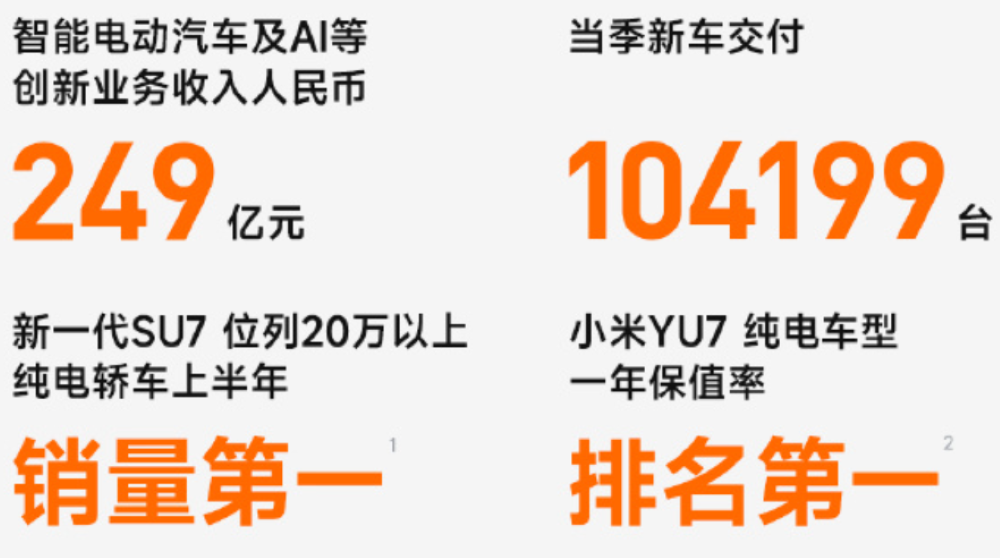
The group reported total revenue of 108.9 billion yuan for the second quarter, with adjusted net profit of 6.2 billion yuan. The smart-EV and AI innovation segment brought in 24.9 billion yuan, of which the cars themselves accounted for 23.9 billion, up 15.9 per cent from a year earlier. The segment’s operating loss widened to 2.6 billion yuan, roughly 8.7 times the year-ago figure, and its gross margin slipped to 19.2 per cent, down 7.2 points year on year. Xiaomi delivered 104,200 vehicles in the quarter, 28.2 per cent more than a year earlier.
A deliberately separate buyer
Lu said the coming Pengcheng series is built to avoid cannibalising the SU7 and YU7. The overlap with both existing models is only about 10 per cent, because Pengcheng is pitched at space and families rather than at the driver’s-car positioning of the SU7 and YU7. Pre-orders leant toward household and multi-passenger use, and buyers are older on average. The N90 Max and N70 Max prices are not final, so their hit to margin is unknown.
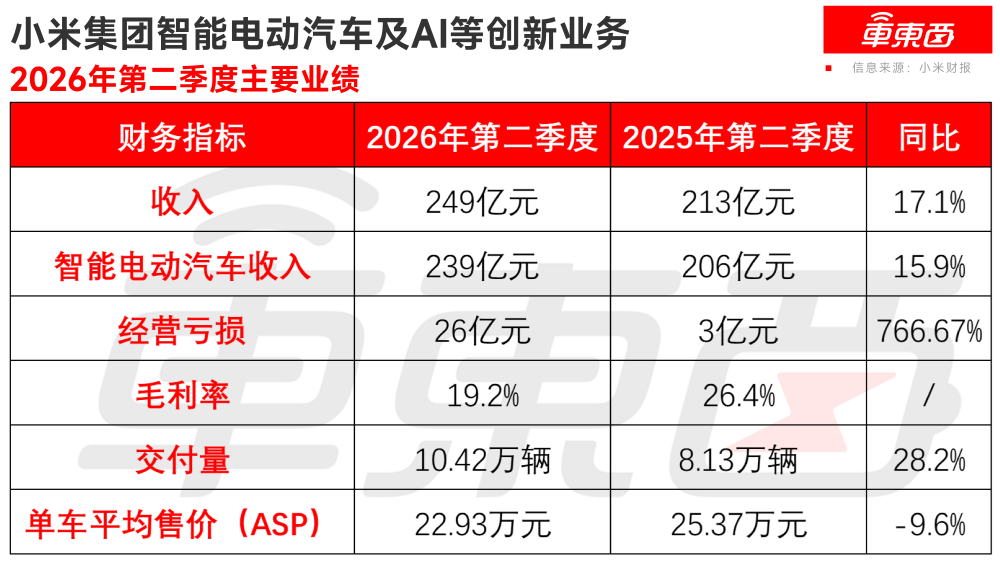
On the margin dip, Lin pointed to three causes. A year earlier the high-margin SU7 Ultra had lifted the base; this quarter a richer SU7 mix and the cost of the new-generation SU7 pulled margin down. Early revenue from Xiaomi’s large-model business also weighed on the segment. He framed the average selling price as a result of the product mix, not a target, and said it barely moves margin.
The overseas queue
The most forward-looking signal was abroad. Lu repeated that Xiaomi will go overseas in the second half of 2027, and said the dealers he met this year are among the top ten in their markets, with seven or eight of the leading names in a given country actively pursuing a Xiaomi franchise. His reason: China’s smart-EV export is now an unstoppable trend, Xiaomi’s human-vehicle-home ecosystem is unique globally, and it is a tech firm building cars rather than a legacy carmaker. A board trip will also scout European markets.
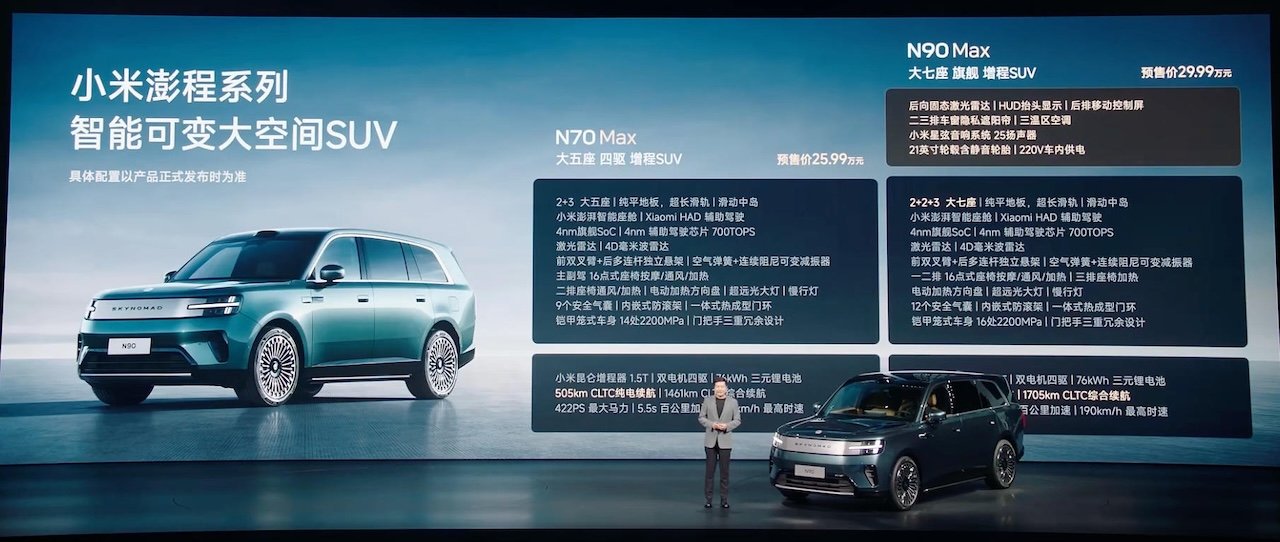
On powertrain split, Lu would not give a range-extender versus battery-electric ratio, noting the Modena-platform SU7 and YU7 and the Kunlun-platform Pengcheng are meant to advance together. The takeaway for European observers is blunt: a Chinese challenger that already moves more than 100,000 cars a quarter is now lining up premium overseas dealers years before launch, betting that brand and ecosystem, not price alone, will win the West.
More images
Editor’s note: This is an adapted translation of the original CheDongXi report. It has been trimmed and restructured for readability for an international business audience.