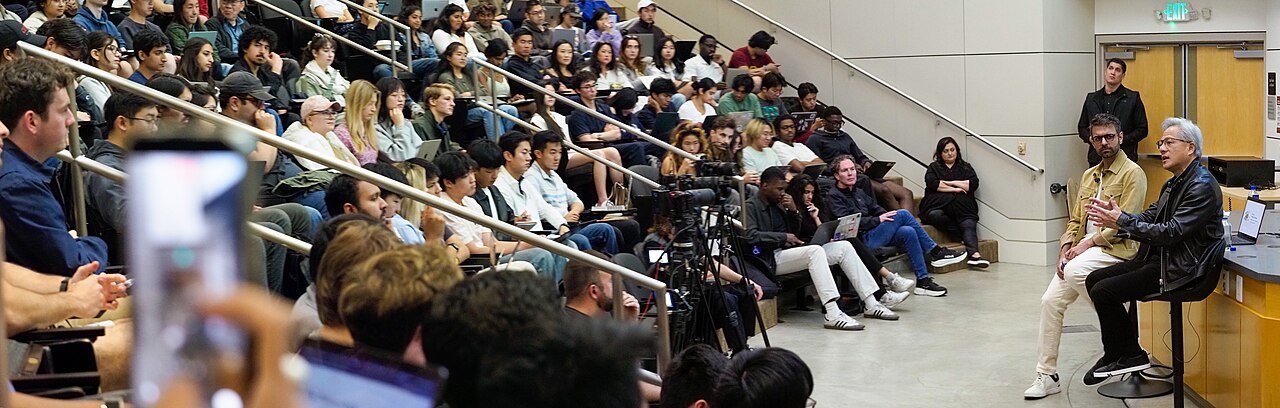
On July 24, Jensen Huang posted his first-ever tweet. It wasn’t about NVIDIA’s latest GPU, earnings, or a product launch. It was about open source AI.
Huang’s newly created X (Twitter) account shared an open letter titled “Open-Weight Models and American AI Leadership,” signed by NVIDIA, Microsoft, Meta, Hugging Face, Mistral, Y Combinator, and 15+ other tech giants and startups. The letter argues that open-weight AI models strengthen security, accelerate innovation, and enable sovereignty — a direct counterpoint to the closed-source approach of OpenAI and Anthropic.
The timing is no coincidence. The letter comes amid what US tech media Axios has dubbed “Kimi Panic” — the shockwave triggered by Chinese AI lab Moonshot AI’s Kimi K3 model, released on July 16. Kimi K3 is the largest open-weight model ever released (2.8 trillion total parameters), with coding performance approaching Anthropic’s Fable 5. The developer community response has been explosive: Hugging Face set up a countdown page for the full weight release, and Moonshot’s API has been selling out.
The letter draws a parallel to the 1980s open-source software movement, arguing that open-weight models are to AI what Linux was to the internet. It explicitly defends knowledge distillation — the practice of using one model’s outputs to train another — as a legitimate technique that has driven AI innovation for years.
The underlying tension is this: OpenAI and Anthropic claim distillation is theft. Microsoft CEO Satya Nadella called that position hypocritical, noting that these same companies used public data — including copyrighted content — to train their models. Hugging Face’s CEO dismissed distillation fears, saying “if it were that easy, many other countries would have already built better open-source AI.”
Huang’s debut post signals that the open vs. closed AI battle has become the defining debate of 2026 — and the world’s most valuable chip company has chosen a side.
Translated and adapted from Sohu IT (it.sohu.com).