How long does it take a company to travel from star unicorn to a queue outside an arbitration hearing? For Wujing Dynamics the answer is eight months.
Registered on 11 February 2026. In June it told the market it held close to RMB 1 billion of orders, had received RMB 110 million of funding, and carried a RMB 1 billion angel valuation. In September it launched a product billed as the highest explosion-proof rating in the sector. In October it was reported to owe nearly RMB 8 million in wages, to have stopped paying social insurance and housing fund contributions, to have an unreachable controlling shareholder and to have halted work. Its research chief and ordinary staff ended up in the same labour arbitration room.
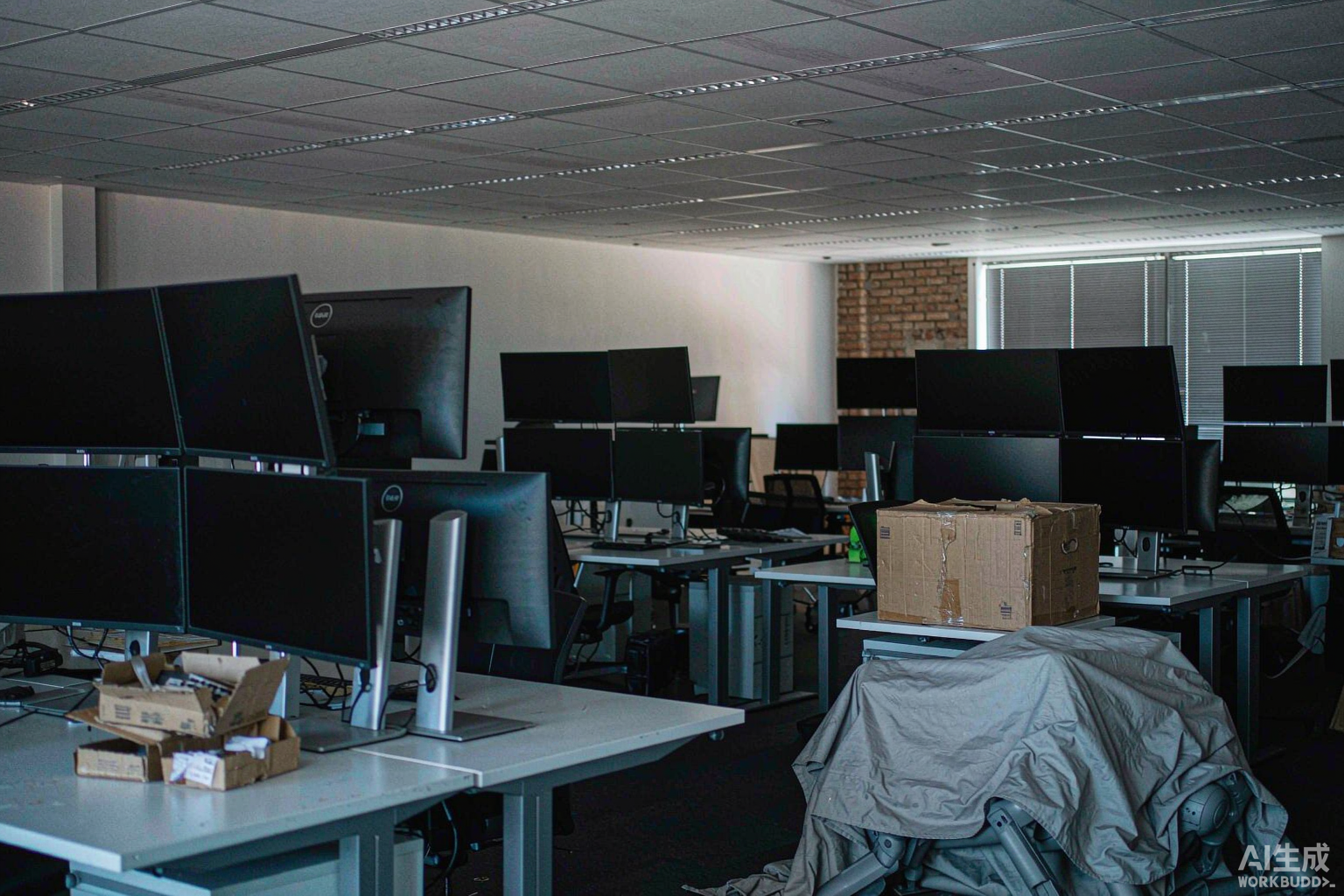
The Jiangning district of Nanjing had promoted it as a model of fund-led recruitment. The Huarui embodied intelligence industrial park brought it in under the language of patient capital, and a district fund plus a market fund completed an angel round in the tens of millions of renminbi.
Between the official press release and the arbitration application there was one autumn.
This is not a simple story of a fraudster leaving town. A fraud would be easier to explain. What is uncomfortable about Wujing is that it executed, almost word for word, the narrative that has been most fashionable in embodied AI for two years: elite university team, mandatory industrial use case, state enterprise framework orders, local fund recruitment, differentiated explosion-proof heavy-load positioning. Then it hit the trap buried inside that narrative at every single step.
The template
On paper the configuration is copied from the template. About 20 core team members came from Tsinghua, Shanghai Jiao Tong, Zhejiang and Harbin Institute of Technology, several of them previously at Zhijiang Lab, Agibot or Robot Era, covering joint modules, motion control and model training end to end.
The product choice was clever too. Not a general-purpose humanoid, not a consumer toy, but integrated patrol and operation for industrial quadrupeds. Conventional inspection dogs only look at things. Wujing claimed its dogs could carry an arm and do work while walking. The customers it aimed at, power grid inspection, petrochemicals, energy and mining, pay high ticket prices and buy through central and local state enterprises.
The Panshi P25-Ex launched in September claimed IIC T6 explosion-proof certification at 60 kilograms all-up, aimed at refining and coal chemicals. On paper there is little to criticise. On paper and in business are two different claims.
The provenance is more telling. Corporate records show the controlling shareholder has interests in more than ten companies and built his career in medical optics. Wujing was wholly owned for a period by his optical micro-systems company before the assets were injected through a share swap. An optical-industry serial entrepreneur assembled a robotics team, took joint money from a local fund and a market fund, and moved at speed into a hardware category that needs long validation cycles.
In that combination, the technical team made the story coherent and the controlling shareholder spread the footprint. Delivery and cash flow, the two things that decide survival, came after the narrative.
The district’s support was real. Tens of millions from the district investment arm, tens of millions from the Huarui park, a stand-alone R&D office building with the furniture already in it. The chief executive’s own phrase was that you could move in with your bags. The district investment holding group manages more than RMB 12.3 billion across four funds, with a RMB 1 billion technology innovation fund and 46 portfolio projects.
The fund plus industry plus park model is not the problem. Unitree and DEEP Robotics grew up in Hangzhou under a similar logic. The problem is when recruitment targets demand that a project explode on arrival, and a company compresses three years of work into six months of reporting.
The order book, unpacked
RMB 110 million of funding sounds like a lot. On an industrial quadruped line it cannot carry development, volume manufacturing and delivery at the same time.
The comparison is the market leader. DEEP Robotics booked RMB 337 million of revenue in 2025 and reached its first annual profit, with RMB 28.68 million of net income attributable to shareholders. In the first half of 2026 revenue was RMB 259 million, more than double, and the company was back to a net loss of RMB 8.81 million. Quadruped gross margin fell from 54.35 to 39.75 per cent, and it sold six humanoids in six months.
Unitree sold more than 23,000 quadrupeds in 2025 and books five times DEEP Robotics’ revenue, on the back of consumer and education volume that pushed unit cost to just over RMB 10,000. Those are the accounts of the leaders, run on real money and real shipments. Robot dogs can make money, but it is slow money, hard money and scale money, and the margin can swing back into loss.
Wujing had RMB 110 million and a few months in which to finish the product, certify it for hazardous areas, build a line and deliver close to RMB 1 billion of orders. On any financial reading there is no room in that plan.
The key is the word order. Wujing described close to RMB 1 billion of orders in hand. Unpacked, roughly RMB 500 million was framework agreements signed with several state enterprises and roughly RMB 500 million was reserve orders from local markets.
The weight of a framework contract can be read from another disclosure in the same period. Qiteng Robotics issued a RMB 943 million framework purchase contract for robot dog components to Meihu. The listed counterparty wrote in its own regulatory reply that the figure was the maximum possible order value estimated from the maximum purchase quantity, and that the contract was not binding on timing or volume.
A framework is intent, a ceiling, a memorandum that leaves both sides room to walk away. Treating it as revenue is like treating the headcount in a photograph as the number of future children.
The arithmetic of the sector
Chinese embodied AI recorded 322 funding events worth RMB 93.5 billion in the first half of 2026, five times the year before. Quadrupeds alone raised about RMB 300 million in 2023, close to RMB 4 billion in 2025 and about RMB 2.4 billion in the first five months of 2026, with the average deal rising from RMB 51 million to RMB 299 million.
Money is arriving far faster than use cases are opening. Demand is still verification purchasing rather than expansion purchasing driven by productivity. Between a customer buying a few units to try and a customer writing robot dogs into a standing operating procedure with annual repeat orders sit reliability validation, maintenance systems and return-on-investment calculations.
DEEP Robotics spent seven or eight years on grid inspection before more than a hundred substations under State Grid and China Southern Power Grid became stable accounts. Wujing announced four months after registration that state enterprise framework orders had entered delivery. What was delivered, how many units, against what acceptance standard, no public report supports any of it.
The consumer end tells the same story from the other side. China sold about 37,700 consumer quadrupeds in 2025, up nearly 290 per cent, but education, research and household use made up about 60 per cent of units and less than a third of revenue. Prices have fallen below RMB 10,000. One model opened at RMB 9,988 and took more than a thousand pre-orders on day one. Another reached the top of its category on JD.com within four months of volume production and accumulated more than 2,000 consumers.
People buy at those prices. What they do with the machine, for how long, and whether it ends up under a dust sheet are still open questions.
The companies that have actually worked in this sector did it two ways. Unitree pushed cost to a level nobody could follow. DEEP Robotics spent seven or eight years inside substations. Wujing had time for neither and tried to cash the valuation of both. The result is the whole eight-month arc from star to standstill.
China holds more than 90 per cent of global quadruped shipments and industrial penetration has barely started, so the category is sound. A sound category has never meant that every company on the track survives.
Editor’s note: This is an adapted translation of the original OFweek report. It has been trimmed and restructured for readability for an international business audience. The full original (in Chinese) is at https://robot.ofweek.com/2026-10/ART-8321205-12003-30708675.html.