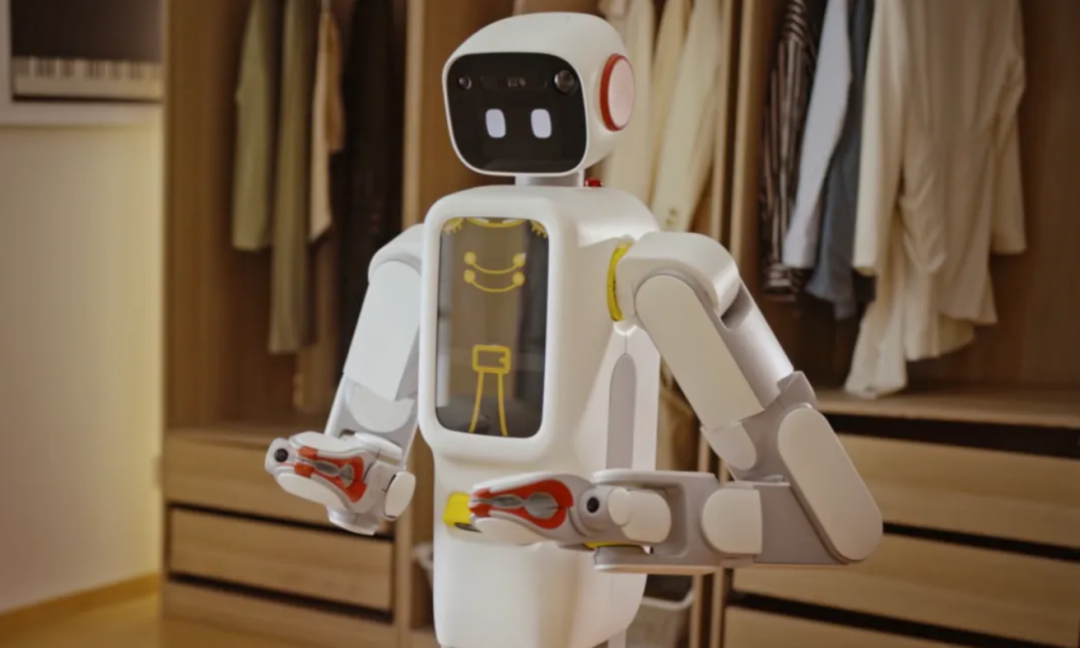
Home robots remain the most stubborn corner of embodied AI, but one Chinese startup is betting the path runs through real living rooms rather than factory floors. Futuring Robot (未来不远), founded in Shanghai in 2022 by serial entrepreneur Zhang Yi, has closed a Pre-A round worth nearly RMB 1 billion, the company announced on July 22. Existing shareholders Source Code Capital, Lianxin Capital, and Boyu Capital reinvested, joined by new investors including Inovance Technology’s industrial fund, Guofang Venture Capital, Dening Capital, Nice Group, and an unnamed major internet company.
From ed-tech IPO to home robots
Zhang’s previous company, Zhangmen Education, went public on the NYSE in 2021 after a decade of building China’s largest one-on-one online tutoring platform. When regulatory shifts reset the education sector, Zhang pivoted to what he saw as the next mass-consumer platform: a general-purpose home robot. The company now pursues a deliberate consumer-only strategy, with no industrial or commercial product lines.
Rent before you buy
Futuring Robot’s go-to-market is a rental model. Its first-generation F1 robot went into paid household trials in September 2025 at monthly rents of RMB 3,000–4,000. By January the company had placed units in 200 households with 20,000 hours of runtime. At the March funding round it was 300 households and 30,000 hours. Now, at Pre-A, the company says it has 500 households under contract, more than 50,000 cumulative hours, and a 96.8% satisfaction rate.
The more telling metrics for hardware subscriptions, Zhang said in a podcast, are a 50% referral rate and 30% renewal rate. The company claims every demo unit is now allocated and that current use cases span chores, companionship, pet care, and home patrol.
F2 hardware and a self-evolving brain
The commercial focus is the F2, a 21-degree-of-freedom home humanoid launched in April 2026 starting at RMB 36,000. Its underlying brain is a self-evolving world action model (WAM) that, rather than training in simulation, stores candidate action trajectories from real online inference and uses the physical execution result to judge which are worth feeding into the next model generation. In May the company added talent from Alibaba Cloud’s embodied-AI team and an autonomous-driving data-pipeline lead from Geely.
The investor logic
The shareholder list is notable because it mixes early-stage capital with industrial muscle. Inovance brings servo-motor and manufacturing scale; Nice Group, one of China’s largest consumer-goods distributors, brings household-channel access. The bet is that home robots will follow the pattern of other hardware categories: the winner is not necessarily the company with the flashiest demo, but the one that can manufacture reliably, get inside homes at acceptable cost, and make people want to keep the device.
Translated and adapted from OFweek Robotics (https://robot.ofweek.com/2026-07/ART-8321203-12005-30695552.html).