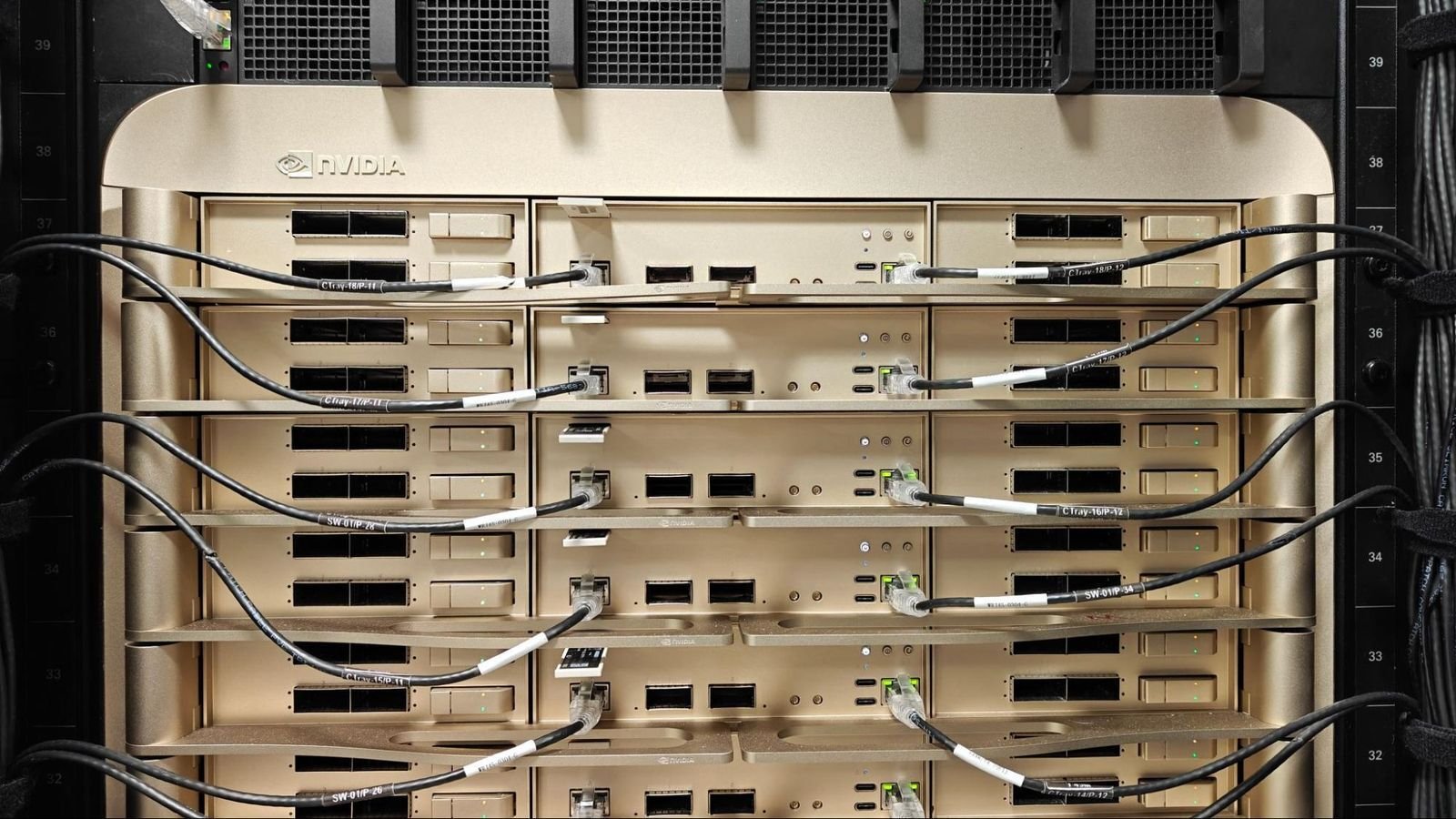
NVIDIA has confirmed a strategic investment in Safe Superintelligence, the lab founded by OpenAI co-founder Ilya Sutskever, and opened its next-generation Vera Rubin compute platform to the effort — targeting a tenfold increase in SSI’s capacity within twelve months. First Financial reports the deal is worth about $5 billion.
SSI, founded in 2024, has shipped no product and published no research, yet carries a post-money valuation near $32 billion. The structure is the story: a chip vendor funds an AI lab that then buys the vendor’s compute, blurring the line between supplier and customer. The same week, AMD said it would invest up to $5 billion in Anthropic; NVIDIA is also in talks to back up to $250 billion of OpenAI datacentre capacity.
The broader cycle is heating. SK Hynix is expected to post a record second-quarter operating profit near 64.1 trillion won at a roughly 77 percent margin. Tungsten hexafluoride, a key chipmaking gas, has surged more than 1,300 percent after two Japanese suppliers exited — a direct consequence of China’s tightened high-purity tungsten export controls. ABF substrate lead times have passed six months. SEMI sees 2026 global semiconductor equipment sales at $165.9 billion, up 23.2 percent.
China angles are everywhere. ASML fell more than 8 percent on progress in domestic DUV lithography; Innolight lists in Hong Kong on 30 July, raising HK$54.5 billion in the year’s biggest IPO; and Basic Semiconductor broke ground on a silicon-carbide packaging line in Shenzhen’s Pingshan district. Memory makers warn the DRAM shortage will run into 2027.
The bet echoes Jensen Huang’s 5-to-10x semiconductor thesis: NVIDIA’s $500 billion Korea HBM pact and this $5 billion SSI stake are the down payments on a decade of explosive compute demand.
*Translated and adapted from TechSugar (https://dy.163.com/article/L3098ETN05312NX9.html).*