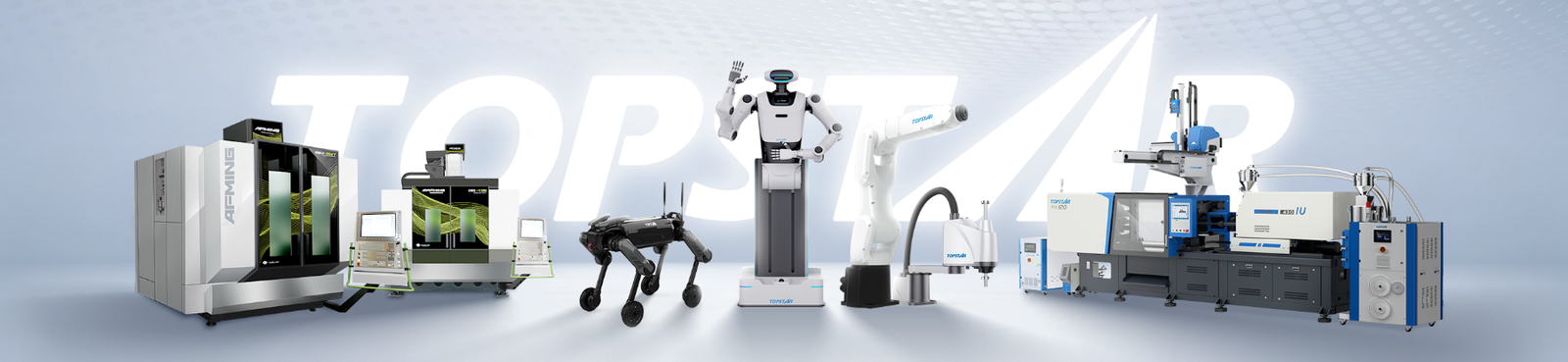
Industrial embodied intelligence just cleared a practical hurdle. Topstar, a Dongguan-based smart-manufacturing equipment maker, has built a complete industrial data-iteration loop with Wuwen Zhike, a physical-AI data-platform company — letting embodied robots iterate quickly, reuse standardized components and deploy at batch scale.
Wuwen Zhike was among the first in the sector to ship a physical-AI data-foundation platform, spanning large AI models, industrial robots and embodied intelligence, and has already won tens-of-millions-yuan simulation-testing orders from leading manufacturers. Together with Topstar, it built a closed-loop platform for industrial-handling scenarios covering the full chain: virtual simulation, data annotation, data organization, model training and real-machine testing.
The virtual-simulation layer uses a self-developed physics engine to build high-fidelity digital twins, with Scan2Sim and Gen2Sim generating batches of multi-condition training scenarios and synthesizing long-tail edge cases — compressing on-site debugging from months to weeks. The annotation layer leans on simulation data’s perfect ground truth plus auto-preannotation with human review, lifting efficiency tenfold.
The organization layer is the clever part: a “data highway” unifies simulation, real-machine and production-line sources, auto-cleans and versions them, and automatically feeds real-machine failure cases back into simulation — a positive data flywheel of “find the problem, add data, upgrade the model.” The training layer builds a perception-planning-control framework with simulation pretraining and real-machine fine-tuning, supporting incremental learning and hot updates. A dedicated real-machine testing layer quantifies model capability across task success rate, efficiency and safety.
The result, Topstar says, is that its entire embodied-robot line can now iterate on a standardized platform — breaking free of single-scenario custom development and enabling fast reuse of technical solutions and cross-industry batch replication. For embodied robots, the bottleneck was never the idea; it was the data plumbing. This is what closing that loop looks like.
*Translated and adapted from OFweek Robotics (https://robot.ofweek.com/2026-07/ART-8321202-8120-30695961.html).*