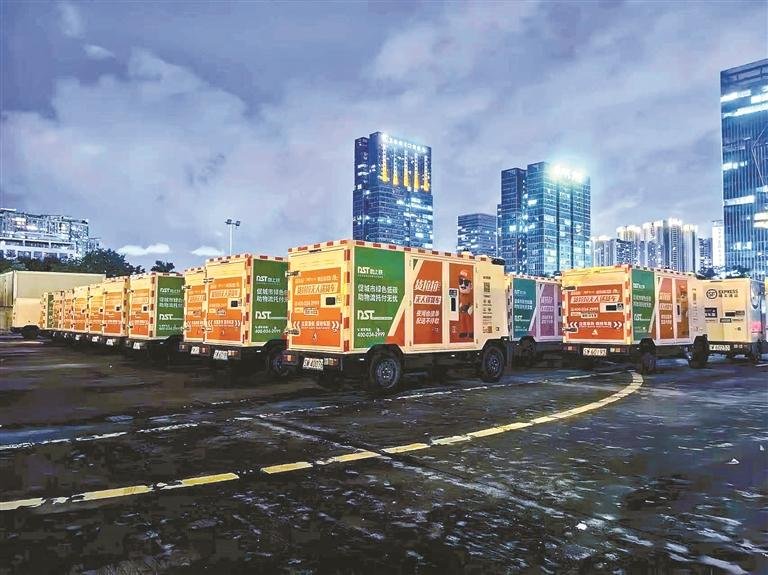
Shenzhen has launched China’s first ‘five-party’ collaborative operating system for autonomous delivery, a model that splits the work of running a self-driving fleet across five specialised roles instead of piling it onto one operator. The pilot opened in Longgang district on 30 July, focused on night-logistics delivery.
From testing to ecosystem
The move marks a shift in how Shenzhen frames autonomous driving. After a city-wide pilot plan in 2024 and a ‘4123’ blueprint in 2025, the 2026 ‘five-party’ model adds a governance-and-operation structure on top of the technology. The city is explicitly moving from a phase of proving the vehicles work to a phase of competing on the ecosystem around them.
The five parties
The technology provider supplies the autonomous vehicle and algorithm and takes first responsibility for system safety. The asset provider holds the vehicle fleet and supplies stable capacity. The commerce provider brings real logistics orders and matches supply with demand. The operations provider handles safety control and the full maintenance chain, including parking, charging, repair and recovery, built on a three-tier safety system using bus-depot resources. The regulator monitors operational data and issues risk warnings.
In the Longgang pilot the roles are filled by Neolix (technology), DST (assets), Huolala (commerce), East Bus (operations) and Shenzhen Urban Transport (regulation). The network covers 846 unmanned-vehicle routes across the district.
Why it matters
Shenzhen already runs close to 840 unmanned logistics vehicles, about 3.16 million monthly delivery orders and more than 12,700 km of open routes, leading the country by scale. The five-party model targets the real bottleneck: making the service cheap enough, stable enough and replicable enough for small merchants, not just the big logistics players. Projected gains include a single vehicle’s daily operation stretching from 12 to 24 hours, capacity use up about 66 per cent and comprehensive cost down about 20 per cent, with next-morning delivery for late-night orders.
Read the original report (Shenzhen News Network)
Translated and adapted from Shenzhen News Network (sznews.com).