Jeff Dean has left Google. The chief scientist and Google Brain co-founder ended a 27-year run on 5 August 2026, and announced that he is starting a company. Alphabet shares moved sharply on the news.
Dean joined in 1999 as employee number 30. The company had 25 people then, he recalled, and more than 190,000 now. Along the way it became not just a centre of technical innovation but, in the phrase used by Chinese commentators, the West Point of global AI talent.
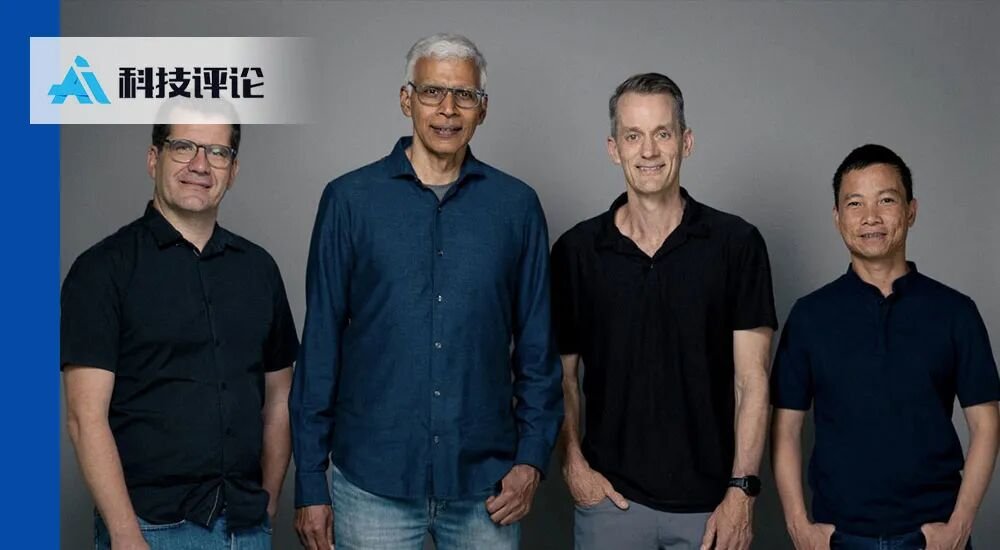
His academic path was unglamorous: an undergraduate degree in computer science and engineering at the University of Minnesota, then a doctorate at the University of Washington under Craig Chambers, working on compiler optimisation. That low-level grounding shaped everything that followed.
Two careers inside one company
Dean’s time at Google splits neatly at 2010. In the first half he and his long-time partner Sanjay Ghemawat published the three papers between 2003 and 2006 that are still called Google’s troika: GFS, MapReduce and BigTable. Those systems pulled thousands of ordinary machines into a single store, set the default computing model for big data, seeded the Hadoop ecosystem and became the origin point of modern NoSQL databases. He also rebuilt the first five generations of Google’s search index and the underlying logic of AdSense, then led Spanner, the globally distributed database whose TrueTime API and atomic clocks solved strong consistency across continents.
From 2011 he turned to AI. With Andrew Ng and Greg Corrado he founded Google Brain. In 2012 his team wired up more than ten thousand CPU cores and let a neural network watch unlabelled YouTube frames until it taught itself to recognise a cat. That unsupervised result convinced the industry that scale alone could buy capability, and industrial deep learning started there. TensorFlow followed, then the TPU, Google’s answer to depending on Nvidia. After the 2023 merger of Brain and DeepMind he became chief scientist and took charge of Gemini’s architecture and pre-training.
The residency that built the competition
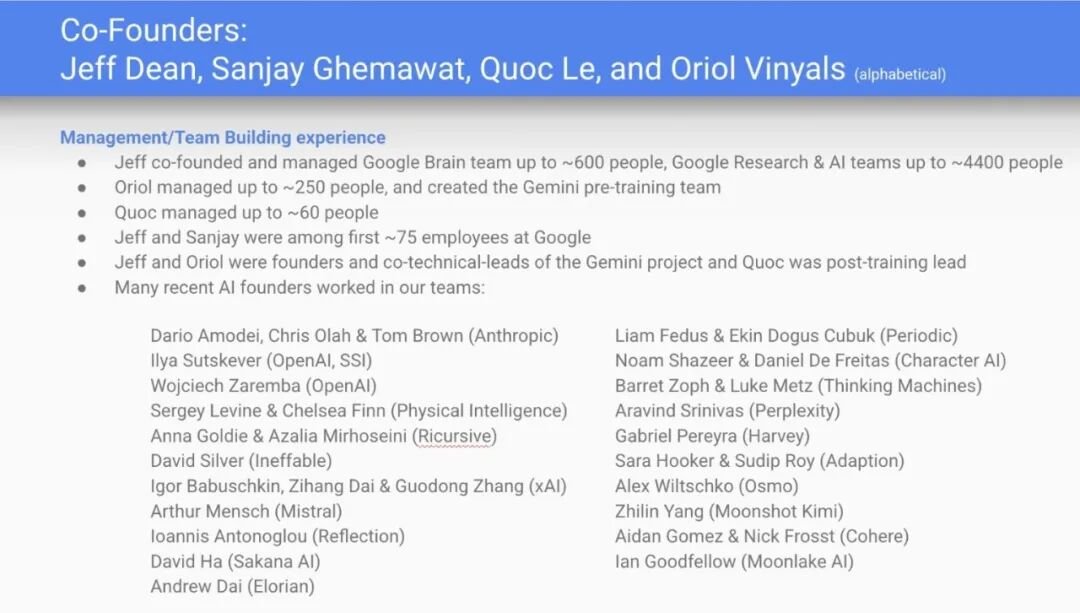
The pitch deck for the new venture contains one slide that has been circulating on its own: a list of 34 founders who came out of Google Brain. Dario Amodei of Anthropic is on it. So is Ilya Sutskever of SSI. Brain grew to around 1,001 people, and its alumni now anchor a large share of the frontier labs.
That density traces back to the Brain Residency, which Dean created in 2016. He judged that the academic pipeline was too slow for the pace AI was setting, and threw out the requirement for an AI doctorate from an elite department. Three tests replaced it. First, quantitative aptitude: candidates did not need AI experience, but had to have proved themselves in some domain demanding hard logic, mathematics or programming, and were assessed on how they attacked complex problems rather than on paper counts. Second, evident obsession: unpaid open-source work, algorithms written for fun, an active GitHub. Third, a genuinely different perspective, on the theory that a room of identical computer science doctorates walks into the same dead ends.
Physicists, theoretical mathematicians, biologists and clinicians, hardware engineers from outside computing, strong undergraduates and university dropouts came in on that basis. They were paid as full Google employees, given effectively unlimited compute, assigned directly to Dean, Geoffrey Hinton or Quoc Le, and allowed to pick their own frontier problem.
The next bet: automating the scientist
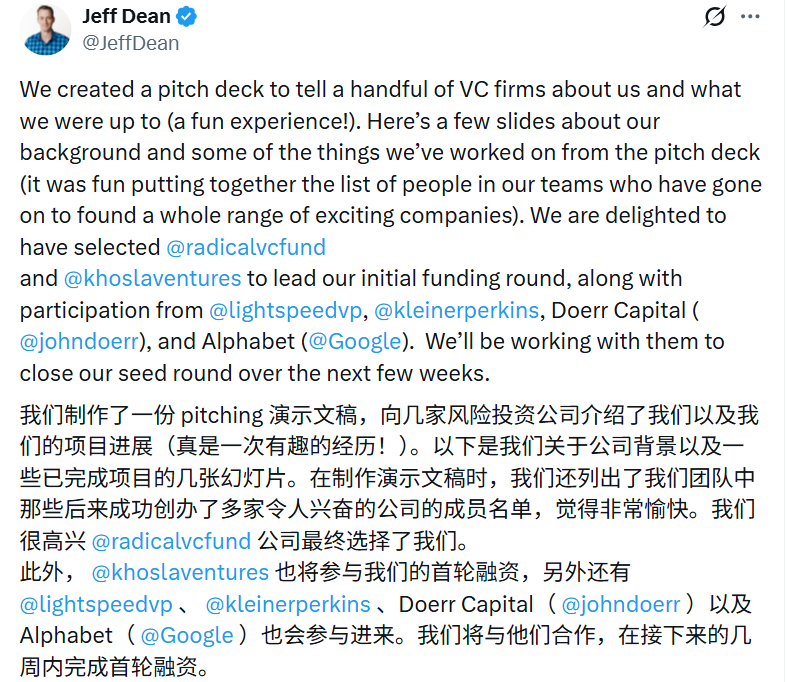
Dean’s next stop is AI for science. With Ghemawat, Oriol Vinyals and Quoc Le he has founded Discovery Loop, a startup aiming to automate machine learning, scientific discovery and engineering development end to end. The framing sits squarely on the current obsession with recursive self-improvement: package the automated scientist as a product, and a team of a few researchers renting the service could out-produce the largest research institution in the world.
Ghemawat is the quieter half of the pair. A Cornell undergraduate and MIT doctorate under Turing award winner Barbara Liskov, he specialised in database storage management and was among Google’s first 75 employees. In Silicon Valley folklore he is the one at the keyboard, turning Dean’s designs into industrial C++ with no bugs in it, working from the conviction that hardware will always fail and software has to assume it.
Editor’s note: this English report is an adapted translation of a Chinese-language original published by LeiPhone (leiphone.com). Figures, dates and direct quotations follow the source.