On the evening of 18 November, Tencent’s chief AI scientist and head of the Hunyuan foundation models, Yao Shunyu, returned to his alma mater at Tsinghua’s Institute for Interdisciplinary Information Sciences, the renowned Yao class, for a closed-door question and answer session with his undergraduate classmate Lv Kaifeng, now an assistant professor there.
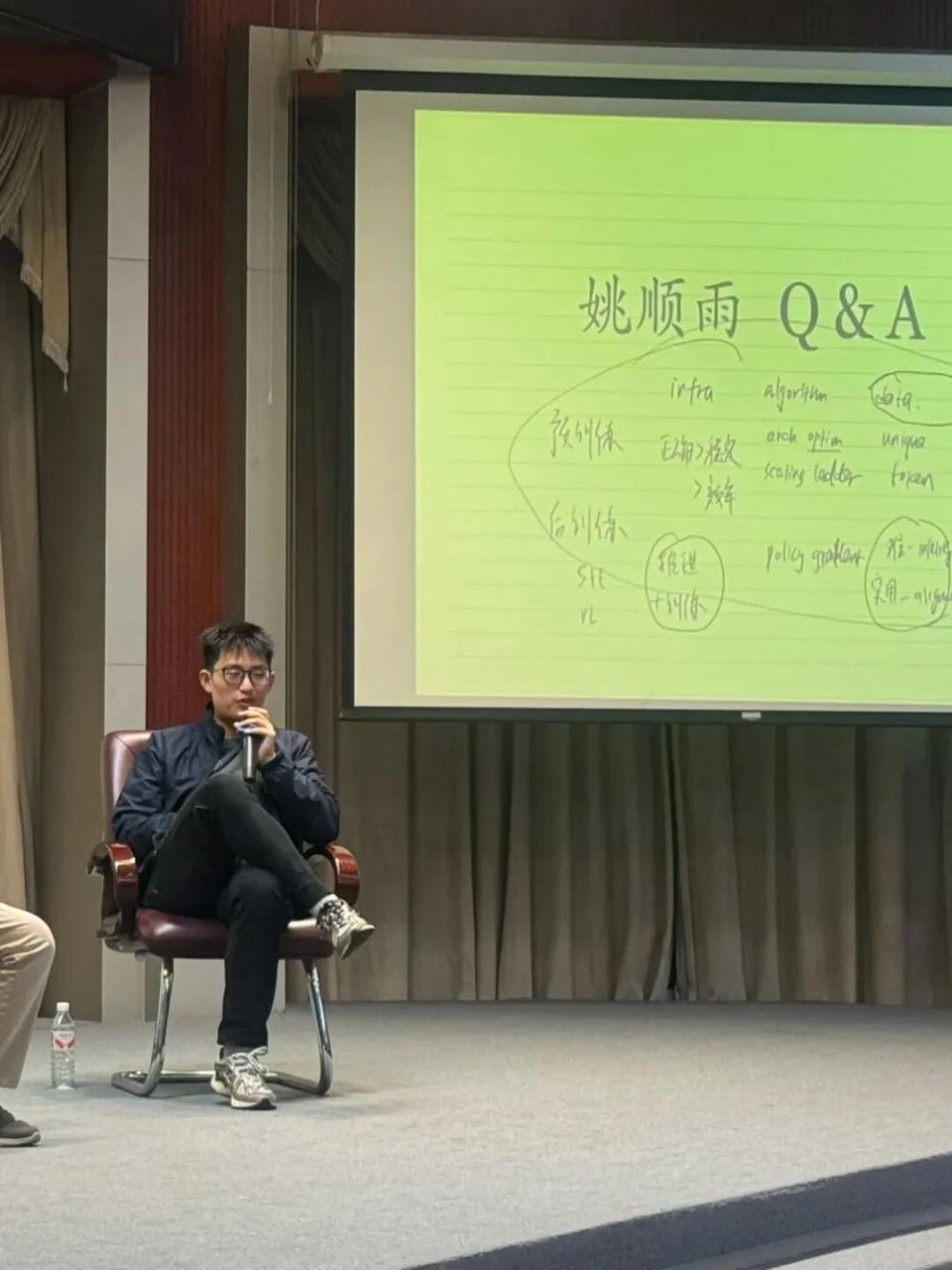
A class of 2015 alumnus and Princeton PhD, Yao helped propose the ReAct paradigm combining reasoning and action. He co-authored the coding-agent benchmark SWE-bench, was first author of the agent benchmark tau-bench, and worked on Operator and Deep Research at OpenAI. Now leading foundation model research at Tencent, he carries both a research and an industrial perspective. Attendees described the atmosphere as relaxed, like a podcast interview, with topics spanning infrastructure, training algorithms, data barriers, safety and organisational management.
Yao laid out the key problems in foundation model research today. On organisation and evaluation, he questioned metric-only thinking and heavy reliance on internal horse-racing, warning that optimising against test sets strips evaluation of diagnostic value. On technical evolution, he argued that buzzwords such as recursive self-improvement carry a degree of hype, and called for a return to concrete engineering problems. Policy gradient frameworks still matter in large-scale reinforcement learning, and judgement about data quality is becoming a real competitive advantage. On business and personal choices, he discussed the gap between model capability and commercial value, and left founders with a question. When GPT-6 is released, will your startup sleep more soundly, or less?
Against metric worship and endless horse-racing
On AI company culture, Yao contrasted two operating logics. One centres on quantitative metrics and horse-racing, sending resources to whoever tops the leaderboard. He puts more weight on trust and taste, on judgement and aesthetic sense.
He cited WeChat, games and film projects. Such products are hard to predict through A/B testing before release. Managers need to believe in the core team’s taste, experience and long-term judgement, and be willing to give them room to fail and grow.
He also criticised the industry’s worship of metrics. When a team lead does not understand technical detail, reports drift toward the easiest numbers to quantify. Parameter count. Data scale. Model FLOPs utilisation. Another few points on MMLU. Yet the work that genuinely changes system performance can be spending days fixing a correctness bug in a low-level computation, cleaning a batch of bad data, or keeping the whole training chain stable. None of it compresses into a bright number on a slide.
On leaderboard-chasing, Yao warned that evaluation exists to show a team its real weaknesses. Once optimisation targets the test set, evaluation gradually loses its diagnostic role and can misdirect research. That is why independence of the evaluation set matters, so repeated tuning and targeted training do not divorce test scores from real capability.
He also described OpenAI’s bottom-up innovation. Early OpenAI invested heavily in areas such as robotics, while GPT began as a relatively small exploratory project that earned more resources as its potential showed. The o1 reasoning model similarly grew out of maths-related research. That structure lets innovation emerge from small teams and concrete experiments, with resources following actual progress. Once a technical direction is clear, large-scale research needs stronger engineering coordination. Keeping room for non-consensus ideas early and building real execution power once the direction is set is a central challenge of foundation model management.
Engineering culture, collaboration and rigour over individual brilliance
Speaking to a room of Tsinghua students known for academic strength, Yao stressed that foundation model research cannot rest on individual cleverness. No single genius delivers a foundation model alone. In large-scale systems engineering he values several traits.
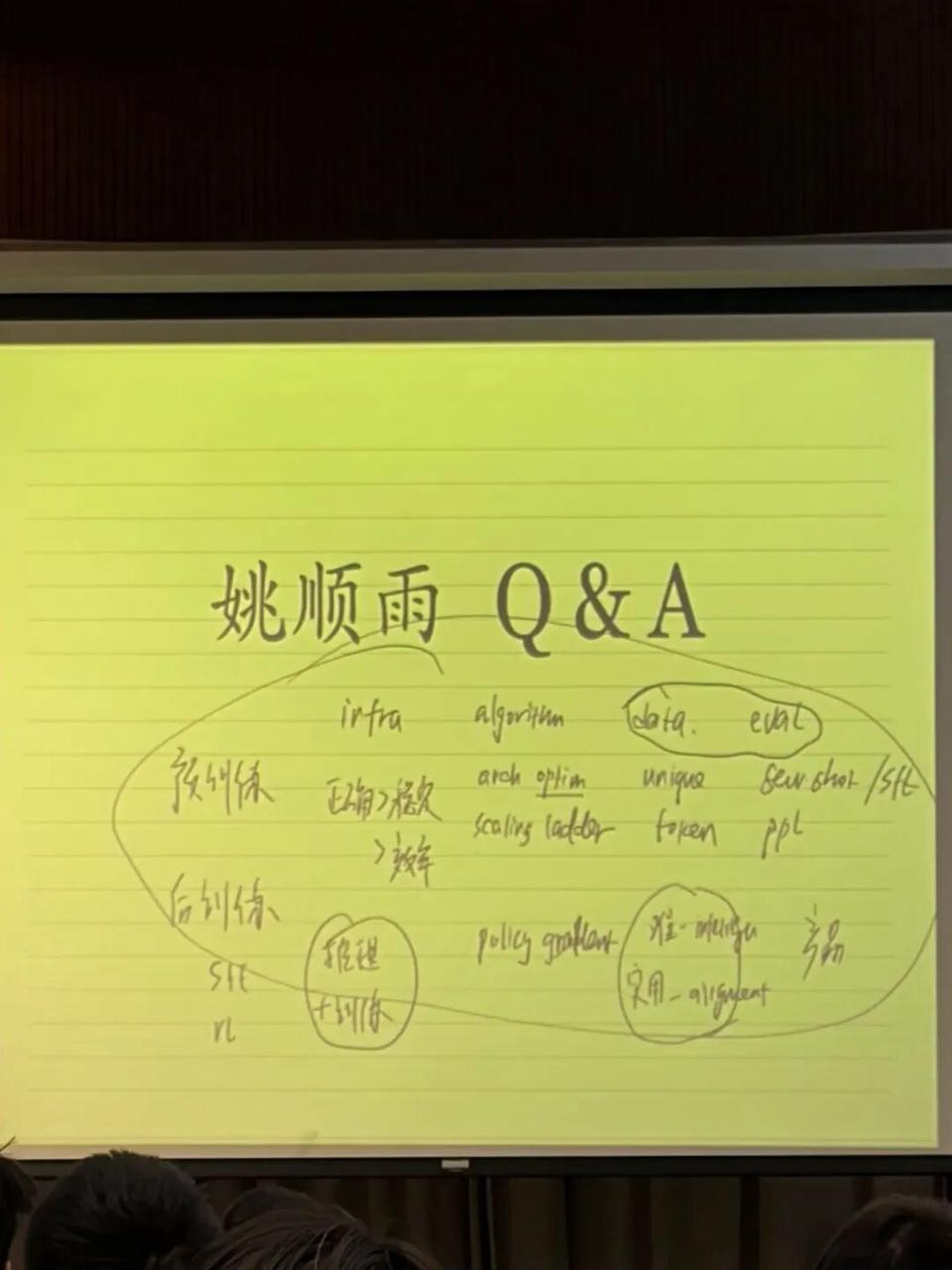
Low ego, meaning honesty without excessive self-regard. Being able to admit error, respect facts and accept disagreement instead of letting personal judgement block collaboration. In complex engineering, communication and correction matter as much as insight. Co-design across the stack, because foundation models span algorithms, infrastructure, chips, data and product. A pretraining architecture must balance training throughput, inference memory cost, post-training adaptability and total cost at once. No single role can work in isolation. Solid rigour and attention to detail, because the important work can be chasing an unreproducible bug, spotting subtle problems in training data, or fixing a small anomaly that hurts model performance. Those tasks may not lift a leaderboard immediately, but they decide whether training is reliable. Learning speed also counts for more than a static CV. The stack moves fast, and the ability to adapt to new architectures and methods often matters more than past experience. Strong young researchers with solid fundamentals can carry serious research responsibility.
He mapped personalities to roles. Pretraining and infrastructure suit people who like clear feedback and steadily moving metrics. Algorithm research suits the imaginative and those drawn to new questions. Product and conversation experience suits people sensitive to human behaviour and user needs. Production systems and deployment suit the rigorous and the conscientious.
Underlying these judgements is a shift. As foundation models grow more complex, an individual’s value depends less on how deep one specialism runs and more on whether different pieces of work can genuinely be connected.
RSI hype and the reality of embodied AI
On capital and media darlings such as recursive self-improvement, embodied intelligence and personal agents, Yao argues some terms are over-packaged. Researchers and founders need to see through the concept to the real question underneath.
Part of RSI practice can be read as using AI to drive the research loop better. Developers already used tools like GitHub for code collaboration. As models improve, AI joins coding, bug fixing, data cleaning, experiment execution and results analysis. The question is whether those capabilities keep raising research efficiency and produce verifiable next-round improvement, rather than generating new vocabulary.
That leaves concrete engineering opportunity in letting models join data synthesis, automated experiment validation and code refactoring. But research automation is not strict recursive self-improvement. That also needs proof that AI-driven gains are verifiable and form a sustained, repeatable loop.
On embodied intelligence and personal agents, he warned against ignoring technical bottlenecks and business problems simply because a concept is in fashion. Physical-world data collection is constrained by device counts, real environments, operating time and experiment cost. Robot data is harder to scale than internet text and video. Meanwhile general foundation models keep improving in multimodal understanding, spatial reasoning and tool use. Embodied founders must ask which capabilities need a dedicated robot model and which may be absorbed by general models over time.
That does not mean specialised embodied models are doomed. Real robot systems still have to solve physical interaction, real-time control, hardware adaptation, safety and deployment. But founders should assess whether their technical route keeps benefiting from growth in compute, data and foundation capability. The durable opportunity may lie not just in training a standalone model, but in hardware systems engineering, real-scene deployment and solving specific physical tasks.
Training, data and the scale puzzle
Past the concepts, Yao broke down the hard problems in compute, algorithms, data and model systems. First, failure in a small experiment does not invalidate a research direction. After proposing ReAct, he tried folding that reasoning-and-action strategy into model training and got poor results on LLaMA 13B, enough to doubt his own judgement. He came to see insufficient scale as the cause. Small experiments mix model capability with noise. A method that shows no gain on a small model may work at scale, while gains on small models do not necessarily transfer up. Researchers need maths, scaling laws and experiment results together to judge which findings travel.
Second, post-training and reinforcement learning still lean on fairly basic algorithmic frameworks. Academia explored value-based and model-based methods and various policy optimisation algorithms. In current practice, policy-gradient methods and their variants remain central, GRPO among them, because they carry fewer extra assumptions and are easier to verify at scale. Simple in form does not mean simple in engineering. His priority order for RL training is clear. Correctness first, then stability, then efficiency. Training and inference systems must coordinate closely on GPU allocation, memory use, throughput and numerical stability over long runs.
Third, post-training data must balance intelligence with real usefulness. Hard tasks such as maths problems build complex reasoning as difficulty rises. Everyday writing and office tasks need less intensity but directly shape alignment and actual experience. A model strong at maths but unable to do real user work has a clear weakness. Post-training must balance difficulty, real scenarios and data quality, and study how evaluation metrics relate to final outcomes.
Fourth, the fight for pretraining data is not over. High-quality code is expensive and may need repeated use, but too much repetition causes memorisation and overfitting. Synthetic data adds supply but brings quality decay. Dynamic data and source mix both affect results. Data production has moved from human annotation to small-model assistance and now large-model generation and filtering. Yet judging which data is genuinely valuable stays with the team. Tools can be copied. Judgement about quality and training objectives takes years to build.
Fifth, model hierarchy and industrial non-text data deserve attention. One possible system trains a strong base model, then distils smaller models for different latency and cost budgets. With AI for AI, the lower cost and faster iteration of small models may matter more. Clinical records, industrial time series and structured tables are also worth exploring. Training native models on them directly often hits weak reasoning. Yao offers two paths. Agents call chart tools and specialist models as a human expert would, or professional data enters the model as knowledge.
Business, startups and the GPT-6 question
On commercialisation, Yao points to a pattern outsiders miss. Technical progress in a lab tends to be smooth and continuous, but the commercial explosion users perceive comes from a jump in interaction or a capability crossing a usefulness threshold. Researchers watch losses, scores and behaviour. Ordinary users do not feel the value until ChatGPT wraps the model in a chat box, or Deep Research lets a natural-language request trigger complex research.
For application founders, two directions matter. Find new product forms that change how people interact with machines, and keep testing the capability frontier to catch tasks the moment they cross from unusable to usable.
On pricing, technical quality and commercial price are not simply proportional. A strong model still faces competitors, open models and substitutes. A technical lead creates a temporary edge. How long it lasts and whether it becomes revenue depends on product, distribution, user relationships and other barriers. His sharp question was this. If your model is close to or ahead of GPT on public benchmarks but your commercial revenue is one hundredth or one thousandth of theirs, something is wrong with the product. Benchmark leads do not guarantee payment or a business model.
On automation and careers, he expects routine infrastructure and algorithm work to rely less on humans, while goal definition, data quality judgement, results verification and deployment into complex reality still need deep human involvement. That is the question he left the room with. Assume GPT-6 is released. Does your startup sleep more soundly, or less? If a capability jump weakens your core business, revisit the direction. If every foundation model improvement makes your product cheaper, stronger and broader, the upgrade becomes a growth engine.
Competing head-on with general models on pure cognitive tasks gets more expensive. Going deep into the physical world, hardware, real experiments and complex user needs builds different resources. Those areas are not immune either. What matters is whether your capability complements model progress rather than racing it.
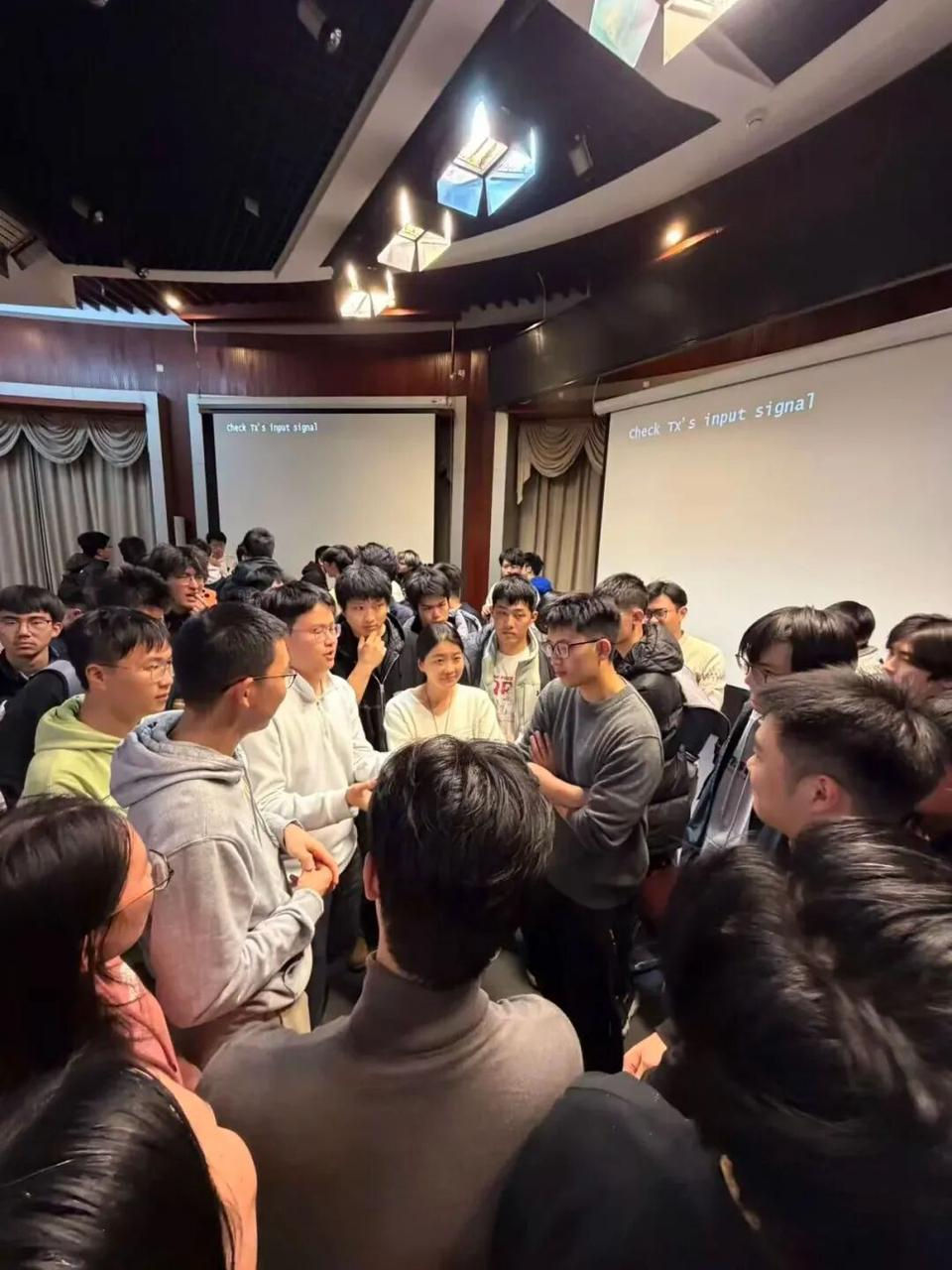
Yao ended by talking about his own student years. He only reached research in his third year, pushed by the recommendation requirement, and tried several fashionable directions he was not truly interested in. He followed his curiosity about computing and other subjects instead and found his own path. In his final PhD year he took a set theory course deliberately, knowing that once work began there might be no time to study theory for its own sake. Friends joined rap clubs or studied maths. Experiences that looked unrelated to research later turned into language taste, theoretical understanding and research judgement. The value of many experiences does not show immediately, and detours are not always wasted.
Editor’s note: This is an adapted translation of the original 36Kr report. It has been trimmed and restructured for readability for an international business audience. The full original (in Chinese) is at https://36kr.com/p/4077969369322632.
The author’s views are their own and do not necessarily reflect the publisher’s position or constitute investment advice.