In 2025, Hello (the ride-hailing and bike-sharing platform) formed Zaofu Intelligent with Ant Group and CATL and entered robotaxis with an ambitious target: deploy 10,000 robotaxis by 2027. By then, Pony.ai had already reached single-city profitability, WeRide and Apollo Go were expanding abroad, and Waymo was still growing its fleet. A 2025 entrant looked late.
Yu Qiankun, co-founder and CTO, argues 2025 was not late but the last suitable window. Building autonomy, data and operations from scratch today would struggle to gain an edge; in 2025 the supply chain was mature and technical routes were converging, leaving latecomers one last reshuffle.
What “first tier” actually means
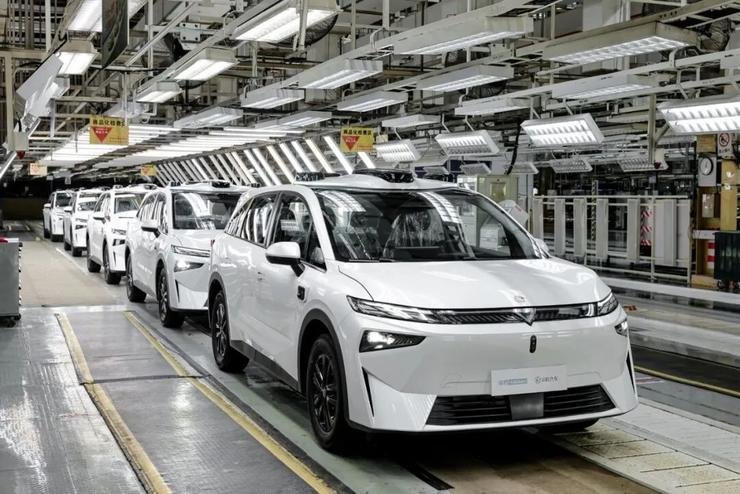
Hello’s first production car, the HR1, launched with Dongfeng Nissan Venucia on 24 July, enters regular service in Guangzhou and Shenzhen, expanding to over ten Chinese cities through 2026 and 2027. Yu defines first tier by capability, not fleet size: mean miles between interventions in the thousands to tens of thousands, mean miles between collision-related interventions at the 100,000 level, while preserving comfort and throughput.
Hello skipped rule-based driving from the start, cut reliance on high-definition maps, adopted an end-to-end architecture and brought AI coding into R&D. Compute reaches 2,000 TOPS with automotive-grade chips and domain controllers; data annotation precision is 0.1 degree, with highly automated labelling.
Later-mover advantages and hard barriers
As a latercomer, Hello absorbed earlier lessons: mature hardware, end-to-end stacks, automated data loops. Yu sees three durable barriers. First, licensing: as robotaxi scale grows, permits may become scarce, as they did for bikes and ride-hailing. Second, operations: crisis handling, roadside response, lower-cost maintenance. Third, the data and scenario accumulation that leaders built over years, which followers close only with time and mileage.
On L2 versus L4, Yu is clear the gap is product definition, not just technology. L2’s responsible party is the driver, so it is not built to L4 standards; suppliers serving OEMs lack incentive to pursue extreme intervention distances. Moving from L2 to L4 is possible, Tesla shows, but needs a hard strategic turn, not a second system to maintain.
Hello will not build cars or chips; its core is autonomy plus ride-hailing operations, and it is open to running others’ autonomous stacks. Yu expects collaboration over fierce competition until the market matures, likely settling into a three-way standoff like bike-sharing. The goal is to be one of the three, and to lead.
The long-tail cases are the grind: a faulty signal that jumps green to red, a cow crossing a rural road, a truck dragging a tree across lanes, a child’s helmet easy even for humans to miss. Hello supplements rare events with simulation, generating “straight-plus-left” scenarios it has not yet met, while keeping real-road data primary once enough accrues. With a 10,000-GPU cluster and a 10-billion-parameter model, the discipline is balancing spend against results.
Editor’s note: This is an adapted translation of the original LeiFeng Network report. It has been trimmed and restructured for readability for an international business audience.