Nearly 200,000 engineers have come through one robotics competition in Shenzhen. Over a thousand of them now work at DJI.

RoboMaster 2026 wrapped in Shenzhen on 9 August. Northeastern University’s TDT team took the title. South China Agricultural University’s Taurus finished second, East China University of Science and Technology’s Origin third and Tongji University’s SuperPower fourth.
Founded by DJI, RoboMaster is a competitive and academic platform for university engineers worldwide, built around robot-versus-robot combat. Teams have to do the whole job themselves: mechanical design, embedded development, control systems, component selection and circuit build, vision algorithms and full system integration. Industry treats a strong RoboMaster record as a de facto certification of hard engineering ability.
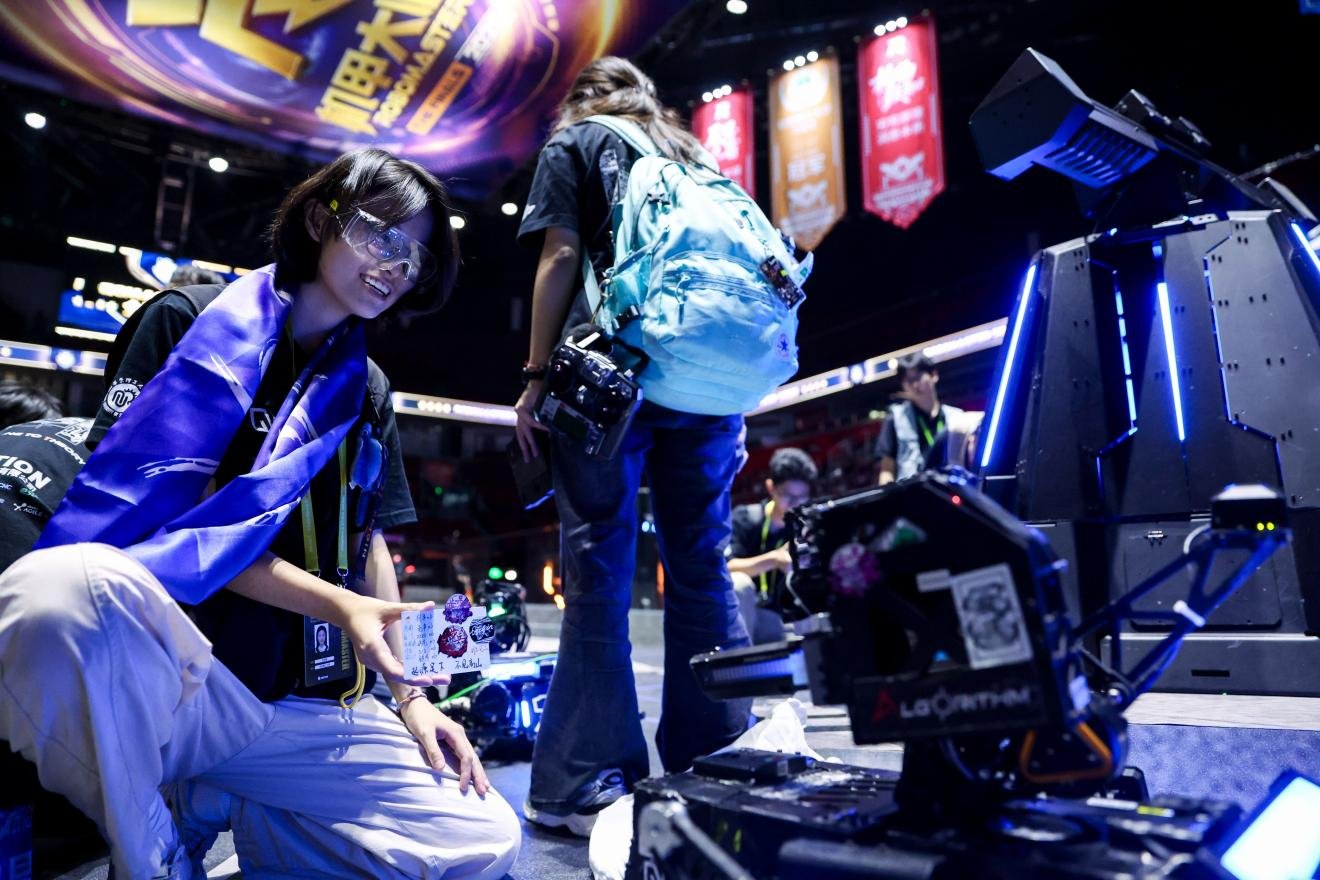
Forty-four university teams reached this year’s national finals with self-developed robot fleets. On the floor, machine coordination and the live situational display shift second by second, testing mechanics, electronics, algorithms, hardware and team management at once, under competition rules that leave no room to pre-plan.
The recruitment pipeline is the real output
The competition has drawn entries from 941 higher-education institutions globally. Over 11 years it has trained close to 200,000 young engineers with systems-level thinking. Competitors have filed more than a thousand national patent applications and open-source technical reports.
Employment outcomes are close to 100 per cent. More than a thousand alumni have joined DJI, which absorbs more RoboMaster talent than any other company. Employers now list competition experience as a hiring preference and offer signing bonuses of 10,000 to 30,000 yuan to compete for the cohort.
The destinations map the Chinese technology economy: Huawei, ByteDance, Tencent and Baidu, then the China Academy of Space Technology and China General Nuclear, then embodied AI, multimodal medical AI and humanoid robotics.

The robot classes map to real industrial work
Every machine class on the field has a commercial descendant, and university teams are already carrying the technology across.
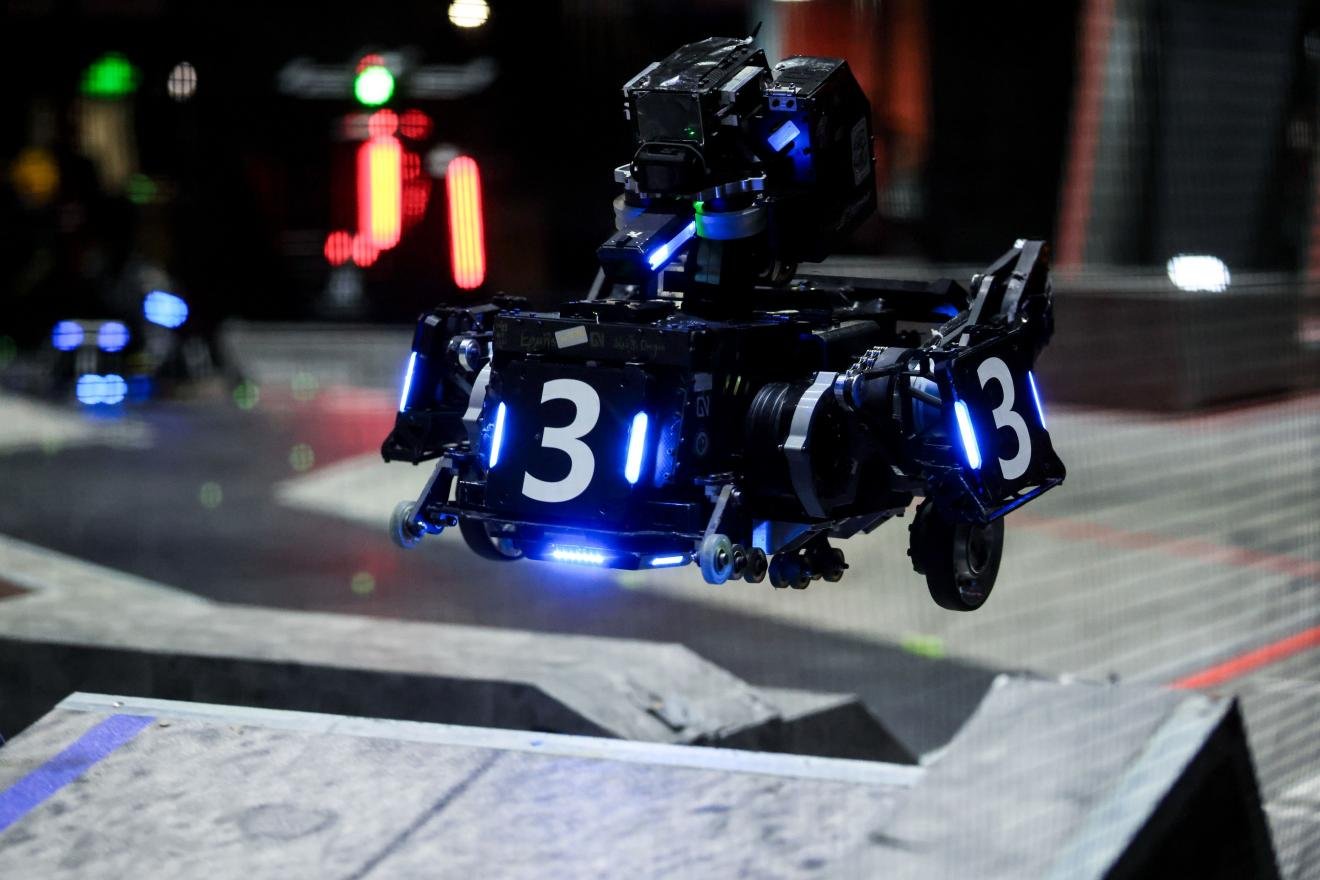
Infantry robots are the most numerous and the most environmentally adaptable units on the field. Their strengths, inspection over difficult terrain, work in low and narrow spaces and stable movement in precision settings, map directly onto hazardous industrial tasks.
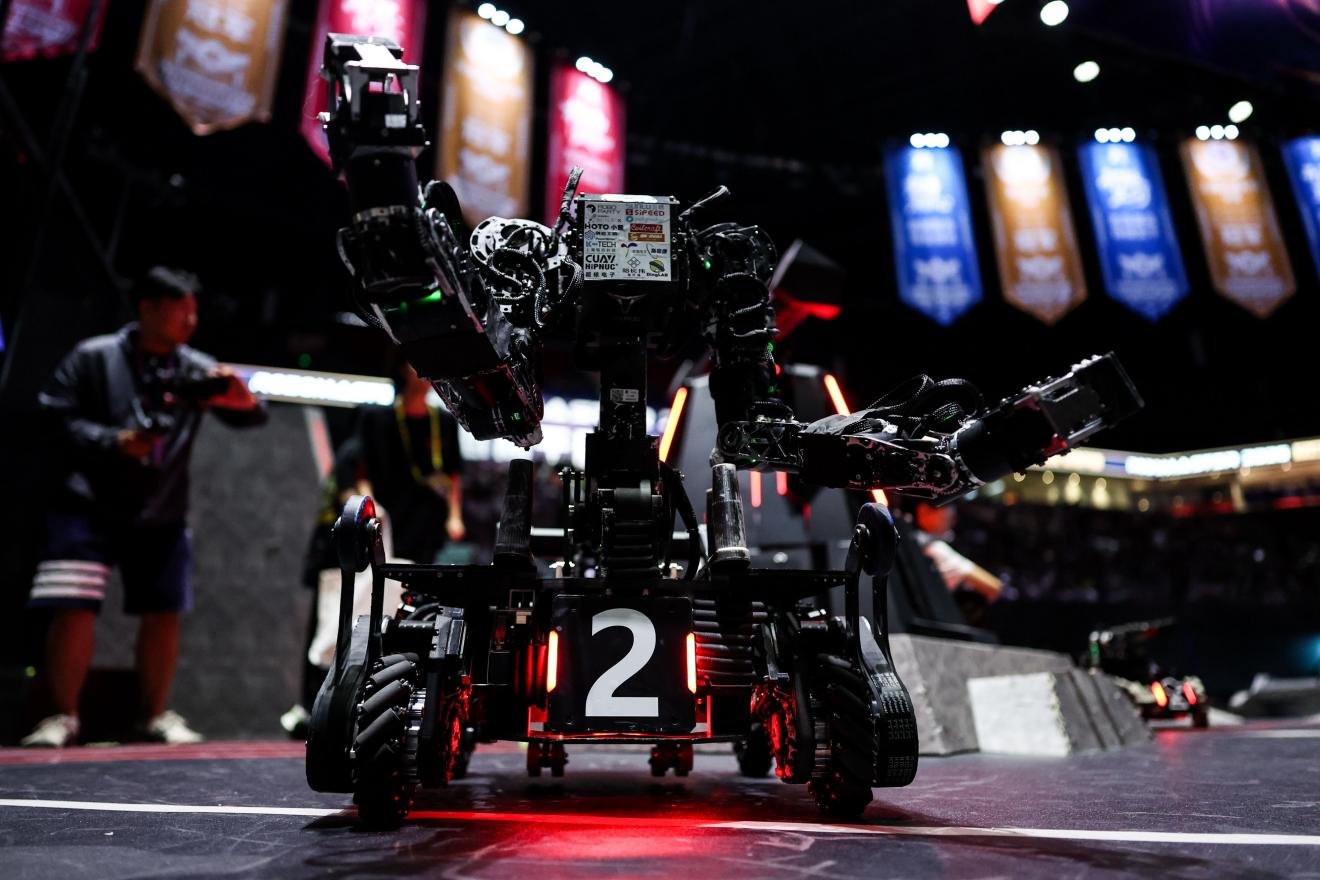
Engineering robots are high-degree-of-freedom flexible grasping platforms, used in competition to grab and assemble energy units. South China Agricultural University’s twin seven-axis humanoid arm build translates into unmanned retail and service work: picking from smart cabinets, self-service counters and food preparation, gripping and placing with two arms the way a shop assistant would.
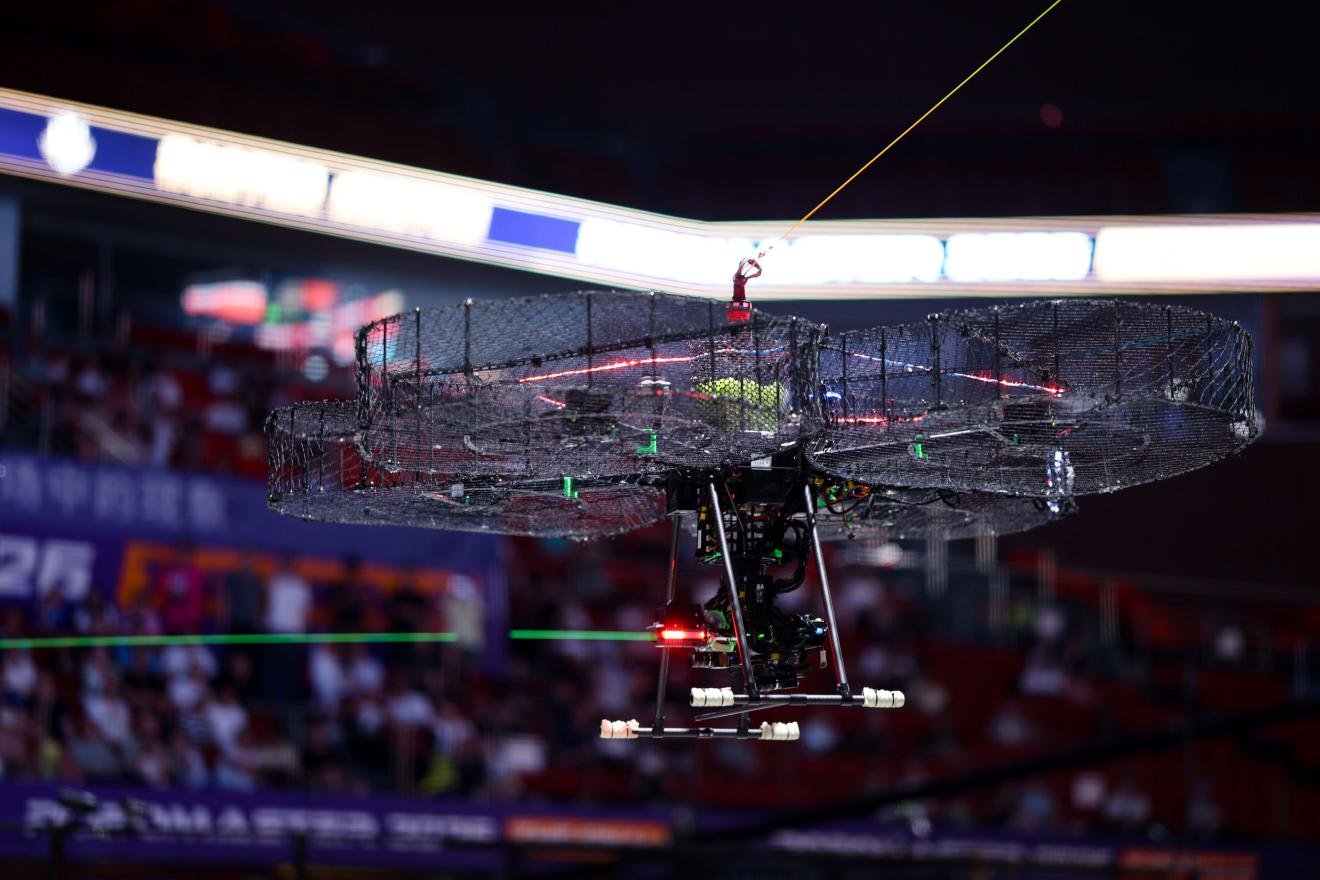
Aerial robots break the constraint of the ground plane, handling dynamic tracking and filming, infrastructure inspection, emergency support and light payload delivery.
Sentry robots are autonomous standing-watch platforms with heavy onboard AI. Northeastern University’s four-axis gimballed tunnel-crossing sentry extends into confined-space inspection, crawling into aircraft bellies, the underside of high-speed trains, utility tunnels, bridge box girders and data centre raised floors. The same capability drops into substations, plants, campuses and warehouses for autonomous patrol and anomaly detection, shifting the job to robots patrolling and people reviewing.
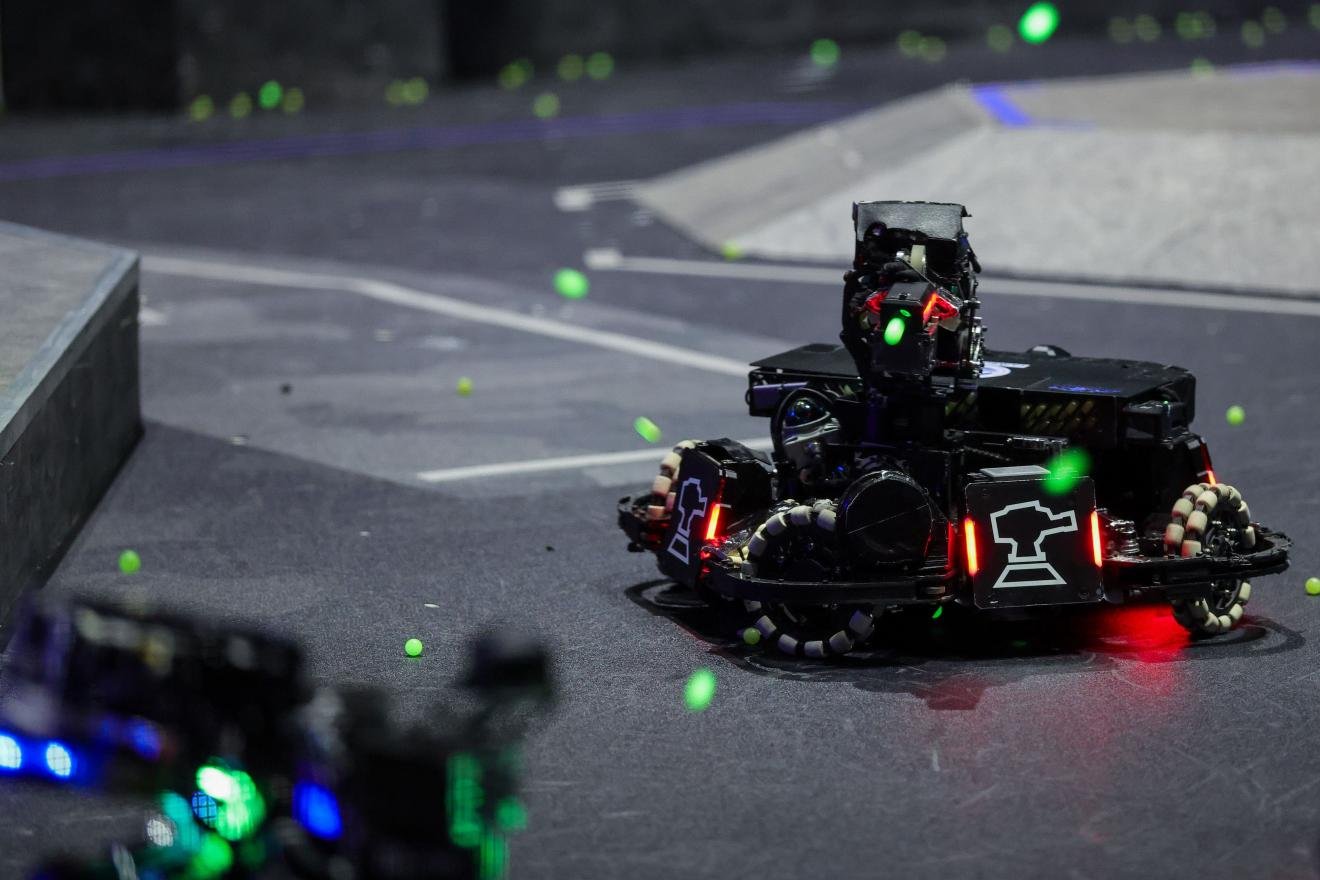
Hero robots deliver precision at range and heavy output up close. Building on approaches from teams including Tongji University, an industrial camera and radar fix the target while the system computes launch direction and displays the predicted impact point. That logic carries into firefighting water-cannon and extinguisher-launching robots, cutting ranging shots and raising first-shot success in bad conditions. At night, in heavy smoke or fog, thermal imaging locates the fire source and the robot keeps placing shots where a human operator could not see.
Dart systems trade manoeuvrability for range and penetration speed, using single-piece delta-wing guidance and miniature autonomous guidance now moving into low-cost long-range delivery. Radar is the tactical brain holding the full data link and the heaviest compute, and in industry it becomes the search-and-rescue positioning core for smart cities and disaster response.
Classroom to competition floor to payroll
What RoboMaster has built in Shenzhen is a complete pipeline running from lecture hall through competition into industry. The event is over. The part where these engineers go and build things is the part that matters.
More from the original report
Editor’s note: This is an adapted translation of the original Shenzhen News Network report. It has been trimmed and restructured for readability for an international business audience.