Six hundred students applied. Fifty got five days on a full-size humanoid robot in Shenzhen.

The LimX Dynamics Developer Camp 2026 closed on 7 August, guided by the Shenzhen Municipal Bureau of Industry and Information Technology and the Shenzhen Qianhai Authority, and run with D-Robotics, Alibaba Cloud, RealSense and PICO.
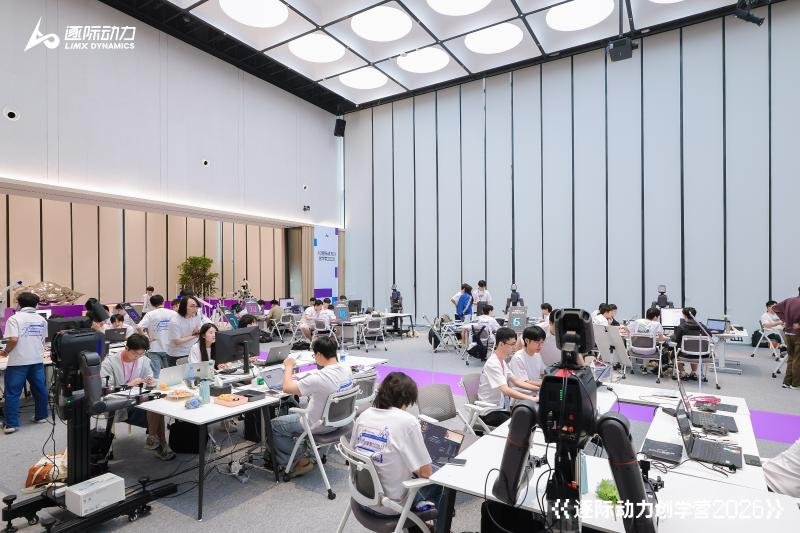
More than 600 students from over 70 universities worldwide applied. Around 50 made it to Qianhai for five days and four nights of embodied AI work on real robot platforms.
Who got in
Applicants came from institutions inside the global QS top 100. The selected cohort covered Peking University, Zhejiang University, Renmin University of China, Beihang University, the National University of Defence Technology, Sun Yat-sen University, Xiamen University, Chongqing University, the University of Hong Kong, the Chinese University of Hong Kong and the Hong Kong University of Science and Technology, alongside Waseda University, the University of Southern California, the Technical University of Munich and RWTH Aachen.
This year’s programme ran two tracks matching the two live problems in embodied AI: vision-language-action models and locomotion. The format was two-stage, an online leaderboard phase that drew several hundred developers, then on-site work with physical machines.
Simulation is not the same as a machine that falls over
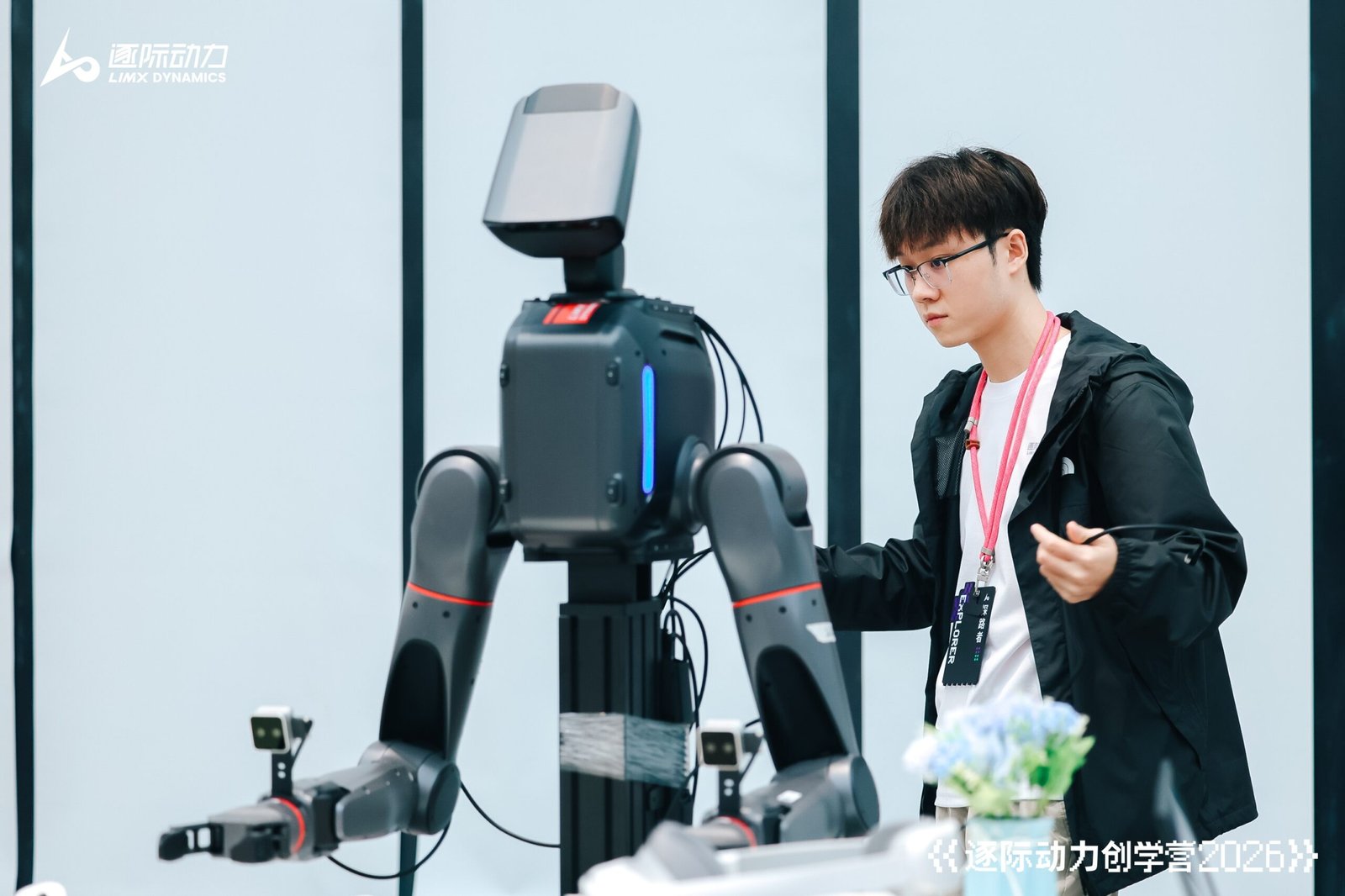
Most student robotics competitions run in simulation. This one opened LimX Dynamics’ multi-form embodied robot TRON 2 and its full-size humanoid Oli to undergraduates and postgraduates directly.
For many participants it was their first extended contact with a real robot. An algorithm that runs on a laptop still has to answer whether the machine walks without falling, whether the grasp closes, and whether deployed performance matches the simulation. Engineering judgement gets built in that gap.
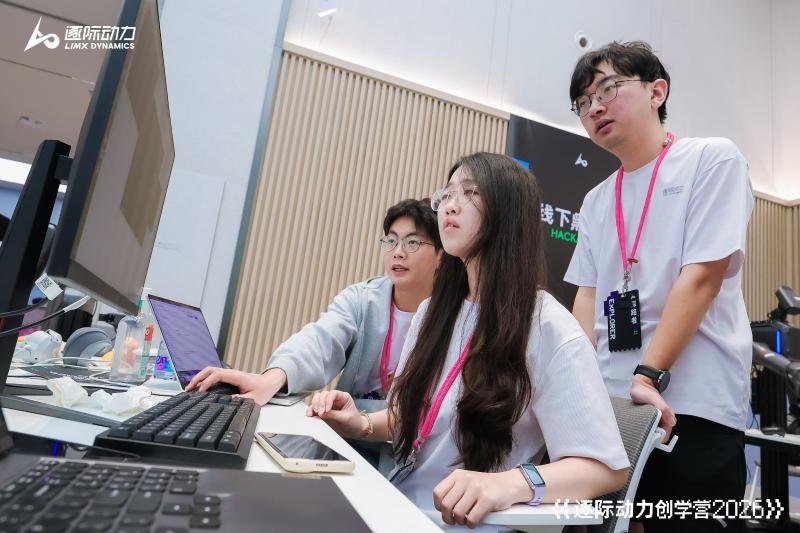
LimX’s core algorithm team and support engineers stayed on site throughout. Young engineers who had recently joined the company worked as teaching assistants, passing on what the transition from campus to industry actually involves. Several teams extended their own debugging hours to close a final bug or complete one more deployment.
Why a robot company runs a summer school
The embodied AI sector is short of people who can write the algorithm and also make the hardware do what the algorithm says. Those are different skills and universities mostly teach the first.
LimX has now run the camp two years running, opening its robot platforms and accumulated engineering experience to universities. Shenzhen’s industrial authorities backed it for a straightforward reason. The city’s advantage in robotics rests on supply chain density and on engineers who have already put their hands on the machines. One of those is harder to copy than the other.
More from the original report
Editor’s note: This is an adapted translation of the original Shenzhen News Network report. It has been trimmed and restructured for readability for an international business audience.