The robotaxi industry has entered a new phase. In 2026, Waymo’s ride volume in San Francisco overtook Lyft at times. In China, Baidu’s Apollo Go completed 3.2 million rides in the first quarter, up more than 120 per cent year on year. Global private investment in autonomous driving reached 23.3 billion dollars in the first four months of the year, more than double the full-year total for 2025.
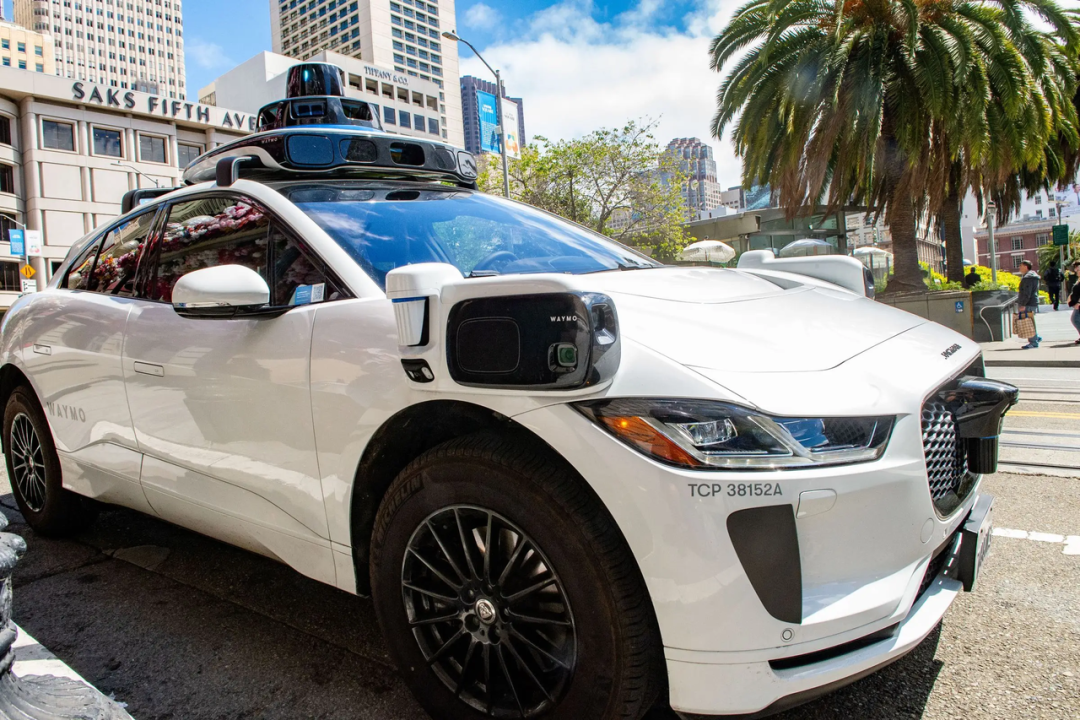
The largest single transaction was Waymo’s 16 billion dollar Series D, which valued the Alphabet unit at 126 billion dollars. Sequoia, Andreessen Horowitz and DST Global all participated. By mid-year, Apollo Go and Waymo had each passed 20 million cumulative rides. A June ranking by Autonomy AI gave Apollo Go 78.4 points and Waymo 77.1, with both well ahead of the rest of the field.
From technology race to city competition
Leiphone argues that the contest is no longer about which company has the better algorithm. It is about which city can absorb robotaxis into its transport system. Shenzhen and Los Angeles have emerged as the leading test cases on either side of the Pacific.
The two cities share some traits. Both are Pacific port cities with outward-looking economies, large migrant populations and heavy car dependence. Both have passed regulations that clarify how robotaxis can operate and how liability is assigned. Both host leading operators: Waymo in Los Angeles, Apollo Go in Shenzhen.
Shenzhen has three structural advantages. First, it can write its own laws. The Shenzhen Special Economic Zone passed China’s first local regulation on intelligent connected vehicles in 2022, covering testing access, paid operation and accident liability. Los Angeles lacks equivalent municipal lawmaking power.
Second, Shenzhen offers harder roads. The city has 18 million residents, a huge fleet of electric scooters and motorcycles, and dense urban villages where pedestrians, cyclists and cars share tight space. Apollo Go already operates in Nanshan, Bao’an and Pingshan districts.
Third, Shenzhen’s users are more receptive. The median resident age is 32, commutes are shorter and the population is more willing to pay for shared mobility than car-dependent Los Angeles households, which own an average of two vehicles.
The Shenzhen-Hong Kong-London pipeline
The most important recent development is on the right-hand-drive side of the map. On 23 July 2026, Apollo Go received Hong Kong’s first fully driverless test licence, for operations at the airport island. On 27 July, testing began. Every previous fully driverless robotaxi service in the world had operated in left-hand-drive, right-hand-traffic markets. Right-hand-drive markets cover more than 70 countries and over two billion people, including the United Kingdom, Japan, Australia and Singapore.
Right-hand drive is not a mirror image. Lane-change rules, right-of-way logic and roundabout behaviour all flip. Apollo Go followed the Hong Kong move with a London road-test announcement on 28 July, in partnership with Uber and Freenow, a Lyft-owned European platform. Waymo is also testing in London, setting up the first direct head-to-head competition outside either company’s home market.
The article concludes that Shenzhen is becoming an exportable “city-level robotaxi solution”: law, geography, user base and operator experience packaged together. If that model holds, the next decade of autonomous mobility may be shaped less by Detroit or Stuttgart than by a corridor running from the Pearl River Delta through Hong Kong to London.
Editor’s note: This is an adapted translation of the original Leiphone report. It has been trimmed and restructured for readability for an international business audience.