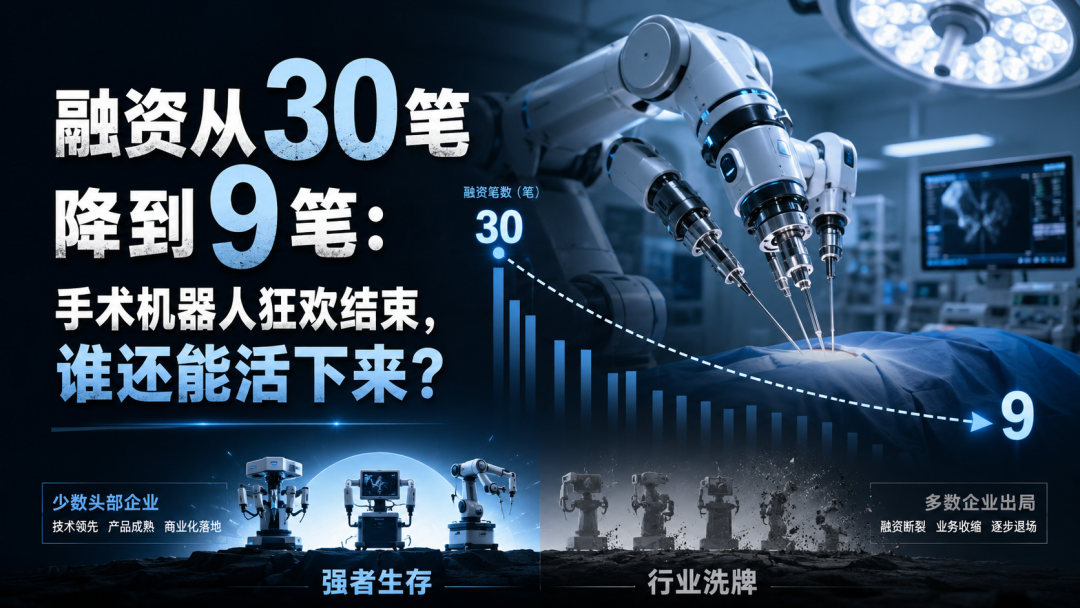
China’s surgical robotics funding fell from about 30 rounds in 2021 to just 9 in 2024, even as 2026 brings a wave of IPO filings. Zhenghang Medical listed in Hong Kong on 30 June as a puncture-surgery-robot maker, while Huake Precision’s STAR Market IPO was accepted. The contrast hides the real story: a survival race for cash and time.
The era that died was simple: build a robot, earn a sky-high valuation. The hard question now is whether a robot installed in a hospital keeps generating procedures and cash flow. A machine costing millions of yuan that runs few surgeries never pays back its depreciation.
Why rush to list when funding dried up? Surgical robotics is a cash-burning marathon: R&D, trials, approvals, doctor training, channel building. When private money stops, an IPO becomes the only way to refill. Tianzhihang is buying 62 per cent of MicroPort Orthopaedics to bind robots with implants, consumables and surgical plans, the Stryker MAKO model.
A January pricing guideline from the National Healthcare Security Administration finally sets tiers for robot-assisted surgery by involvement and clinical value, letting hospitals model payback. But policy sets the price, not the demand. Proving a robot beats the surgeon’s hands still falls to clinical value.
Survivors will need four things: genuinely different technology, higher per-machine procedure volume, recurring revenue from consumables and services, and enough cash to outlast a five-to-ten-year race. The party is over. The real market is only now beginning.
Editor’s note: This is an adapted translation of the original OFweek report. It has been trimmed and restructured for readability for an international business audience.