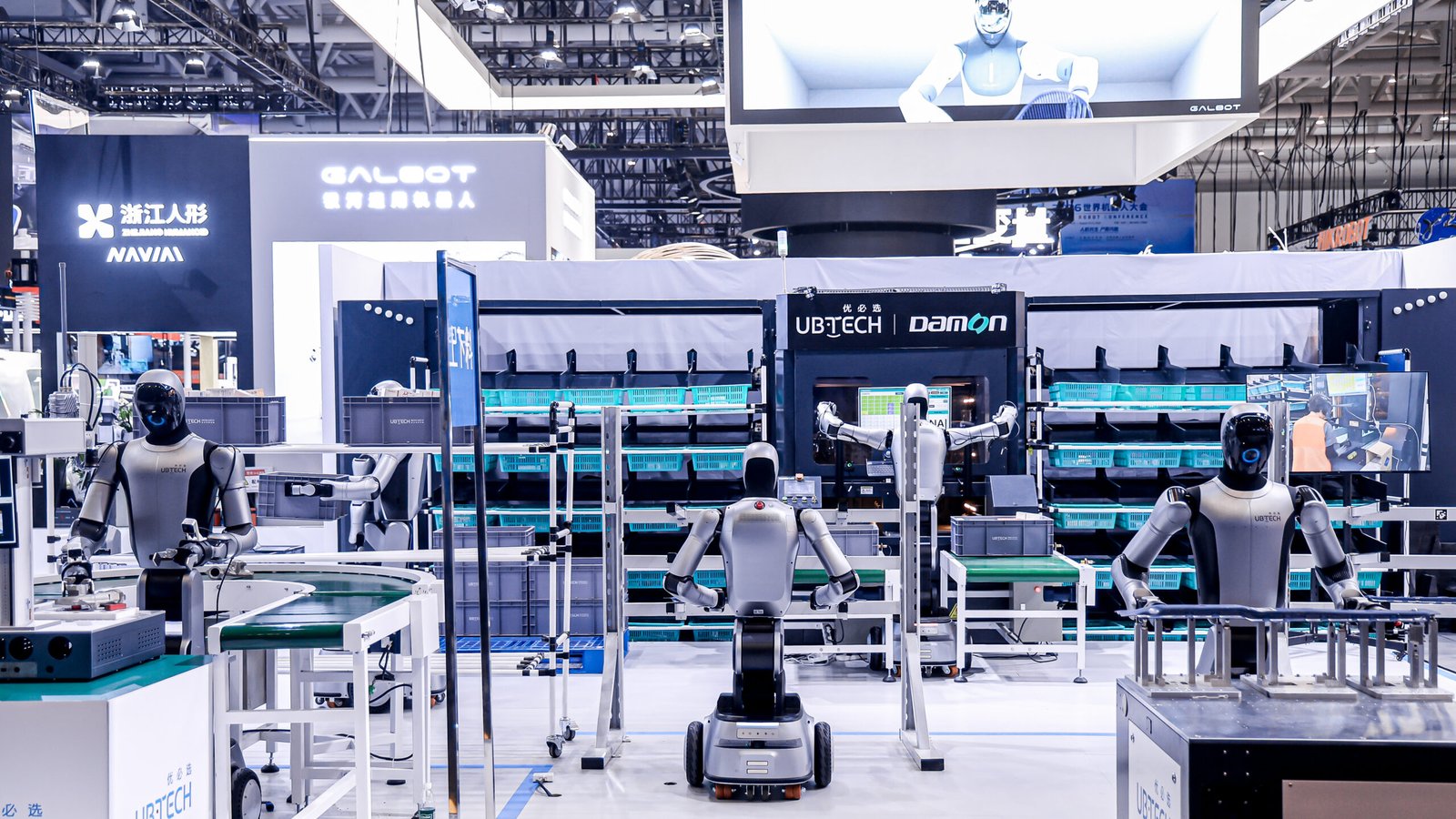
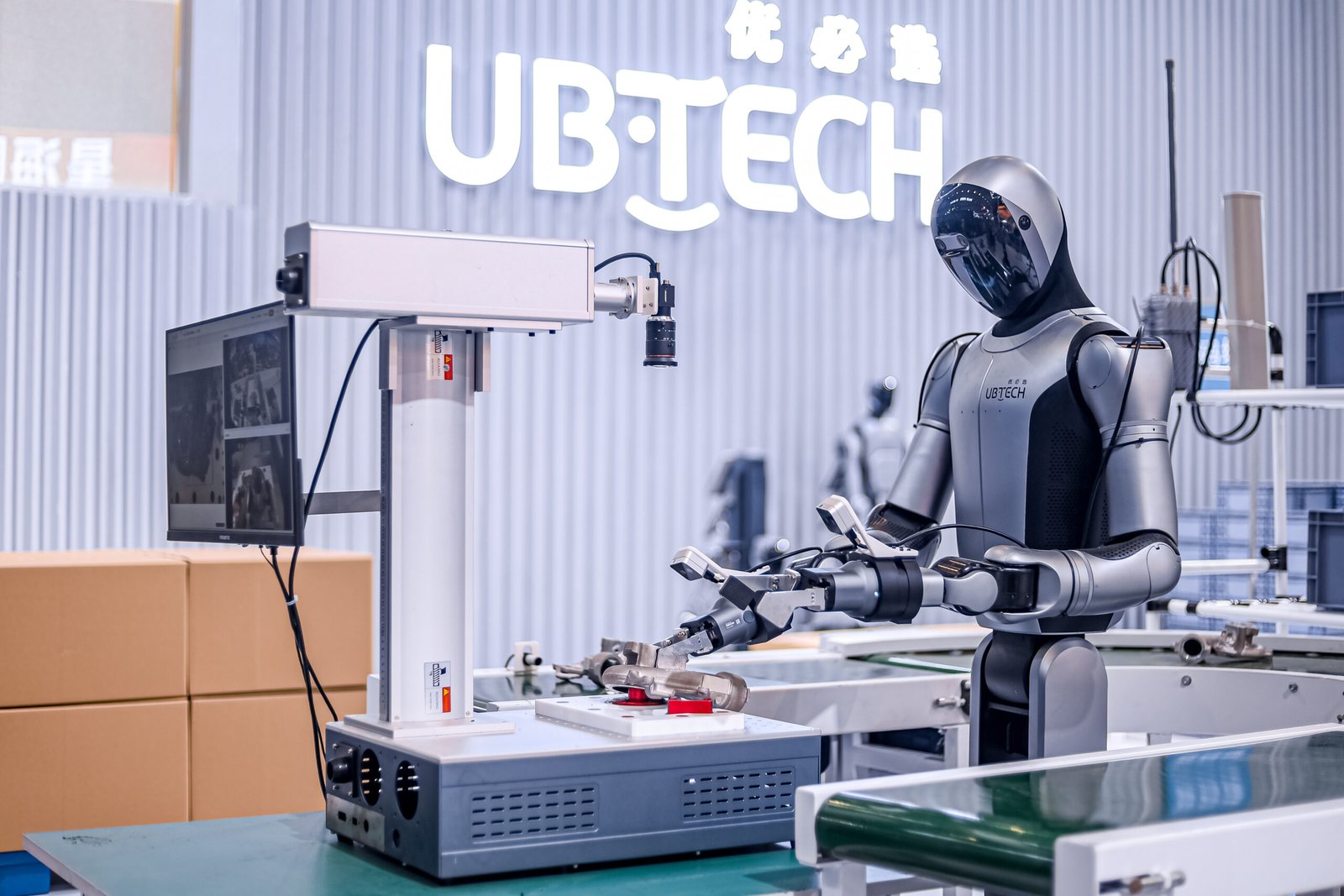
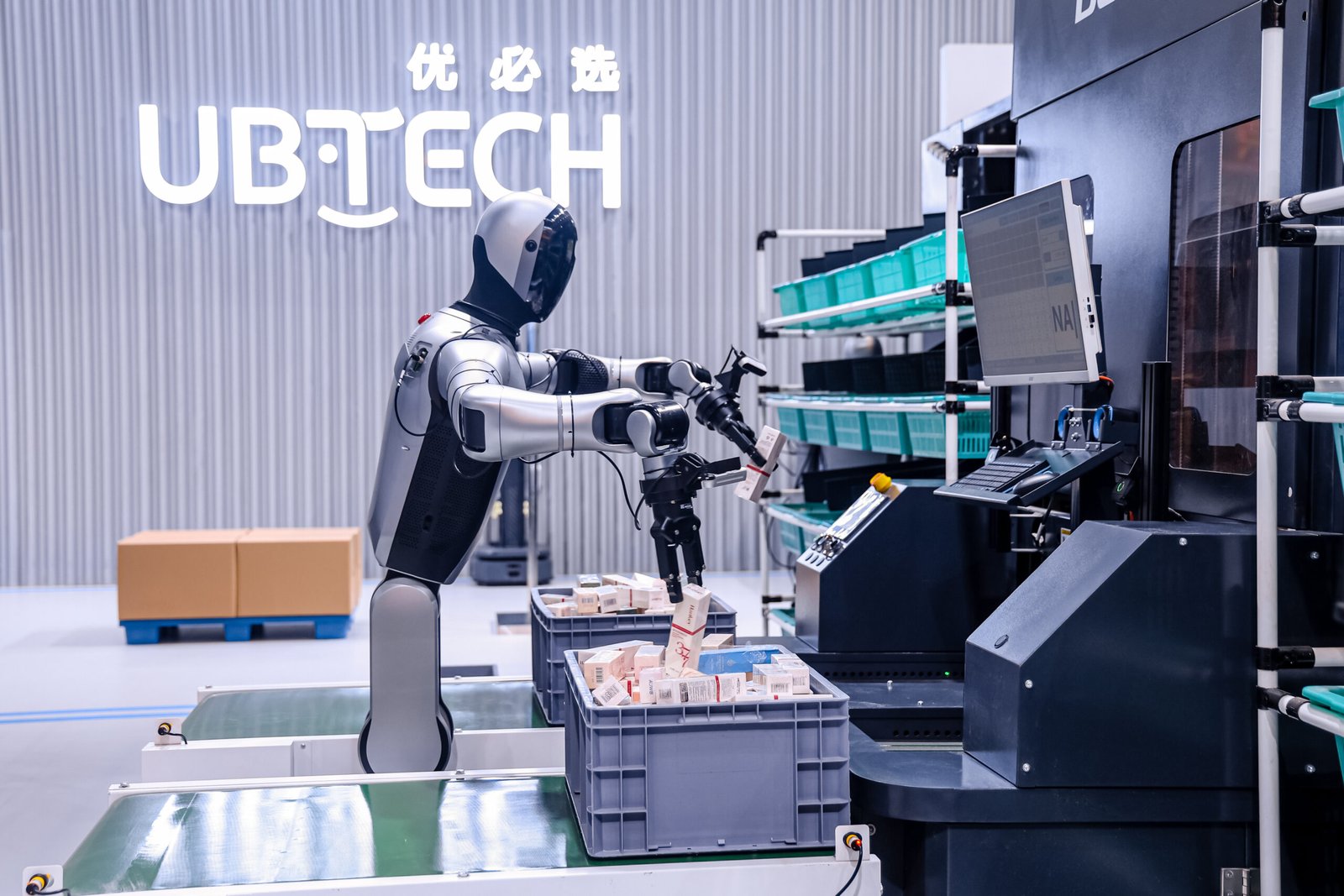
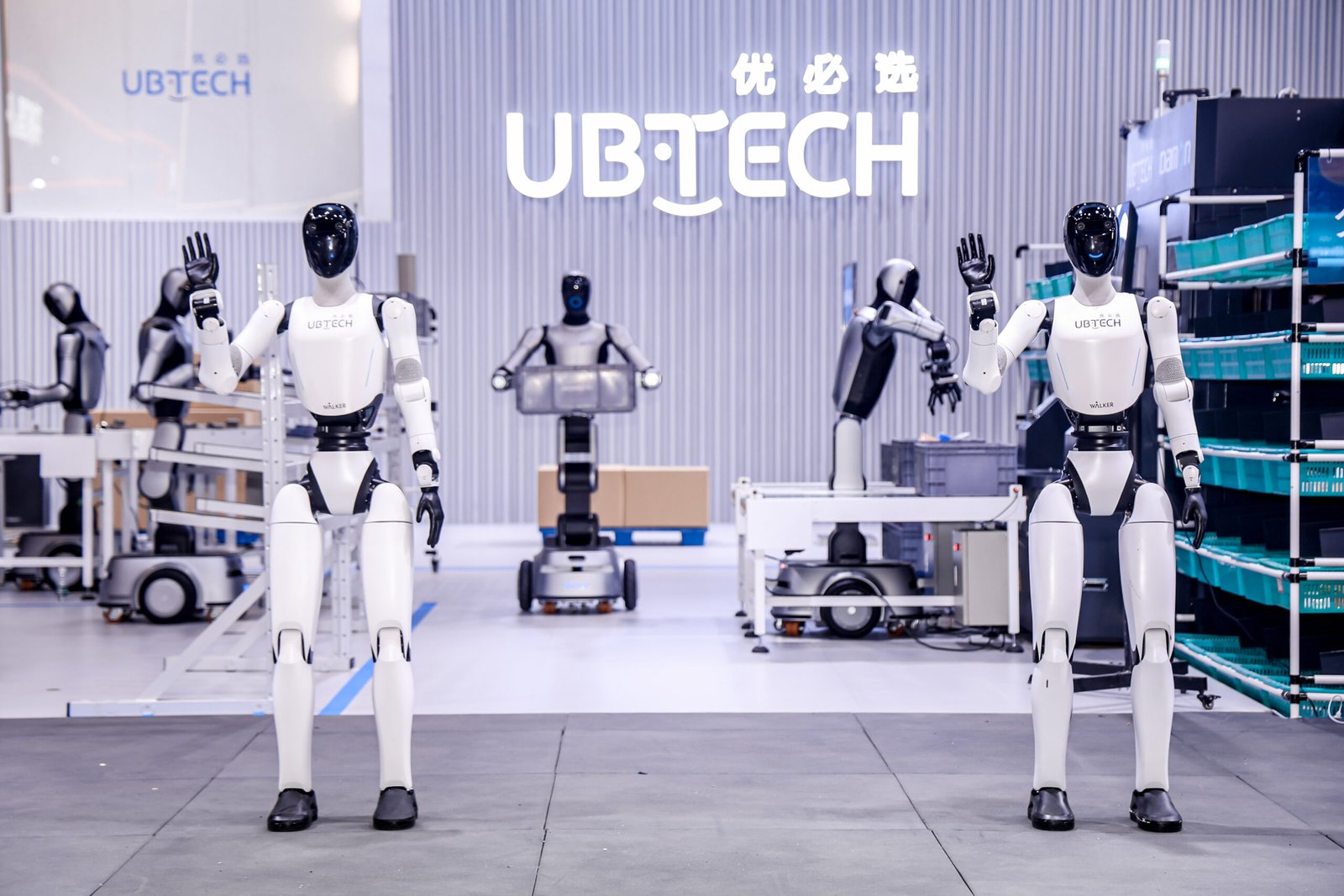
UBTECH arrived at WRC 2026 with a ‘working crew’ rather than a dance troupe. Walker C1 hosted the booth, more than ten Cruzr Y1 and S2 units ran a copied factory line doing stamping and machining feed, depalletising and e-commerce sorting, and the new UWORLD U1 home humanoid drew the longest queues. The through-line was not one machine but a self-built ’embodied brain’.
A brain with three layers
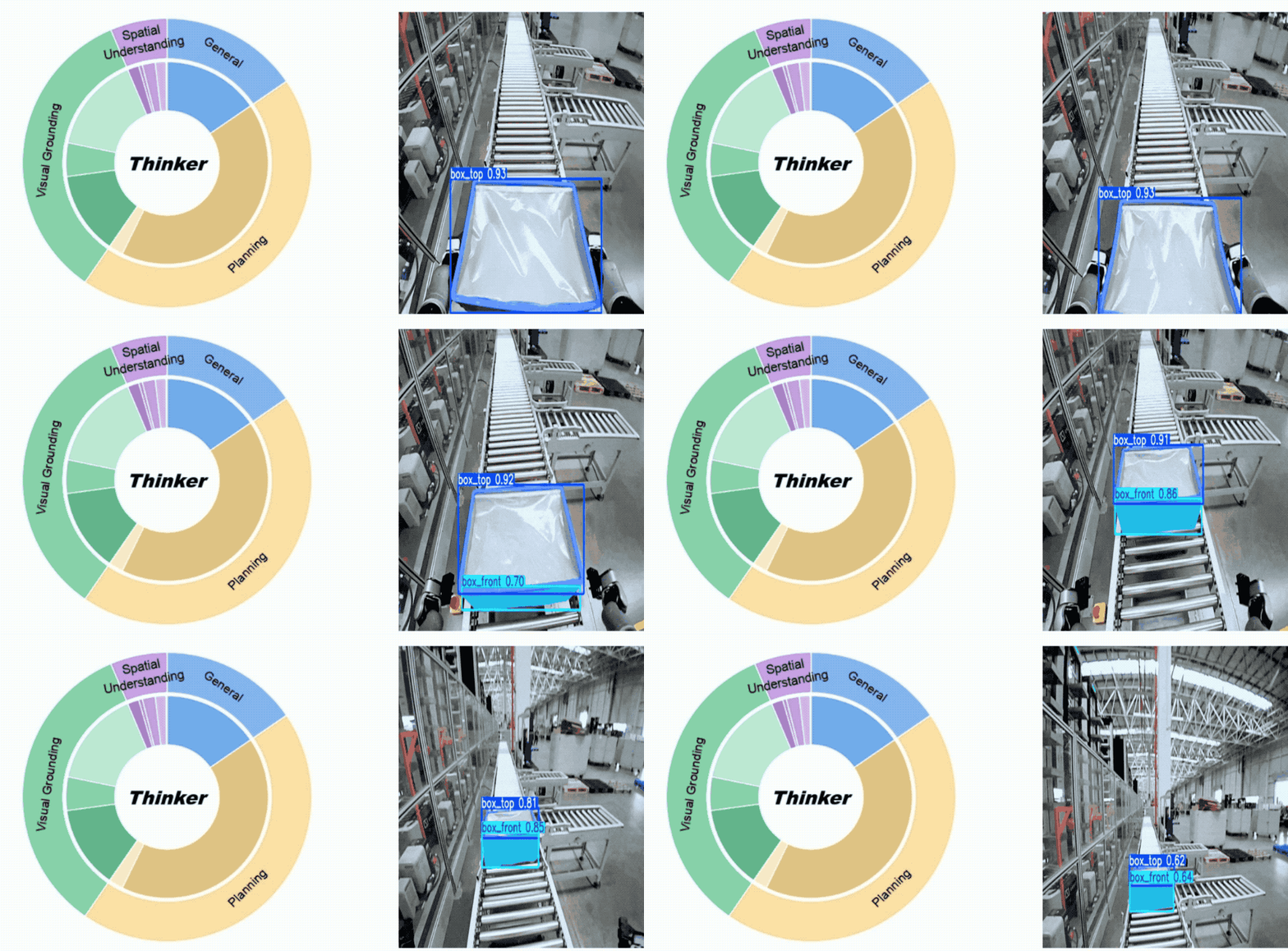
Vice-president Jiao Jichao said the core is giving the robot a thinking brain and a moving body that truly fit. UBTECH built a three-layer stack: a base model, Thinker, made for embodied scenes, with Thinker 1.0 taking nine firsts in the under-10-billion embodied benchmark and a top model at 100 billion; a world model, Thinker-WM, that predicts state change and topped the Libero operational benchmark; and a VLA (vision-language-action) model, Thinker-VLA, in Lite, Pro and Max from 1 billion to 100 billion parameters. With Nvidia Thor the VLA runs fully at the edge, lifting inference efficiency 176 per cent and cutting storage 60 per cent, from 64 GB to 32 GB.
Hardware choices follow the same logic. Performance robots use cheap planetary gears; UBTECH’s industrial humans use high-precision harmonic drives, and swap the basic RK3588 chip for Thor to fuse sensors and plan in real time. The world model also opens a cheap data path: it distils physical sense to light VLA models and generates rare scenarios, easing the cost of real-world collection.
Three lines, one loop
UBTECH spreads across industrial, commercial and home. The claim is that training on the factory line, interaction on the shop floor and emotion in the home feeds one data flywheel, the rare asset the field lacks. Jiao warns most embodied models lean on Transformer, a frame built for language not motion, and UBTECH is exploring embodied-native architecture. It also built an ecosystem: a edge-chip joint venture with GPU firm Muxi and a parts unit for hands and servos.
For European watchers the takeaway is integration. UBTECH is not selling a parameter sheet but a closed loop from base model to edge engineering to real data back to training, across three scenarios at once, with the supply chain to match. That is the kind of full-stack position Western robotics firms, strong in one layer, are racing to assemble.
More images

Editor’s note: This is an adapted translation of the original Zhidx report. It has been trimmed and restructured for readability for an international business audience.