On 2 September, initiated by LinkerBot and Xingyuanzhi, more than 20 core supply-chain firms including Orbbec, FAORobot, Fulai New Materials, Hesai, Huaweike, Livox, Langyi, Linghou, Rokae, Mailivision, Nuwa Create, Quanzhibo, Senyun, RoboSense, Tashan, Wuwenzhike, the iFlytek robot-brain platform, Xinjingcheng, Quectel, Zhixing Embodied and Zongguanxian formed the China Embodied Intelligence Tier 1 Industry Alliance.
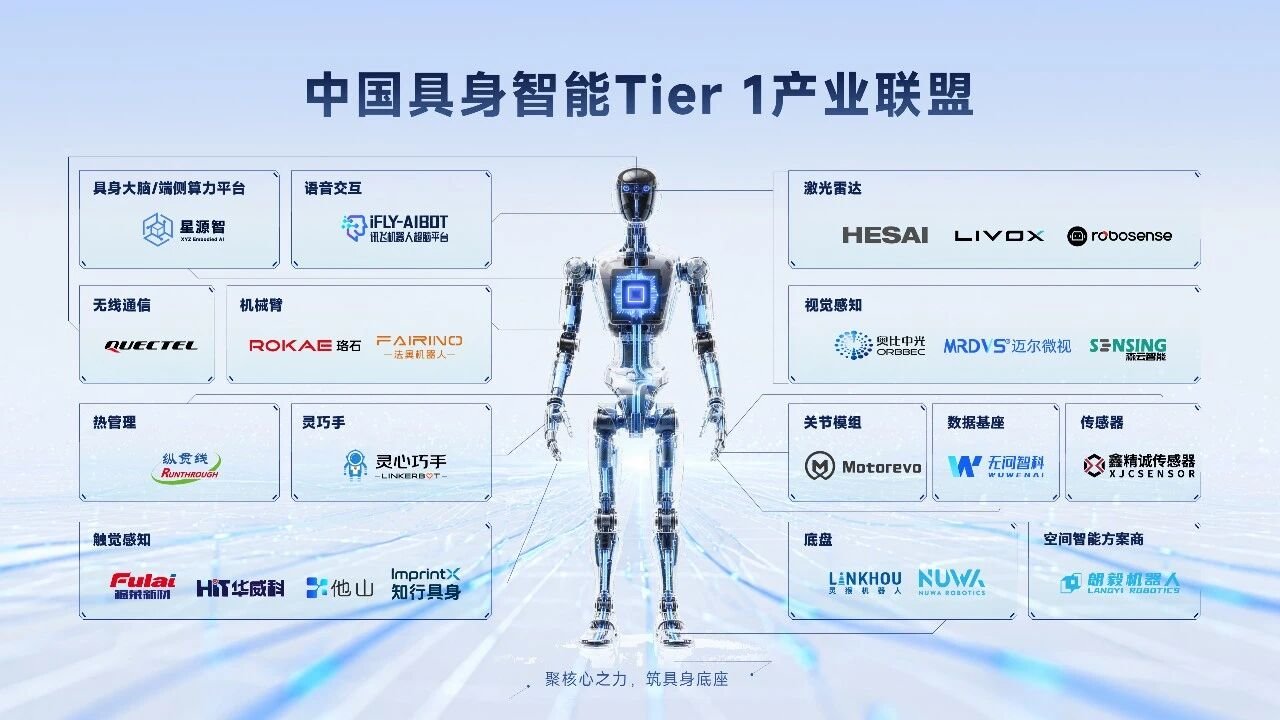
The members cover the most critical links: embodied brain, dexterous hands, voice interaction, visual perception, LiDAR, robot arms, mobile chassis, wireless communication, thermal management and sensors. As a founding member, LinkerBot will work with the group on three axes, cross-hardware adaptation, cross-body deployment and scenario validation, to move embodied intelligence from single-point leadership to system leadership.
Why the alliance now
Embodied intelligence is leaving the lab for real scenarios in manufacturing, logistics and services. But scale has never been a single technology’s victory; it is full-stack coordination of perception, decision and execution. The industry faces shared pains: interfaces differ across vendors, integration cost stays high; real-world, visual and skill data sit in silos; and model iteration needs massive quality data no single firm covers end to end.
The balance of competition is shifting from single-point innovation to the combined strength of technology, supply chain and scenario. Only by turning each firm’s best answer into the system’s best answer can embodied intelligence pay off. The alliance connects years of core strength so each member is both a partner and an extension of the others.
LinkerBot: full-stack in-house dexterous handling
In the alliance’s map, LinkerBot owns the dexterous-operation link. It is one of few firms with full software-hardware in-house capability and full-stack dexterous-hand R&D. In hardware it covers all three mainstream routes, tendon, linkage and direct-drive, with the Linker Hand series for research, industry and humanoids. The hand tips carry high-density array pressure sensors and electronic skin, fusing vision, force and touch for sub-millimetre precision.
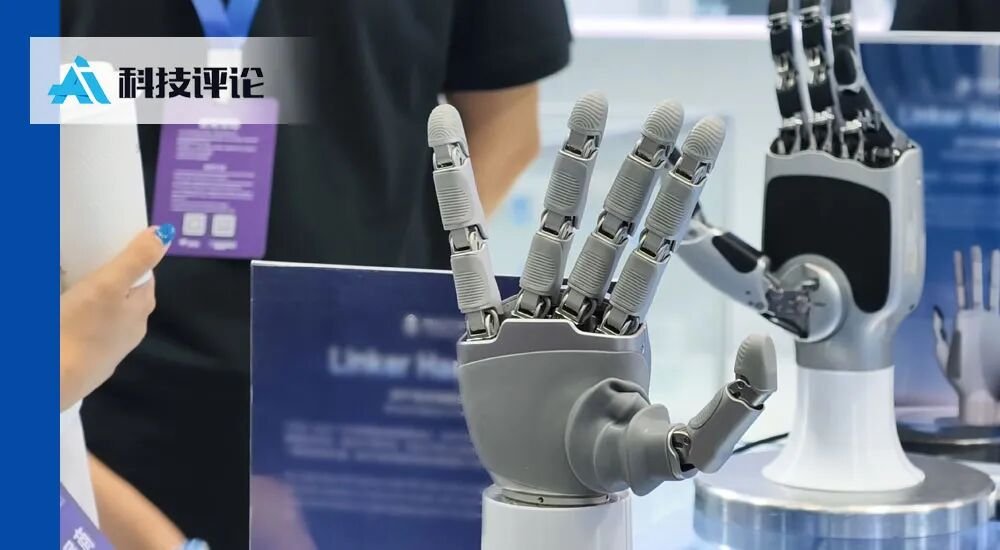
In software and algorithms it built the full chain from drivers and sensing to control and an embodied large model, with Linker Open TeleDex teleoperation, LinkerSkillStore skill library and the Linker Genesis model, plus the industry’s first UMI-Dex open-source dexterous-data scheme built on same-form end-effector, multimodal alignment and native touch.
With self-built core parts and scaled production, plus live deployment in flexible production, embodied retail and logistics sorting, LinkerBot’s products already run in industry, logistics, retail, research and humanoids. Inside the alliance it will tune its hands with partners’ vision, LiDAR, arms, chassis and brains, closing the loop from perception to decision to dexterous operation to data feedback.
The alliance aims to cut integration cost through cross-hardware standards and joint validation, share test data and adaptation know-how to stop repeated work, and run joint pre-research on next-generation architectures on one benchmark. For LinkerBot, its full-stack dexterous skill becomes a connected node, not an isolated point, validated in real scenarios as one complete loop.
More from the original report
Editor’s note: This is an adapted translation of the original Leiphone report. It has been trimmed and restructured for readability for an international business audience.
Translated and adapted from Leiphone (https://www.leiphone.com/category/robot/JjxeXP5ggz1y4t36.html).