As smart terminals race toward agentic AI, more functions run efficiently and safely on device. An agent can run dozens or hundreds of steps from one sentence, or act before you speak by sensing context and memory. That experience rests on the silicon, and the agent trend is pushing chips to evolve: more performance, less power, stronger on-device AI compute, faster memory, tighter security.
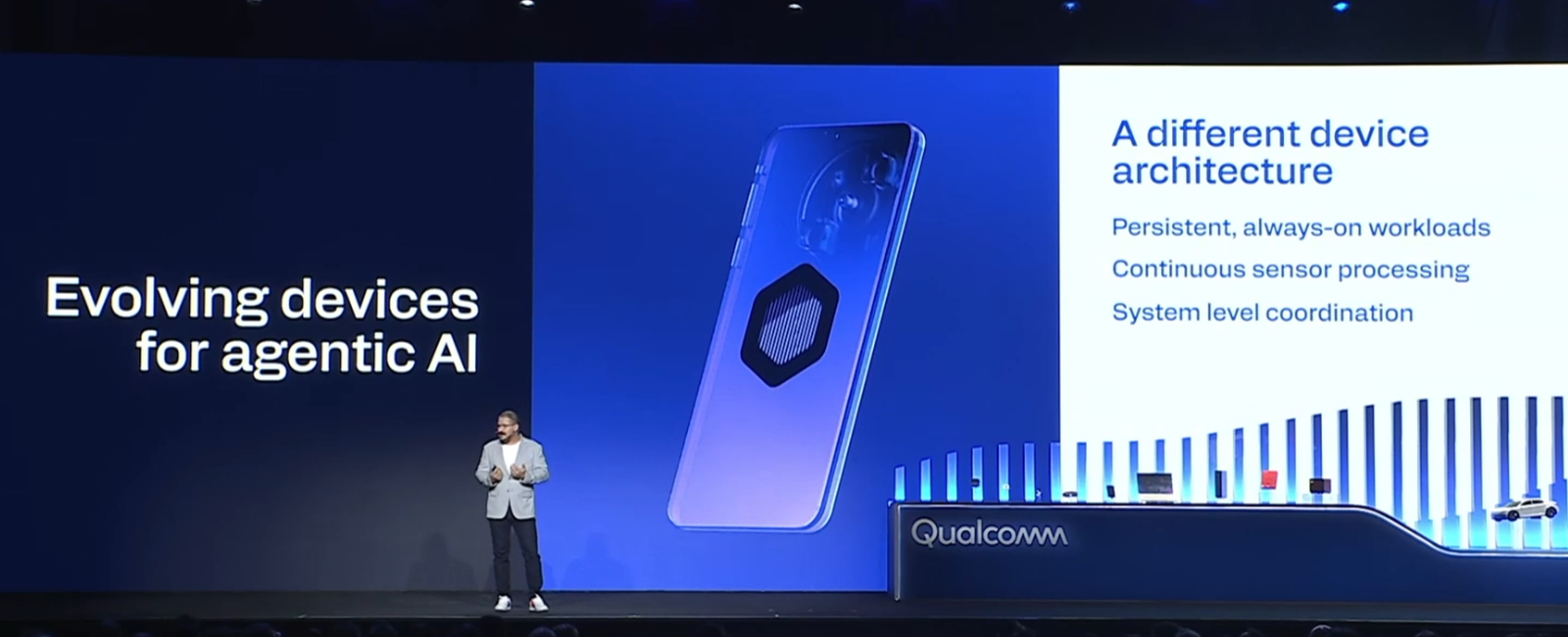
Qualcomm recently previewed the hard upgrades coming to the new Snapdragon flagship it will detail at the 2026 Snapdragon Summit, from CPU cache redesign to AI rendering in the graphics pipeline, a dedicated GPU AI core and an upgraded NPU. The new platform is a full evolution around agents and the base layer for the second-half 2026 flagship AI phone fight.
One: the NPU becomes mandatory, with a new on-device AI architecture
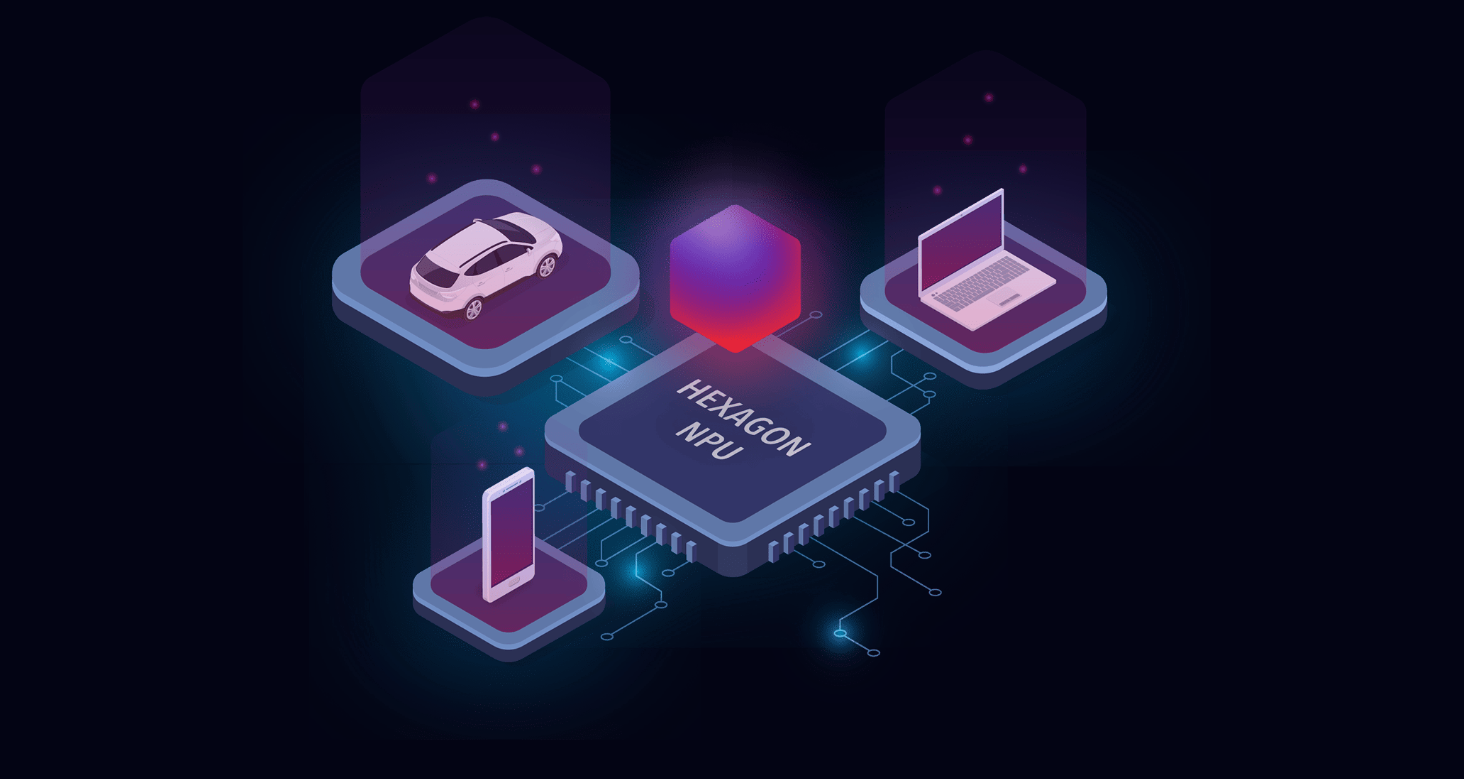
The NPU, born for neural nets, is now near standard on smart terminals. Qualcomm will ship a new Hexagon NPU with two key advances: an Element Accelerator for Transformer workloads in generative and agentic AI, blending vector and scalar units to speed the heaviest ops, and a larger shared memory so model state, context and KV-cache sit closer to the compute, easing the memory wall. First-token time drops below 1.5 seconds, near-instant interaction. Qualcomm is also working with top memory and model vendors on a Mixture-of-Experts on-device architecture: a 3-billion-parameter MoE can generate one token on the NPU while activating only about 300 million routed parameters, cutting compute and bandwidth for larger-model feel at lower cost. INT2 to FP16 support lets developers trade performance, memory, quality and power.
Two: 5GHz, dynamic cache, Oryon CPU as the agent’s brain
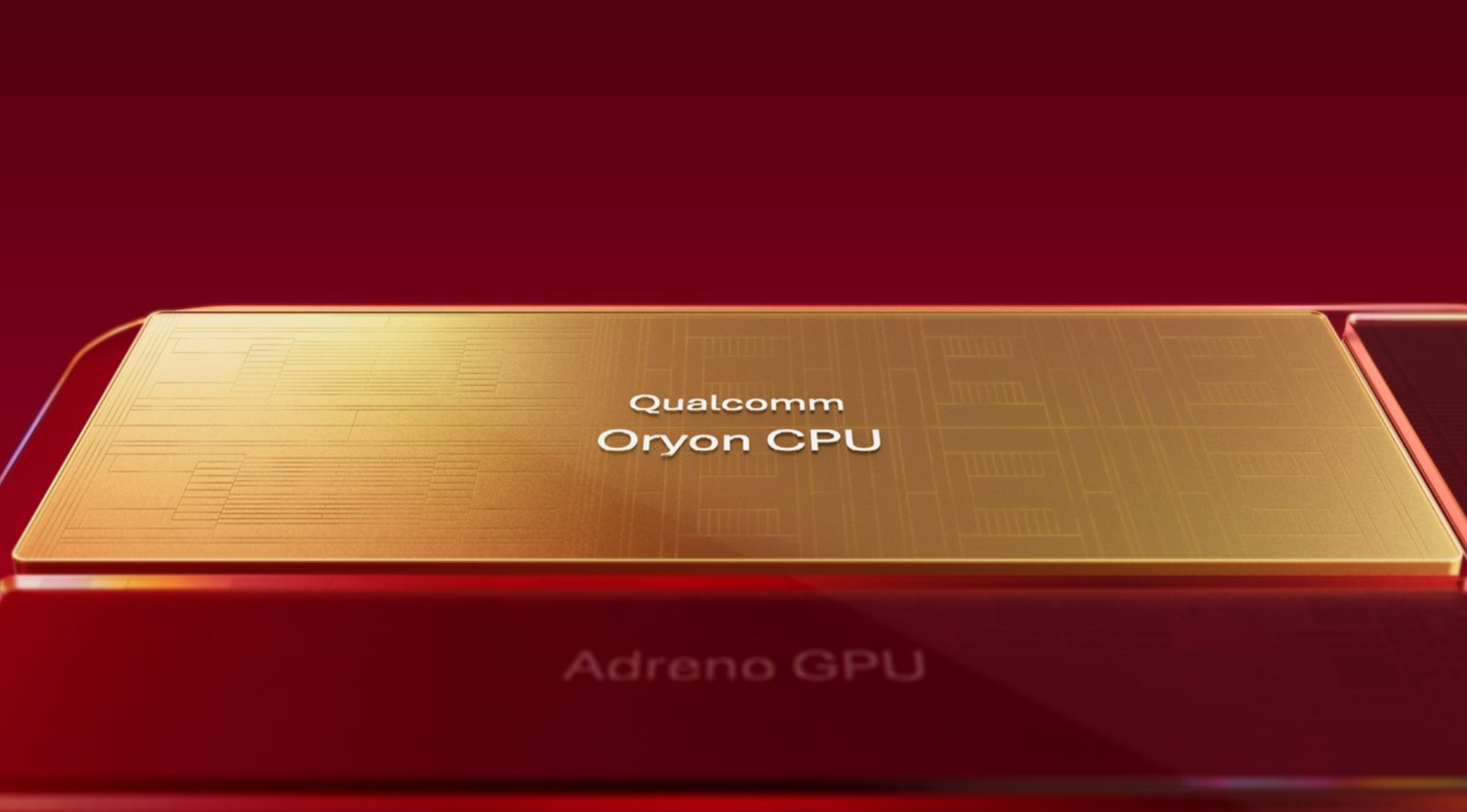
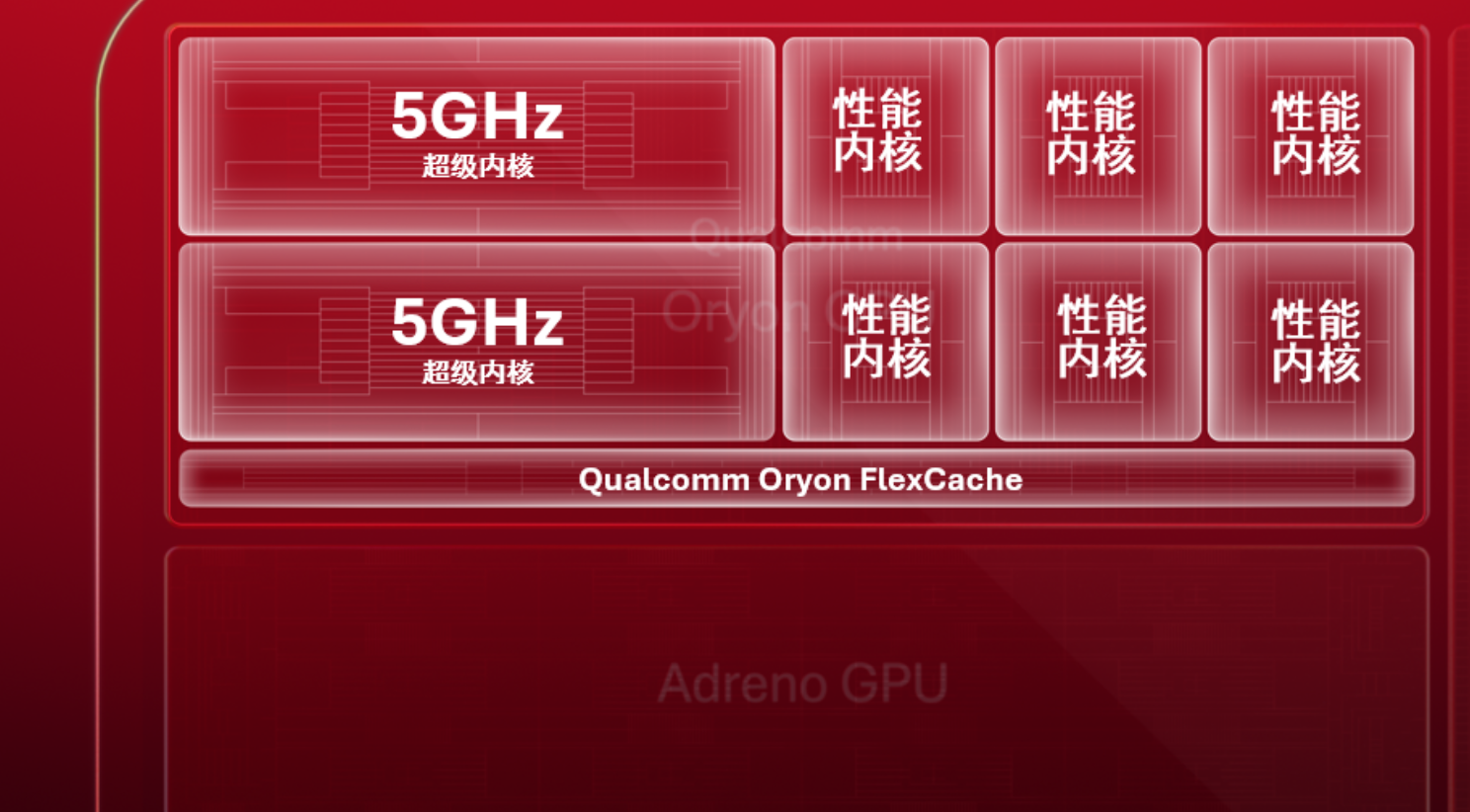
The new Oryon CPU is the first mobile CPU to reach 5GHz, not just from process node but from full custom design of core, subsystem and microarchitecture. With higher IPC, app launches and agent scheduling are smoother. A new Qualcomm Oryon FlexCache lets heterogeneous cores share one cache pool, dynamically allocated by load, so a super core can use the whole pool under heavy load. With memory supply tight, FlexCache cuts system-memory access, keeping performance stable even when RAM is constrained, and lets an agent keep task data in cache across core switches.
Three: AI built into the GPU
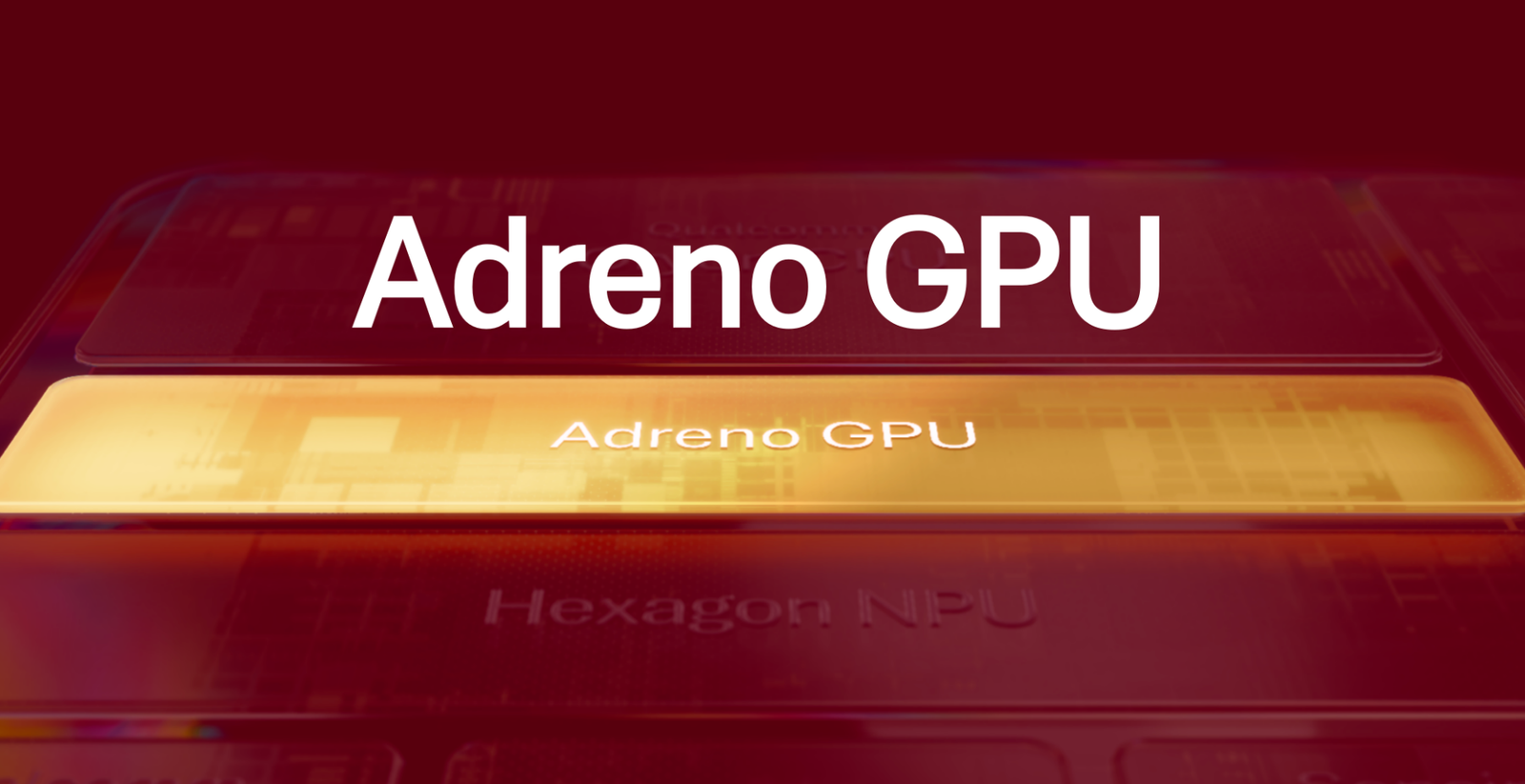
The new Adreno GPU adds a dedicated AI core and neural graphics. Neural super sampling renders low then reconstructs high resolution; neural super sampling with denoise handles ray-tracing noise; neural frame rate uplift rebuilds intermediate frames from real ones. In a demo, seven-eighths of pixels were AI-reconstructed, lifting frame rate and efficiency up to 4x over the prior generation and cutting DRAM traffic up to 70 per cent. Traditional raster and a third-gen ray-tracing unit also improved, lowering DRAM bandwidth needs about 13 per cent in ray-tracing benchmarks.
CPU for AI, AI for GPU, and an NPU left to partners together define the 2026 flagship. For US and China handset makers alike, the agentic phone is now a silicon contest, and Qualcomm just set the bar.
More images from the source report:

Editor’s note: This is an adapted translation of the original Zhidx report. It has been trimmed and restructured for readability for an international business audience.
Translated and adapted from Zhidx (https://www.zhidx.com/p/592443.html).