Leaner architecture and faster response are the direction of travel for smart cars, and cockpit-domain convergence is one of its sharpest nodes. Zuoshi Auto Research forecasts China’s cockpit-domain fusion market will grow at a 36 per cent compound rate from 2026 to 2030, with 3.6 times the headroom still to come by the end of the decade.
But the moment cockpit and driving share a single chip, finite compute tilts toward driving. Several early fusion schemes shipped with laggy head units, dropped surround-view frames and sluggish cabin response. The cabin experience cannot be the price paid for a smarter car.
Two routes to one chip
The first route is multi-vendor stitching. Each supplier brings sensors, silicon, domain controllers, cabin software and driving algorithms, and the pieces are bolted together. The underlying logic is never unified, so on a constrained chip the driving stack gets over-developed and the cabin stutters. Worse, a fault spans modules no single vendor owns, and the carmaker ends up arbitrating between companies.
The second route is full-stack integration, where one supplier owns hardware, underlying software, cabin and driving as one system. Desay SV, the recognised leader here, defined its product as “one chip, dual intelligence, cockpit-domain dual excellence.” Its single-chip memory architecture refuses to let the cabin fall below the benchmark set by Qualcomm’s SA8155P, a 7 nm cockpit SoC rated at 8 trillion operations a second and driving up to six cameras. Desay’s third-generation cabin, already in Li Auto and Chery models, was built on that same chip.

In October 2024 Desay launched the ICP S01E native cockpit-domain architecture. In August this year the Chery Fulwin T7, carrying that solution, opened for presale and entered mass production. The Fulwin T7 also pulls Desay’s SA8775P fusion package into the 100,000-yuan car segment, where the test is harsher: cut hardware cost without cutting the experience.
What decides it is inside the chip
Desay’s “same-source, same-frequency” principle keeps underlying algorithms and upper-layer apps on one data link, so what the driving system perceives, the cabin renders. Through compute-in-memory and shared memory, ICP S01E cuts the copying and shuttling of data between cabin and domain, dropping latency by more than 90 per cent and reaching microsecond inter-core communication.
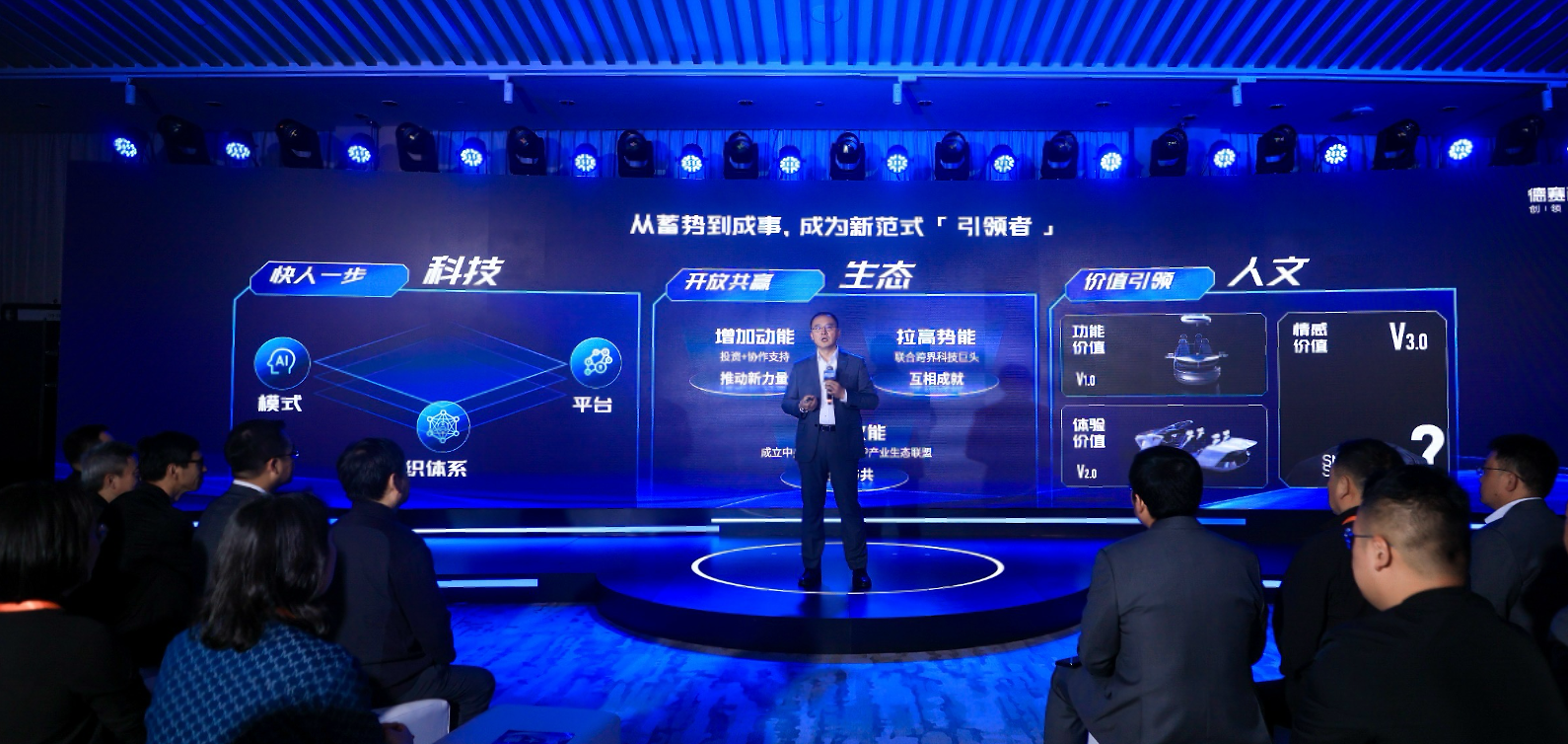
The payoff is concrete. On a highway pilot run, if a truck cuts in at the merge, the cabin’s live render shows the vehicle behind while the driving system reacts. The car stops arguing with itself.
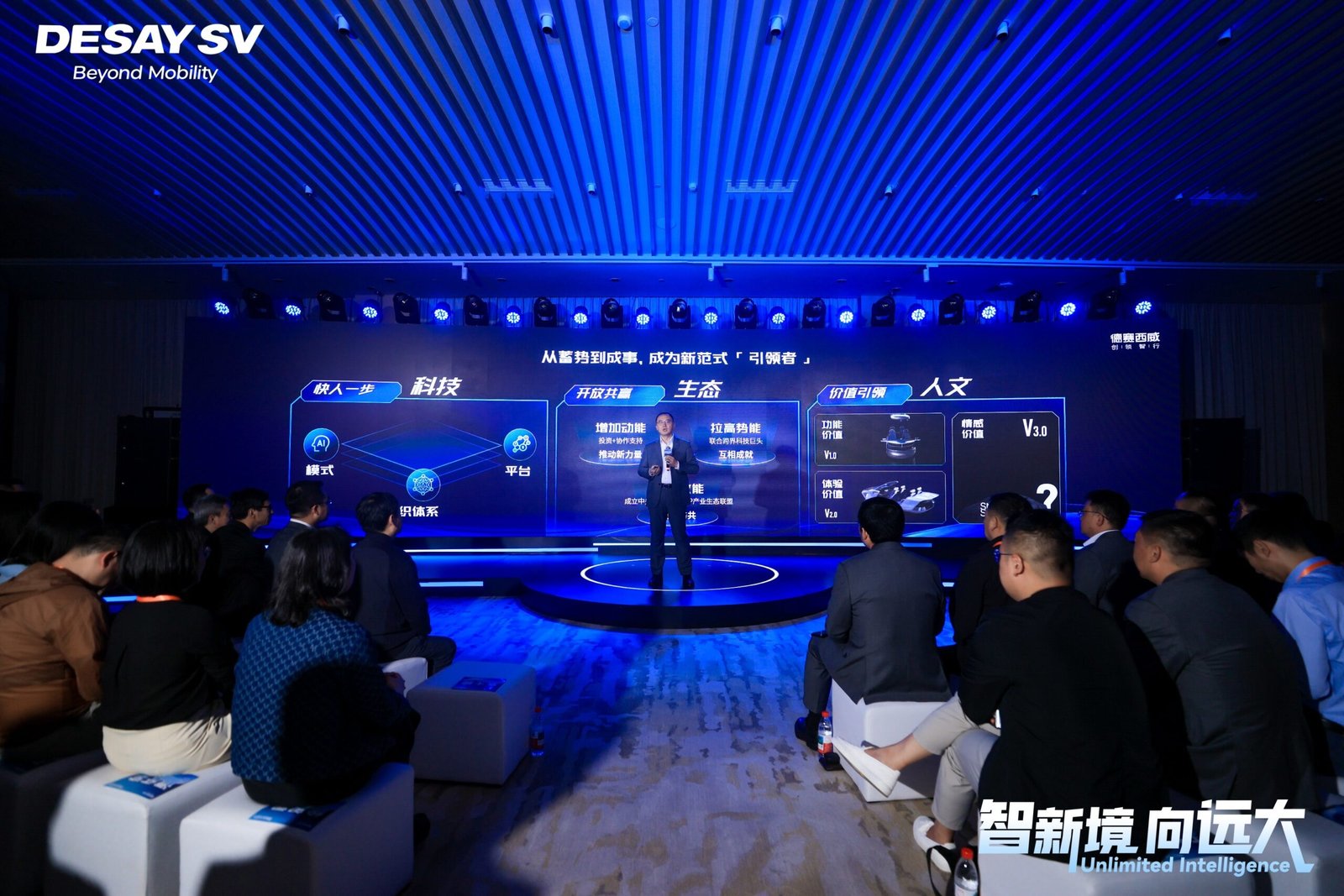
Editor’s note: This is an adapted translation of the original LeiPhone report. It has been trimmed and restructured for readability for an international business audience.