Wall Street is repricing Tesla Semi as a software terminal, not a truck
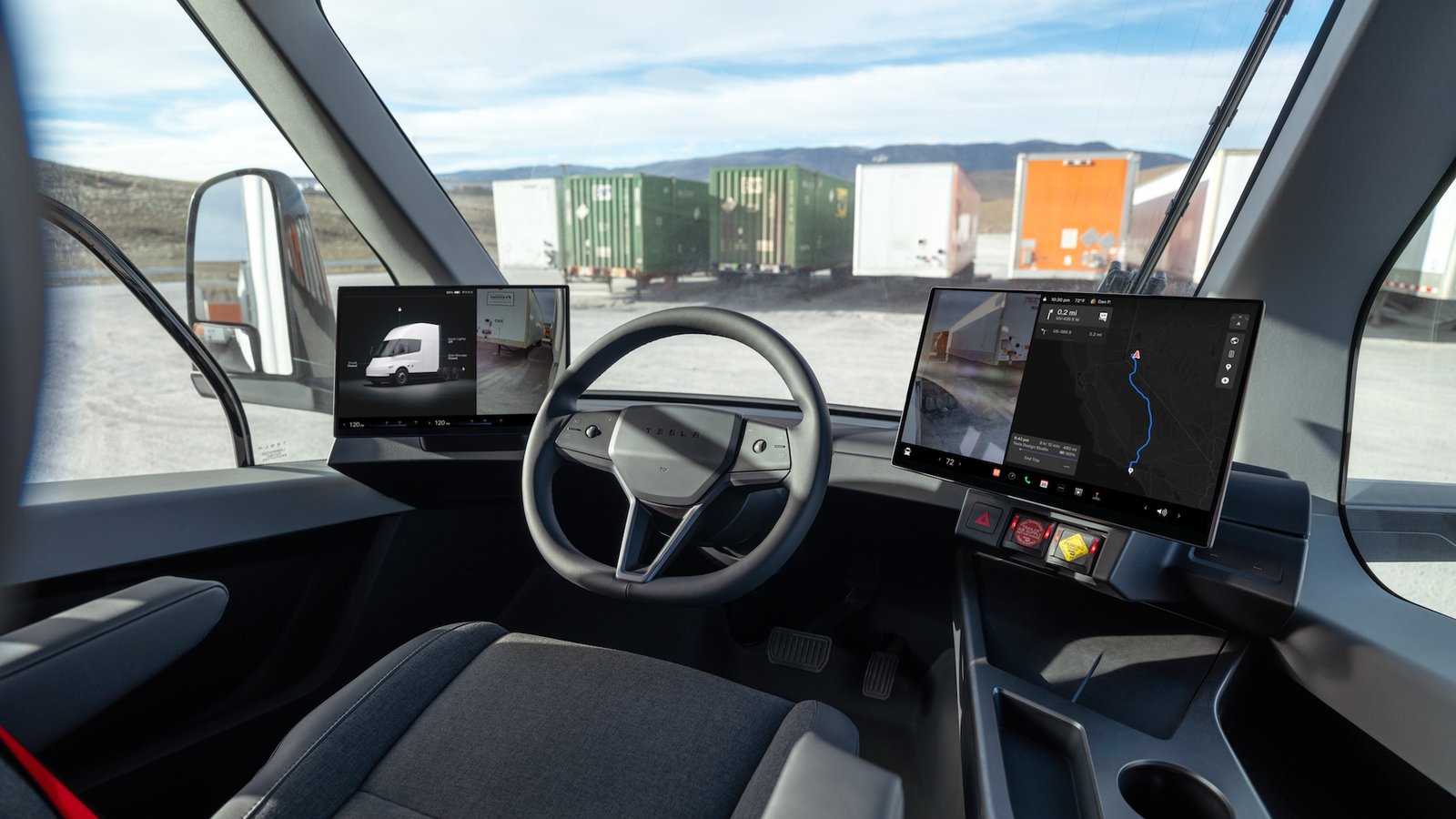
Can a smart heavy lorry keep earning after it has been sold? Morgan Stanley thinks so, and the arithmetic it published alongside Tesla’s European Semi launch is far larger than the hardware it sits on.
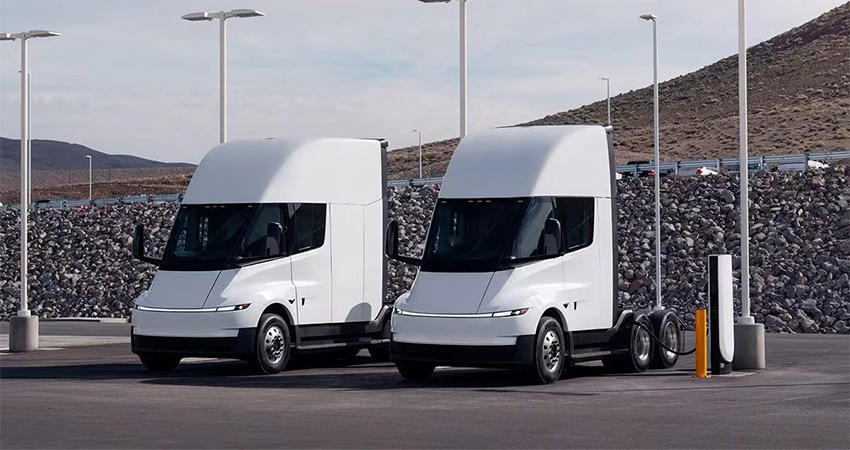
On 11 September Tesla unveiled the European-specification Semi and confirmed that customer deliveries will begin in 2027. The same week, Morgan Stanley published a note that asks a different question. Not what the truck costs, but what it can bill.
The bank’s central estimate is that an autonomous Semi running 18,000 miles a month could generate roughly USD 12,000 to 18,000 a month in software revenue per vehicle, or about RMB 80,400 to 120,600. By 2040, a fleet of 82,000 autonomous Semis could produce around USD 17 billion of software revenue, or about RMB 113.9 billion.
Tesla originally set a manufacturing target of 50,000 Semis a year. Andrew Percoco of Morgan Stanley therefore calls a cumulative fleet of more than 80,000 units over roughly 15 years a conservative starting point. In a more optimistic case, software subscription revenue from Semi could reach about USD 34.4 billion by 2040, or roughly RMB 230.48 billion.
What the bank is doing is stretching the revenue window of a single vehicle. A conventional heavy lorry is a one-off hardware transaction. Autonomy turns it into something closer to a mobile terminal that runs more than 200,000 miles a year and bills continuously.
Morgan Stanley re-rates Semi as a software terminal
The model is straightforward. Morgan Stanley assumes Tesla can charge a technology fee per mile driven, at about USD 0.85 to 1 per mile, or roughly RMB 3.6 to 4.2 per kilometre. At 18,000 miles a month that is about USD 12,000 to 18,000 per lorry per month in software income.
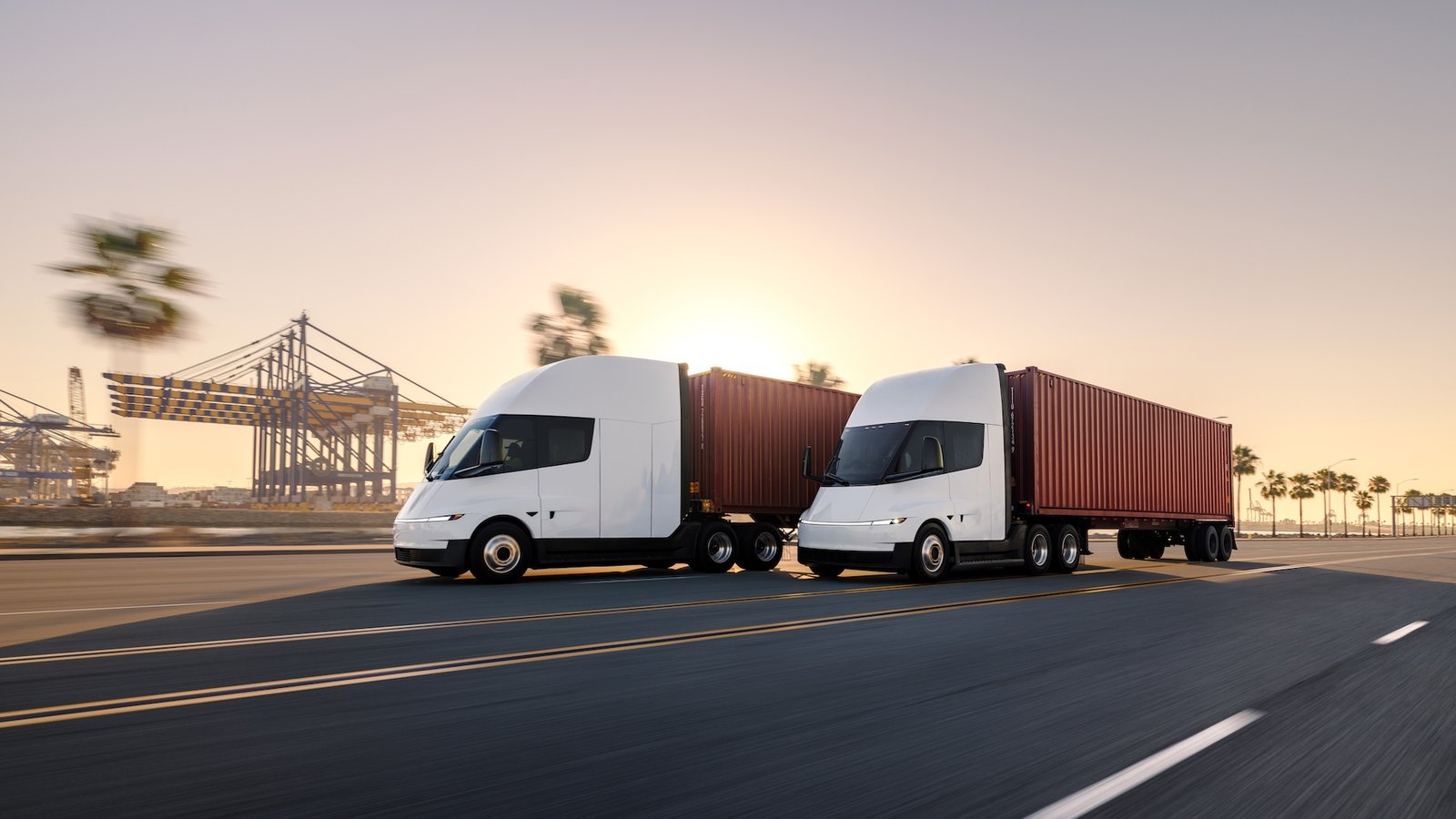
By 2040 the bank models about USD 17 billion of software revenue plus USD 7.5 billion to 8 billion of incremental EBIT, meaning earnings before interest and tax. Treated as a standalone opportunity, it estimates the Semi business is worth about USD 20 per share, or roughly USD 80 billion in market value.
For scale, Tesla’s passenger-car FSD subscription costs about USD 100 a month. One autonomous Semi would therefore generate the software revenue of roughly 120 to 180 passenger-car FSD subscriptions. Heavy lorries sell in far smaller volumes, but their high utilisation and long mileage multiply the value of software on every unit.
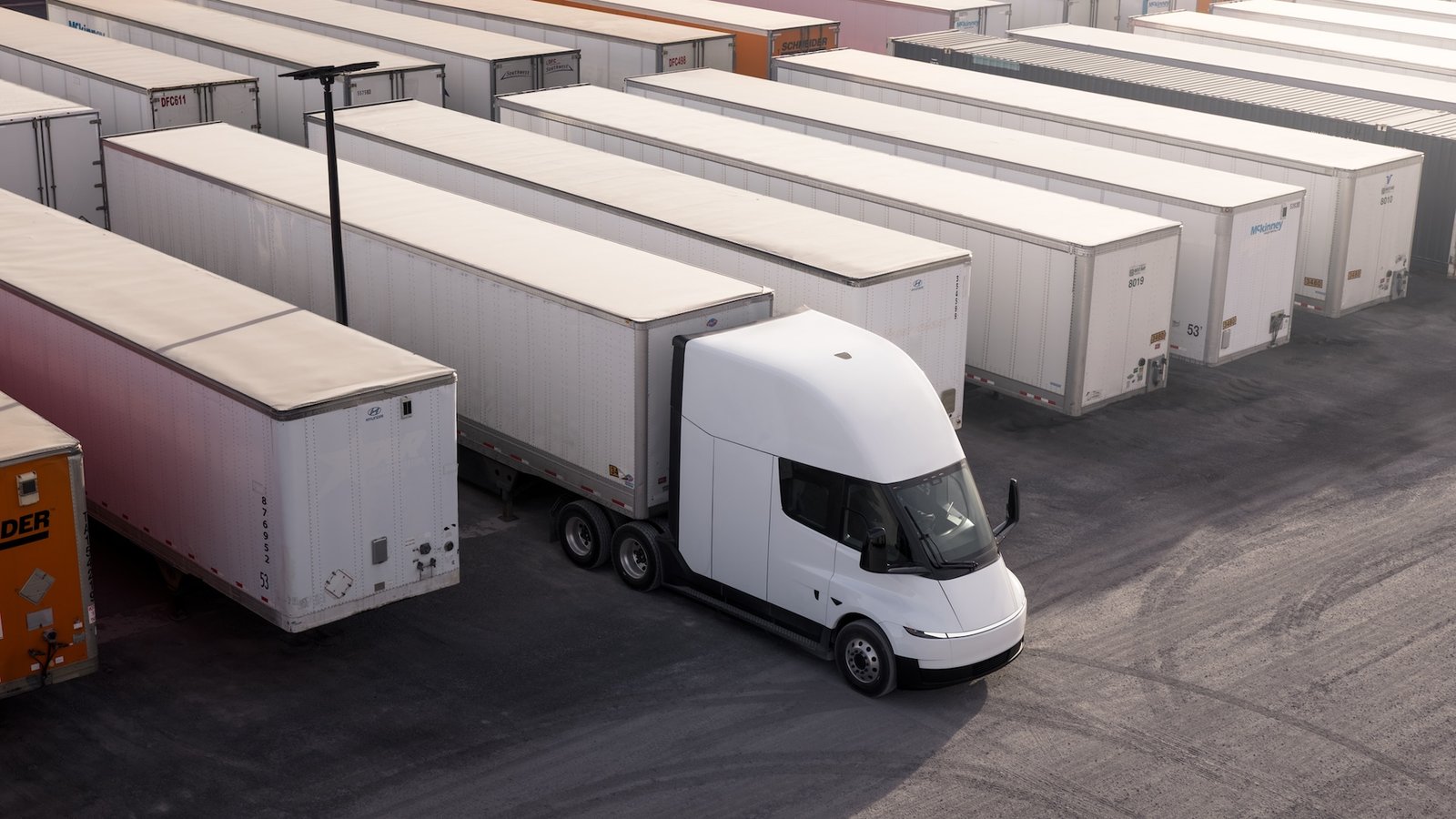
Fleets pay because they are buying operating efficiency rather than a nicer driver-assistance feature. In the Morgan Stanley model a human-driven electric lorry covers about 92,400 effective miles a year, while an autonomous lorry reaches about 215,200 miles and lifts daily running time from roughly 11 hours to 22 hours.
Cost per mile falls from USD 2.67 to USD 2.13, a drop of about 20 per cent. Annual profit per lorry, after operating costs, rises from about USD 31,000 to about USD 189,000, and the margin widens from 11 per cent to 29 per cent. Autonomy does not add a feature to a lorry. It rewrites the cost and revenue structure of a production tool.
Why heavy lorries offer the cleanest return in autonomy
The driver shortage is the first reason. According to industry reports, China’s shortfall of lorry drivers had reached 10 million by early 2025. Drivers aged 36 to 55 account for 84 per cent of the pool, while those under 35 are under 20 per cent. Some 71.55 per cent of drivers rest no more than four days a month and work more than 10 hours a day on average. The problem is not simply rising labour cost. It is that the old model of adding capacity by adding drivers is running out.
The market underneath that problem is large. Morgan Stanley estimates the addressable market for autonomous heavy lorries in the United States alone at about USD 601 billion in 2026, rising above USD 1 trillion by 2041. China’s base is comparable in volume terms. National Bureau of Statistics data put 2025 road freight volume at 43.29 billion tonnes with freight turnover of 7.95 trillion tonne-kilometres, and the Ministry of Transport counted 11.6891 million operating goods vehicles on the road at the end of 2025.
That scale means even partial entry into trunk-line and bulk haulage corresponds to a substantial market. It also explains why heavy lorries can carry a much higher software ARPU, or average revenue per user, than consumers. A private buyer pays for convenience and experience. A fleet pays out of saved transport cost.
From selling lorries to selling capacity
Broken down, the Robotruck model has three revenue layers. The first is hardware. Beyond the unit sale, the real purpose is to build an installed base that feeds data, subscriptions and eventually higher levels of autonomy.
The second layer is the autonomous driving software that Morgan Stanley values most. Subscriptions carry higher gross margin and they recur. As long as the vehicle keeps working, the system can bill by time, distance or function. Revenue shifts from earning once per lorry to earning repeatedly around each lorry.
The third layer is L4 driverless capacity, where the company stops selling only software and starts selling transport itself to shippers and logistics firms. Revenue then moves from hardware, to software, to capacity.
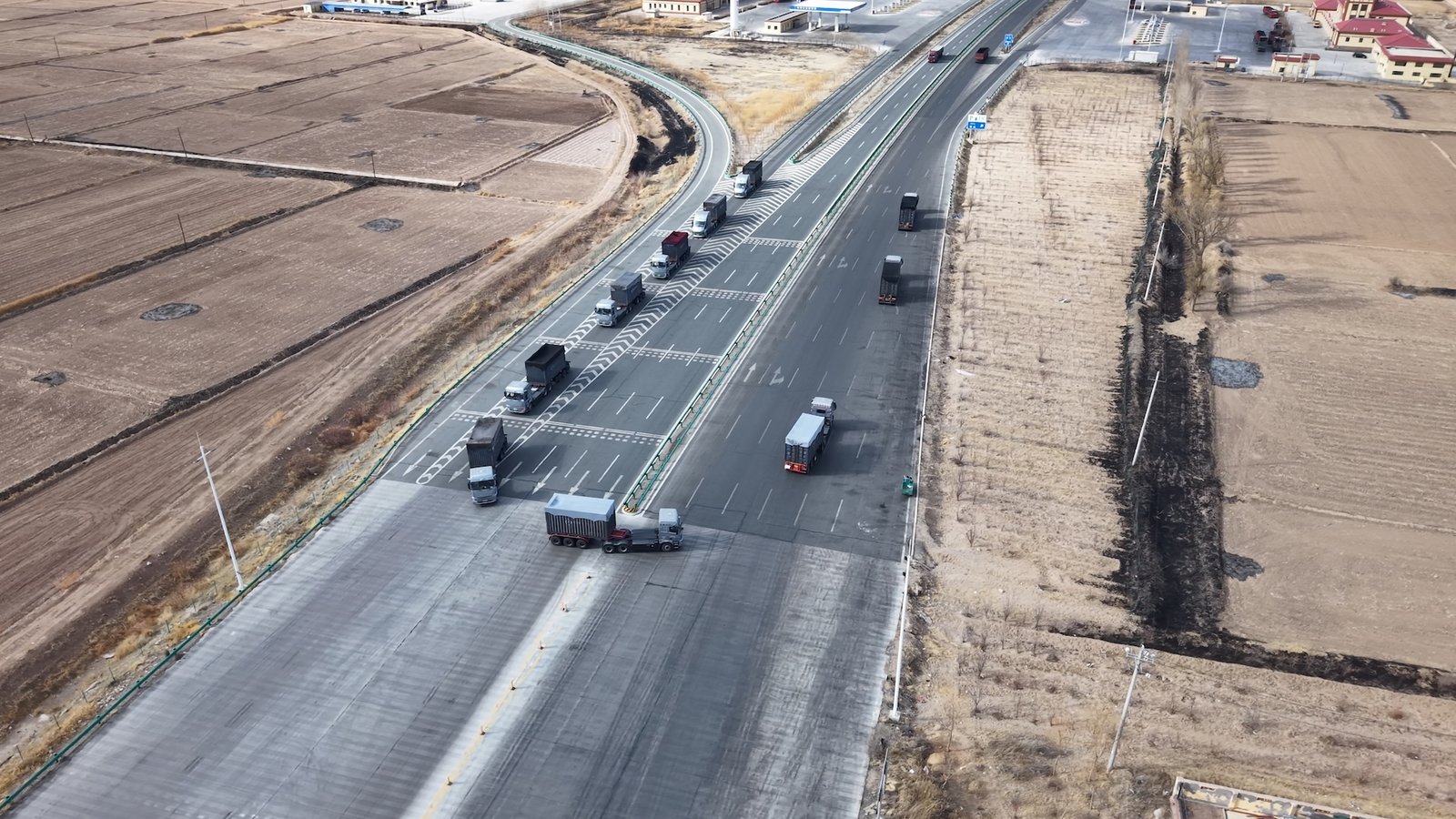
China already offers an early read on this. DeepWay had delivered 13,707 new-energy heavy lorries by April 2026, more than 9,000 of them fitted with L2 assistance, with a paid subscription rate above 30 per cent. Cumulative L2 operating mileage reached nearly 500 million kilometres by September 2026. An L4 platoon has completed driverless rear-vehicle testing in Inner Mongolia and moved into commercial validation, and the company ran the industry’s first L4 new-energy heavy lorry road test with STO Express. DeepWay follows the same path of integrated hardware and software, building fleet scale first and monetising autonomy afterwards.
If that path holds, unit sales stop being the only metric that matters. Installed base, autonomy penetration, willingness to keep paying, software revenue per lorry and the eventual move into driverless capacity all become valuation variables.
The industry’s question has changed. It is no longer who reaches L4 first, but who can turn a one-off hardware sale into years of software and capacity revenue.
Editor’s note: This is an adapted translation of the original Chedongxi report. It has been trimmed and restructured for readability for an international business audience. The full original (in Chinese) is at https://chedongxi.com/p/376367.html.